
 Ashley
Your Body Sends Signals When Fiber Is Low
Most people have no idea how much fiber they’re actually eating — and most are getting far less than they need. The recommended intake is 25–38 grams per day, but the average adult in Western countries consumes only 15–17 grams. This chronic shortfall doesn’t go unnoticed by the body. A low-fiber diet produces a distinctive cluster of symptoms — some obvious, some that are easy to misattribute to other causes. Recognising these signals is the first step toward addressing one of the most common and consequential nutritional deficiencies in modern life. For a complete understanding of what fiber is and why it matters, see our complete dietary fiber guide.
The Most Common Signs of Low Fiber Intake
Constipation or Irregular Bowel Movements
This is the most direct and immediate sign of insufficient fiber — particularly insoluble fiber. Healthy bowel function typically means one to two comfortable bowel movements per day. If you’re going fewer than three times per week, straining regularly, or passing hard and dry stools, your insoluble fiber intake is almost certainly too low. Insoluble fiber adds bulk to stool and speeds transit through the colon — without it, stool becomes slow-moving, dry, and difficult to pass. This is the body’s most straightforward signal that dietary fiber is inadequate. See our guide to fiber and digestion for how to address this.
Chronic Bloating
Paradoxically, both too little and too much fiber (introduced too quickly) can cause bloating — but the bloating of chronic low-fiber intake is different in character. When fiber intake is consistently low, the gut microbiome shifts toward less beneficial bacterial populations. This dysbiosis can produce excessive gas from the fermentation of food residues, increased gut permeability, and slowed motility — all contributing to a persistent sense of bloating and abdominal discomfort that doesn’t resolve on its own. Gradually increasing fiber intake typically resolves this type of bloating within 3–4 weeks as the microbiome rebalances.
Feeling Hungry Soon After Eating
If you find yourself hungry again within 1–2 hours of eating a full meal, low dietary fiber is a likely contributor. Fiber — particularly soluble fiber — slows gastric emptying, prolongs the absorption of nutrients, and stimulates the release of satiety hormones including GLP-1 and PYY. Low-fiber meals are digested and absorbed quickly, causing blood sugar to spike and then drop, which triggers hunger signals even when adequate calories have been consumed. Adding fiber to meals is one of the most effective ways to extend satiety without increasing calorie intake. See our guide to fiber and weight loss for how this affects appetite and body weight.
Blood Sugar Swings and Energy Crashes
Mid-afternoon energy slumps, post-meal drowsiness, intense sugar cravings, and erratic energy throughout the day are all classic symptoms of blood sugar instability — and insufficient dietary fiber is a primary driver. Without soluble fiber to slow glucose absorption, carbohydrates are digested rapidly, causing sharp blood sugar spikes followed by crashes. Consistently eating low-fiber meals creates a pattern of glucose dysregulation that drives fatigue, cravings, and irritability. See our guide to fiber and blood sugar for the full picture.
High Cholesterol
If your doctor has flagged elevated LDL cholesterol, your fiber intake — particularly soluble fiber — is worth examining. Soluble fiber binds to bile acids in the intestine and removes them from the body, forcing the liver to draw more cholesterol from the blood to make new bile acids. Low soluble fiber intake removes this cholesterol-lowering mechanism entirely. Beta-glucan from oats and barley, pectin from apples and citrus, and psyllium husk are the most clinically proven dietary interventions for LDL reduction. See our fiber and heart health guide for detailed evidence.
Poor Gut Microbiome Health
Signs of microbiome imbalance — including food intolerances that seem to worsen over time, frequent minor infections, skin issues like eczema or acne, persistent low mood or anxiety, and vulnerability to digestive upset after travel or antibiotics — can all reflect an impoverished gut microbiome caused by chronically low fiber intake. The gut microbiome is almost entirely dependent on dietary fiber for fuel. Without it, beneficial bacterial populations decline, diversity falls, and opportunistic bacteria can gain a foothold. See our guide to gut microbiome and fiber for the full connection.
Weight Gain Despite Eating Reasonably
If your weight is creeping up despite eating what seems like a reasonable amount of food, chronic low fiber intake may be a silent contributor. Without fiber’s satiety-promoting effects, it’s easy to unknowingly overconsume calories — eating more frequently and in larger portions than your body actually needs. Low fiber also impairs the gut hormones that regulate appetite and fat storage. Gradually increasing fiber intake is one of the most effective changes for reversing this pattern.
What to Do If You Recognise These Signs
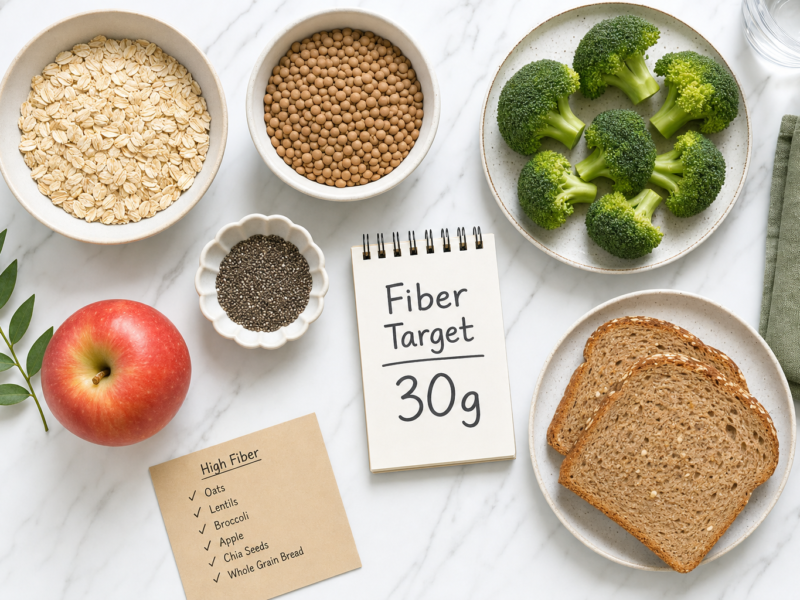
Start by tracking your current fiber intake for 3–5 days using a nutrition app to establish your baseline. Then implement gradual increases — no more than 5g additional fiber per week — using the foods in our best high fiber foods guide. Follow our 7-day fiber-rich meal plan as a practical starting framework. Drink at least 2 litres of water daily to support the fiber you’re adding. Most people notice meaningful improvement in energy, digestion, and appetite control within 2–3 weeks of consistently increasing fiber intake. Understand your daily fiber target and track progress toward it.
FAQ
What are the signs of not enough fiber?
Constipation, chronic bloating, frequent hunger after meals, blood sugar crashes, high LDL cholesterol, weight gain, and signs of gut microbiome imbalance are the most common indicators.
How quickly do symptoms improve when you increase fiber?
Constipation and bowel regularity typically improve within 3–5 days. Blood sugar stability improves within 1–2 weeks. Microbiome changes develop over 3–4 weeks of consistent intake.
Can low fiber cause weight gain?
Yes — insufficient fiber undermines satiety, disrupts appetite hormones, and contributes to blood sugar instability that drives overeating and fat storage.
Is bloating always a sign of too little fiber?
Not always — but chronic bloating that doesn’t resolve with dietary adjustments is often related to microbiome imbalance driven partly by insufficient fiber variety and quantity.
How do I know if my cholesterol is fiber-related?
If your LDL is elevated and your diet is low in oats, barley, legumes, and fruits, increasing soluble fiber is one of the first dietary interventions worth trying.
What is the fastest way to increase fiber intake?
Add chia seeds to breakfast (4g per tablespoon), swap white bread for whole grain (2g per slice), add a portion of legumes to lunch (12–15g per cup), and eat fresh fruit as snacks instead of processed foods.


 Emma Thornton
 James Hargreaves
 Daniel Brooks
 Sarah Mitchell