 James Hargreaves
Fiber and IBS — A Complex but Manageable Relationship
Irritable bowel syndrome (IBS) affects up to 15% of the global population and is characterised by chronic abdominal pain, bloating, and altered bowel habits — either constipation (IBS-C), diarrhoea (IBS-D), or both alternating (IBS-M). Fiber is one of the most important dietary factors in managing IBS — but not all fiber is equal, and the wrong type can significantly worsen symptoms. Choosing the right fiber for your IBS subtype is essential. For foundational context on fiber types, see our complete dietary fiber guide, and specifically soluble vs insoluble fiber.
Why Fiber Affects IBS Differently Than Healthy Guts
People with IBS have a heightened gut sensitivity — their intestinal nerves respond more acutely to distension, gas, and movement than in people without the condition. This means that the gas produced during fiber fermentation, or the increased bulk and movement caused by insoluble fiber, can trigger pain and discomfort in IBS at levels that would be perfectly comfortable for someone without the condition. Additionally, many IBS sufferers have altered gut microbiome composition and motility patterns that affect how fiber is processed.
Soluble Fiber for IBS — the Safer Choice
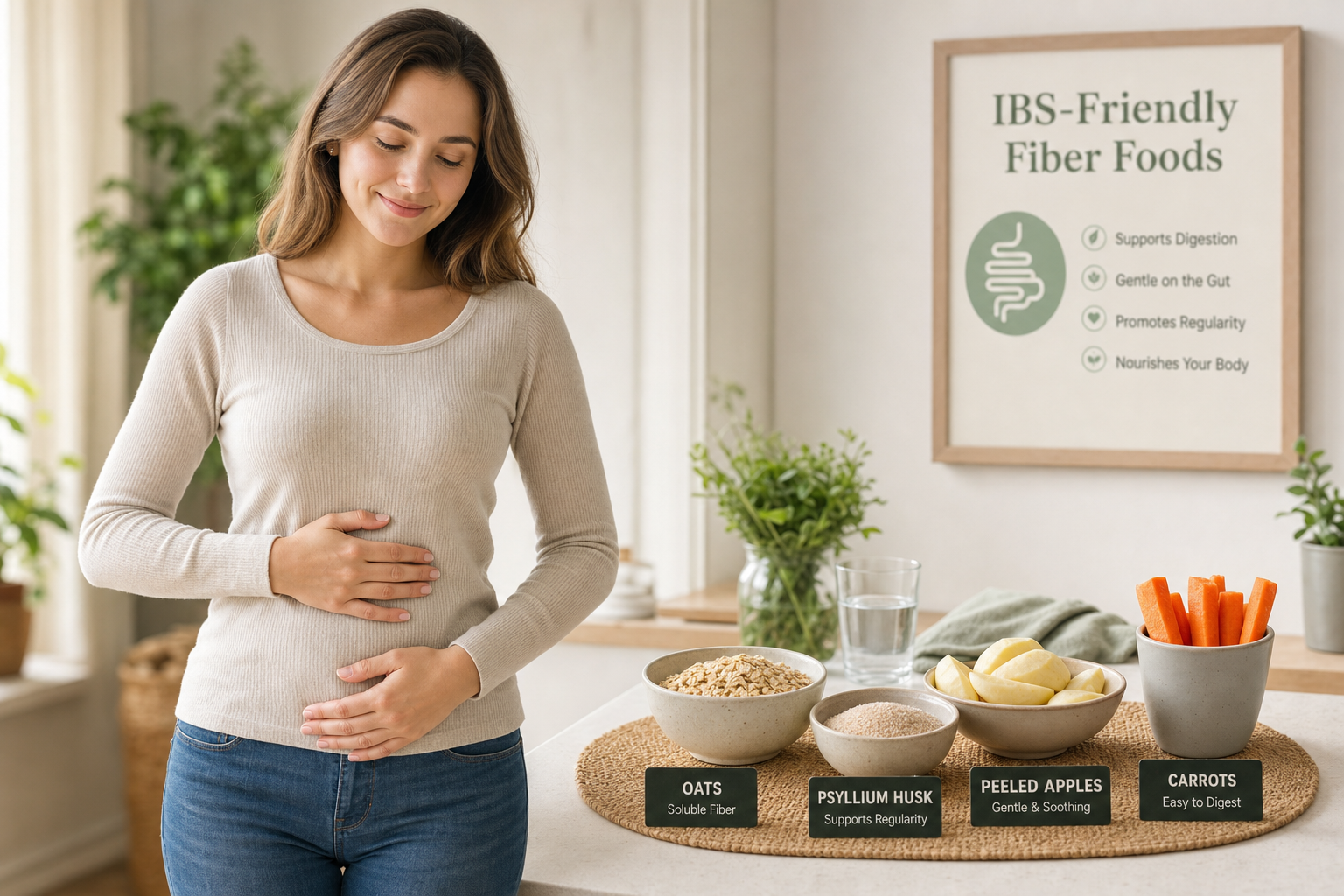
Soluble fiber is generally well-tolerated in IBS and often beneficial. It forms a gel that softens stool and slows transit — helpful for IBS-D (diarrhoea-predominant). It also adds gentle bulk that supports regularity — helpful for IBS-C (constipation-predominant). Crucially, soluble fiber is fermented more slowly and completely than insoluble fiber, producing less gas and causing less distension. Psyllium husk is the most studied and recommended fiber for IBS — multiple clinical trials have shown it reduces overall IBS symptom severity more than other fiber types. Other well-tolerated soluble fiber sources include oats, peeled apples and pears, carrots, and white rice. See our guide to fiber and digestion for broader context on how fiber affects gut function.
Insoluble Fiber and IBS — Use With Caution
Insoluble fiber — from wheat bran, whole grain bread, vegetable skins, and most nuts and seeds — is the type most likely to aggravate IBS symptoms. It increases colonic motility rapidly and produces more gas during fermentation, which can trigger cramping, urgency, and pain in IBS sufferers. This doesn’t mean insoluble fiber must be avoided entirely — many IBS patients tolerate moderate amounts well — but it should be introduced very gradually and reduced or eliminated if symptoms worsen. Raw vegetables, particularly cruciferous ones like broccoli and cabbage, are common triggers in IBS.
FODMAPs — the Fiber-IBS Complication
Many high-fiber foods are also high in FODMAPs — Fermentable Oligosaccharides, Disaccharides, Monosaccharides, and Polyols. These are short-chain carbohydrates that are rapidly fermented by gut bacteria, producing significant gas and osmotic effects that trigger IBS symptoms. High-FODMAP fiber foods include onions, garlic, leeks, most legumes, apples, pears, and wheat. The Low-FODMAP diet — developed at Monash University and the most evidence-supported dietary intervention for IBS — temporarily restricts these foods to identify triggers, then systematically reintroduces them. Many people with IBS can tolerate prebiotic foods like onions and garlic in small cooked amounts — see our guide to prebiotic fiber foods for context. If fiber supplements are needed, see our fiber supplements guide for IBS-appropriate options.
Practical Fiber Strategy for IBS
Start with psyllium husk — begin with half a teaspoon in plenty of water daily and increase very slowly over 4–6 weeks. Prioritise well-cooked, peeled vegetables over raw ones. Eat oats, peeled fruit, and white rice as your primary fiber sources initially. Avoid wheat bran and high-FODMAP foods during flares. Work with a registered dietitian experienced in IBS for personalised guidance, particularly for the Low-FODMAP approach.
FAQ
Is fiber good or bad for IBS?
It depends on the type. Soluble fiber (especially psyllium) is generally beneficial for IBS. Insoluble fiber and high-FODMAP fibers can worsen symptoms in many people.
What is the best fiber for IBS?
Psyllium husk has the strongest clinical evidence for IBS symptom relief. It’s effective for both IBS-C and IBS-D due to its dual bulking and stool-softening properties.
Does fiber make IBS worse?
Insoluble fiber and high-FODMAP fibers can worsen IBS. Soluble fiber introduced gradually typically improves or doesn’t worsen IBS symptoms.
Can people with IBS eat oats?
Yes — oats are low-FODMAP and high in soluble beta-glucan fiber, making them one of the best fiber foods for IBS.
What vegetables are safe for IBS?
Cooked carrots, courgette (zucchini), green beans, spinach, and peeled potatoes are among the most IBS-friendly vegetables. Raw cruciferous vegetables and onions are common triggers.
Should I take a fiber supplement if I have IBS?
Psyllium husk is the most evidence-supported supplement for IBS. Introduce very gradually with plenty of water. Avoid wheat bran supplements, which frequently worsen IBS.

 Rachel Summers
 Daniel Brooks
 Ashley
 James Hargreaves