 Rachel Summers
Why High-Fiber Foods Are the Foundation of Good Health
The easiest and most effective way to improve your fiber intake is to build your meals around whole, fiber-rich foods. Unlike supplements, whole foods deliver fiber alongside vitamins, minerals, antioxidants, and phytonutrients that work synergistically. For a full overview of what fiber is and why it matters, see our complete guide to dietary fiber.
The Best High-Fiber Foods by Category
Legumes — The Fiber Powerhouses
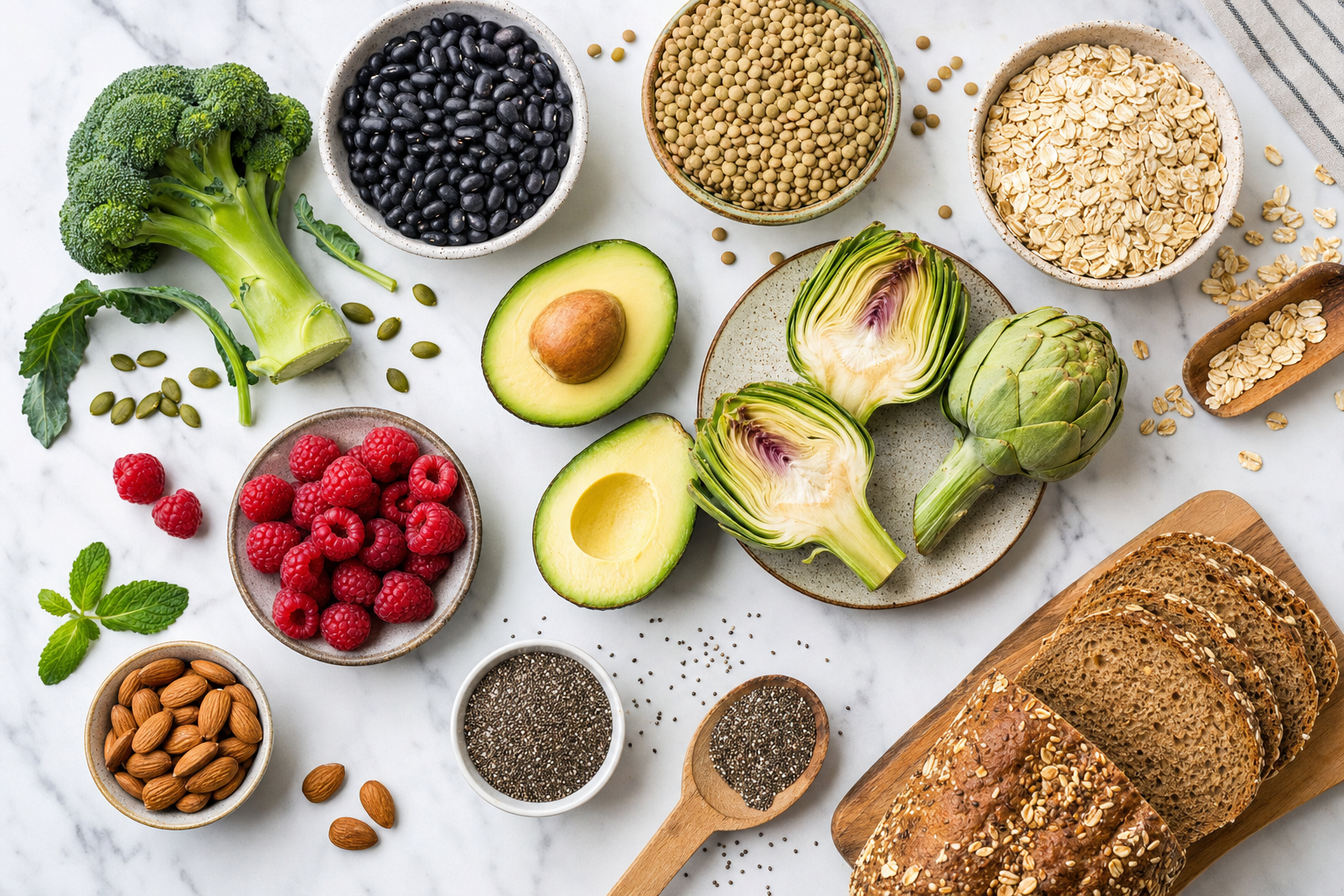
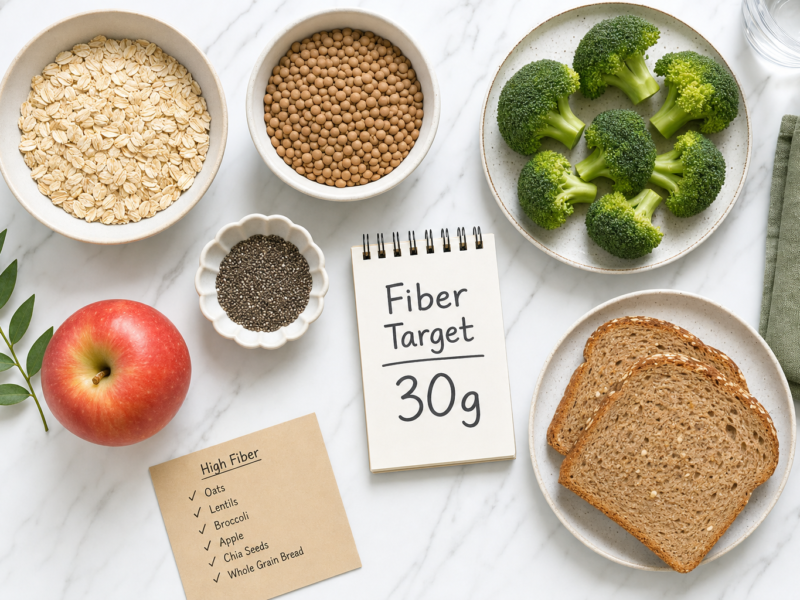
Legumes are by far the most fiber-dense foods available. A single cup of cooked lentils delivers 15.6g of fiber — more than half the daily recommended intake for women. Black beans provide 15g per cup, chickpeas 12.5g, kidney beans 13g, and split peas an impressive 16g. Legumes contain both soluble and insoluble fiber, making them exceptional for gut health, blood sugar control, and satiety. They’re also rich in plant protein, making them one of the most nutritionally complete foods available.
Whole Grains
Whole grains retain their bran and germ layers — where the fiber lives. Top choices include: oats (4g per 40g serving of rolled oats), barley (6g per cooked cup), quinoa (5g per cooked cup), brown rice (3.5g per cooked cup), whole wheat bread (2g per slice), and bulgur wheat (8g per cooked cup). Barley deserves special mention for its exceptionally high beta-glucan content — the soluble fiber most strongly linked to LDL cholesterol reduction.
Vegetables
Non-starchy vegetables provide fiber with minimal calories — making them the highest value fiber source per calorie. The standouts include: artichokes (10g per medium artichoke — one of the highest vegetable sources), Brussels sprouts (4g per cup), broccoli (5g per cup), sweet potato with skin (4g per medium potato), carrots (3.6g per cup), and green peas (9g per cup). Eating the skin of potatoes, sweet potatoes, and other root vegetables roughly doubles their fiber content.
Fruits
Fruits offer a combination of soluble pectin fiber and insoluble fiber, particularly in the skin. Top fiber-rich fruits include: raspberries (8g per cup — one of the highest fruit sources), pears with skin (5.5g), avocado (10g per whole avocado — exceptional), apples with skin (4.5g), oranges (3g), and bananas (3g with the added benefit of prebiotic fructooligosaccharides). Dried fruits like figs, apricots, and prunes are concentrated fiber sources — but consume in moderation due to their high sugar content.
Nuts and Seeds
Chia seeds are one of the most fiber-dense foods per gram in existence — a single tablespoon (12g) delivers 4g of fiber, and two tablespoons in water form a gel that is itself a potent source of soluble fiber. Flaxseeds provide 2.8g per tablespoon, almonds 3.5g per 30g serving, and pistachios 3g per 30g serving. Adding a tablespoon of chia or flaxseeds to oatmeal, yogurt, or a smoothie is one of the fastest ways to meaningfully increase daily fiber intake.
Foods That Help Prevent Blood Sugar Spikes
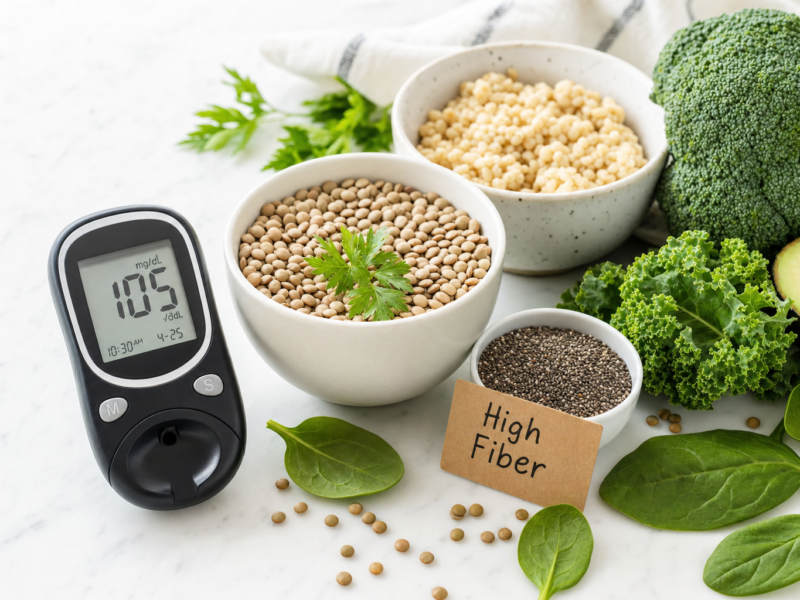
Some high-fiber foods are particularly effective at blunting post-meal glucose spikes — making them valuable for both metabolic health and weight management. Oats, barley, lentils, chia seeds, and apples all contain high amounts of soluble fiber that slow glucose absorption. Eating these foods at breakfast is especially beneficial for setting stable blood sugar through the morning. See our guide to fiber for gut health for more on how fiber choices affect your whole body.
How to Add More Fiber to Your Diet Practically
Building fiber into your diet doesn’t require radical changes. Start by swapping white bread for whole grain, adding a handful of spinach or broccoli to dinner, choosing lentil or bean-based soups for lunch, snacking on fruit with nuts rather than processed snacks, and adding chia or flaxseeds to your morning yogurt or oats. These simple swaps can add 10–15g of fiber daily without overhauling your diet. See our fiber-rich meal plan for a fully structured 7-day approach. Understanding how much fiber you need each day is a helpful first step before building your food list.
Foods to Limit for Better Fiber Balance
Ultra-processed foods — white bread, pastries, sugary cereals, chips, crackers, and fast food — are almost entirely stripped of fiber. A diet dominated by these foods makes it virtually impossible to hit daily fiber targets. Replacing even two or three processed food servings per day with whole food alternatives can dramatically shift your fiber intake in the right direction.
FAQ
What food is highest in fiber?
Legumes (lentils, black beans, split peas) and avocados are among the highest fiber foods per serving. Chia seeds are exceptional per gram.
Are oats high in fiber?
Yes — oats are rich in beta-glucan soluble fiber, which is particularly effective for lowering LDL cholesterol and stabilising blood sugar.
What vegetables have the most fiber?
Artichokes, green peas, Brussels sprouts, broccoli, and sweet potato with skin are among the highest-fiber vegetables.
Is fruit a good source of fiber?
Yes. Raspberries, pears, avocados, and apples (with skin) are excellent fruit fiber sources. Eat the skin whenever possible.
What nuts are highest in fiber?
Almonds, pistachios, and especially chia seeds and flaxseeds are the highest-fiber options in the nut and seed category.
How can I quickly increase my fiber intake?
Add chia seeds to yogurt or oats, swap refined grains for whole grains, eat legumes at lunch, and snack on fruit and nuts instead of processed foods.
Simple High-Fiber Food Swaps
White bread → whole grain bread (+2g fiber per slice). White rice → brown rice or quinoa (+2–3g per serving). Cornflakes → rolled oats (+3g per serving). Potato chips → air-popped popcorn (+3.5g per 30g). Fruit juice → whole fruit (+3–5g). Regular pasta → whole wheat or legume pasta (+4–6g per serving). Making all six swaps daily adds approximately 15–18g of fiber without any new foods or major recipe changes.

 James Hargreaves
 Sarah Mitchell

 Ashley