 Ashley
How Fiber Helps Control Blood Sugar
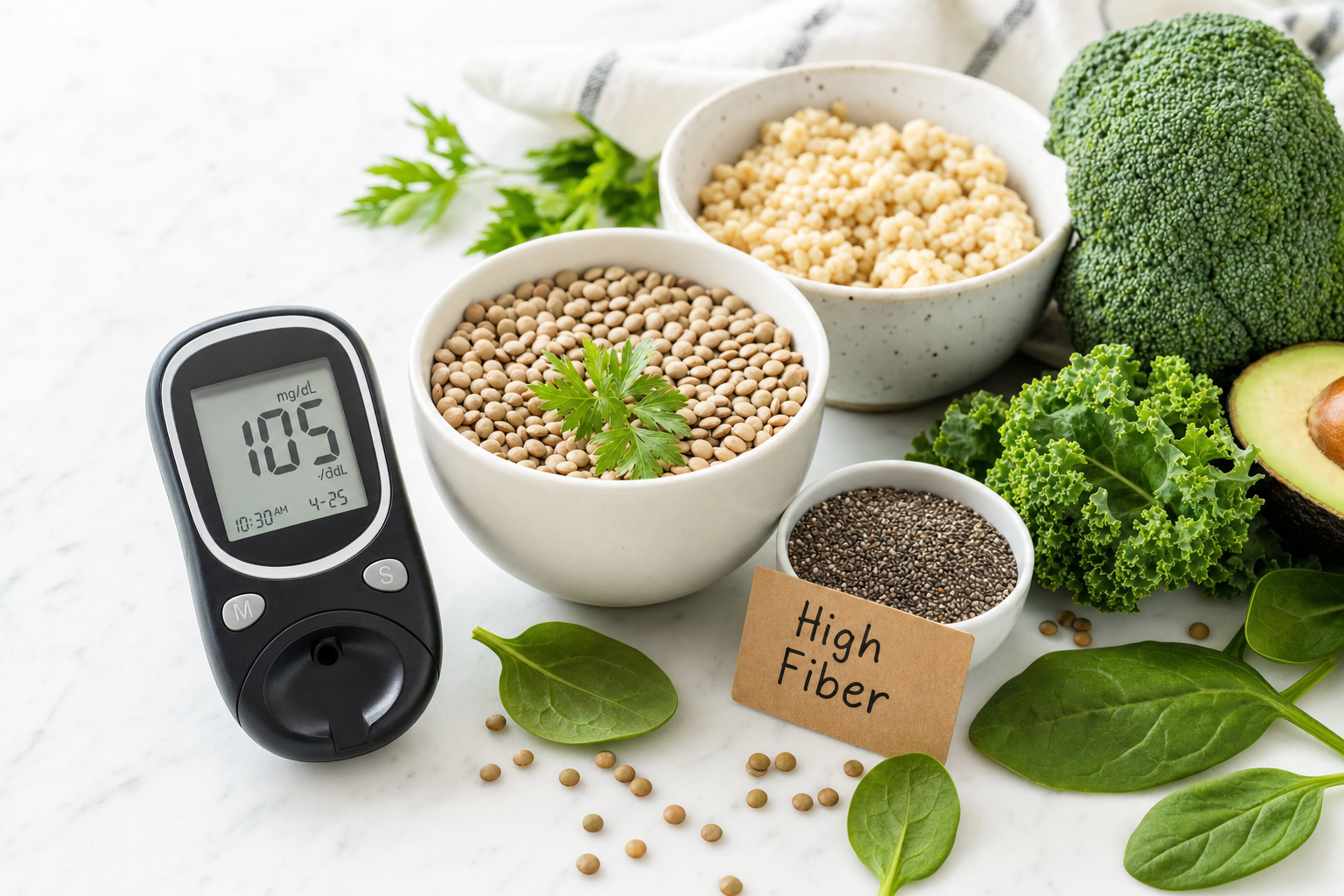
Among fiber’s many health benefits, its effect on blood sugar is one of the most clinically significant. Dietary fiber — particularly soluble fiber — fundamentally alters how your body processes glucose from carbohydrates, reducing the speed and height of blood sugar spikes after meals and improving insulin sensitivity over time. For a foundational understanding of fiber types and mechanisms, see our complete dietary fiber guide.
The Mechanism — How Fiber Slows Glucose Absorption
When you eat carbohydrates without fiber, glucose is absorbed rapidly into the bloodstream — causing a sharp spike in blood sugar that demands a large insulin response. Soluble fiber changes this dynamic completely. As it dissolves in water in your stomach and small intestine, it forms a viscous gel that physically slows the digestion of carbohydrates and the absorption of glucose through the intestinal wall. The result is a much gentler, more gradual rise in blood sugar — reducing both peak glucose levels and the insulin demand that follows. Understanding soluble vs insoluble fiber is important here — it is primarily soluble fiber that drives this glucose-moderating effect.
Fiber and Insulin Sensitivity
Beyond individual meals, consistent high-fiber intake improves insulin sensitivity over time. Short-chain fatty acids produced when gut bacteria ferment fiber — particularly propionate and butyrate — directly influence insulin signalling pathways and glucose metabolism in the liver, muscles, and adipose tissue. Regular high-fiber intake is associated with lower fasting insulin levels, better insulin sensitivity scores, and reduced risk of insulin resistance. This makes fiber one of the most important dietary tools not just for managing blood sugar, but for preventing metabolic syndrome and type 2 diabetes altogether.
Fiber and Type 2 Diabetes Risk
The epidemiological evidence linking high fiber intake to reduced diabetes risk is among the most consistent in nutritional science. Large prospective studies consistently find that people in the highest fiber intake quartile have 20–30% lower risk of developing type 2 diabetes compared to those in the lowest quartile. Whole grain consumption — the largest single contributor to fiber intake in most diets — is particularly strongly associated with reduced diabetes risk. Legumes show similarly powerful protective associations, likely due to their combination of high fiber, high protein, and very low glycemic index. The fiber-blood sugar relationship complements the broader picture of blood sugar management — for context, see also how diet affects blood sugar more broadly.
Best Fiber Foods for Blood Sugar Control
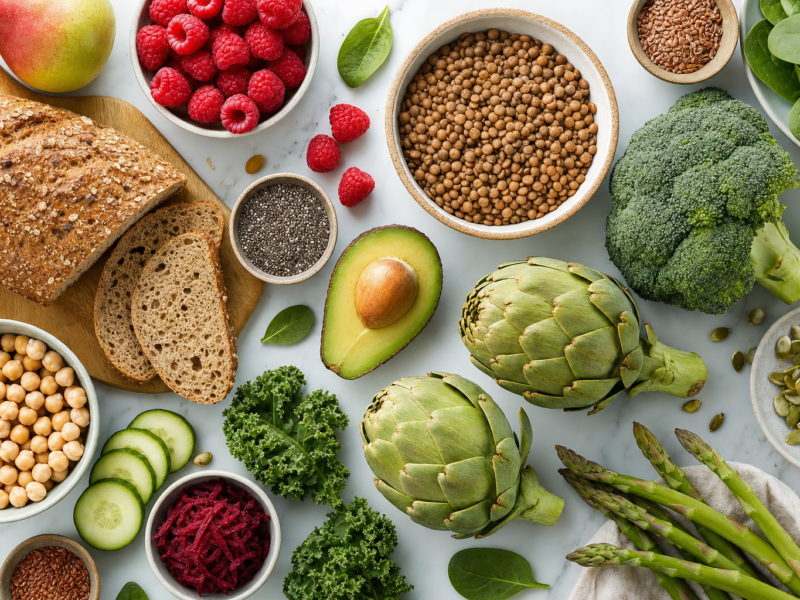
The most effective foods for blood sugar management through fiber are those highest in soluble fiber. Legumes (lentils, chickpeas, black beans, kidney beans) have some of the lowest glycemic indices of any carbohydrate food, largely due to their combination of soluble fiber and resistant starch. Oats — particularly steel-cut or rolled — provide beta-glucan that reduces post-meal glucose by 20–30% compared to refined grain alternatives. Chia seeds mixed with liquid form a gel almost immediately, making them extremely effective for slowing glucose absorption when added to meals. Barley has one of the lowest glycemic indices of all grains due to its exceptional beta-glucan content. Apples and pears provide pectin soluble fiber that moderates fruit sugar absorption. See our best high fiber foods guide for detailed fiber counts and serving guidance.
Practical Tips for Using Fiber to Manage Blood Sugar
Always eat carbohydrates alongside fiber — never alone. Add chia seeds or flaxseeds to any meal containing carbohydrates to immediately slow glucose absorption. Start every meal with vegetables before eating the carbohydrate portion. Choose legume-based meals over grain-based meals when blood sugar management is a priority. Replace white rice and pasta with lentils, chickpeas, or barley several times per week. Eat whole fruit rather than juice — the fiber in whole fruit dramatically moderates the sugar impact. Understanding how much fiber per day you need gives you a measurable target to work toward.
FAQ
Does fiber lower blood sugar?
Yes — soluble fiber slows glucose absorption from meals, reducing blood sugar spikes. Consistent high fiber intake also improves insulin sensitivity over time.
What fiber is best for blood sugar?
Soluble fiber from legumes, oats, chia seeds, barley, and psyllium husk has the strongest evidence for blood sugar management.
Can fiber prevent type 2 diabetes?
High fiber intake is associated with 20–30% lower risk of developing type 2 diabetes in large prospective studies.
How much fiber should I eat to control blood sugar?
Aim for 30+ grams daily, with emphasis on soluble fiber sources at every meal. Even adding 10g daily above your current intake produces measurable blood sugar improvements.
Does fiber help with insulin resistance?
Yes — through SCFA production and improved gut microbiome composition, consistent fiber intake improves insulin sensitivity over weeks to months.
Is fruit okay if I’m managing blood sugar?
Whole fruit is generally fine — the fiber in whole fruit dramatically moderates the glucose impact of fruit sugar. Fruit juice, however, has had this fiber removed and causes much sharper spikes.
Fibre and Blood Sugar Regulation: Key Questions Answered
How does fibre help regulate blood sugar?
Soluble fibre forms a viscous gel in the digestive tract that slows gastric emptying and the absorption of glucose into the bloodstream. This flattens the post-meal glucose spike and reduces the insulin response required. Insoluble fibre speeds transit and improves insulin sensitivity over time. Both types contribute to blood sugar regulation through different mechanisms.
What type of fibre is best for blood sugar control?
Soluble fibre has the strongest acute effect on blood sugar — it directly slows glucose absorption. Best sources: oats (beta-glucan), psyllium husk, lentils, beans, chia seeds, apples and barley. Insoluble fibre (wheat bran, vegetable skins) improves long-term insulin sensitivity and gut health but has less immediate impact on glucose spikes.
How much fibre per day helps with blood sugar?
Studies show measurable blood sugar benefits at intakes above 25-30g per day, with the strongest effects at 35-50g. Most adults eat only 15-17g. Adding just 10g of soluble fibre per day (roughly a cup of cooked lentils or oats with chia seeds) can reduce post-meal glucose spikes by 20-30% in people with insulin resistance.
Does fibre lower blood sugar immediately?
Soluble fibre taken with or just before a carbohydrate-containing meal reduces the glucose spike from that meal — the effect is acute and dose-dependent. It does not lower already-elevated blood sugar the way insulin or medication does. Think of it as a glucose buffer rather than a glucose lowerer.
What are the best high-fibre foods for blood sugar regulation?
In order of evidence strength: (1) Oats — beta-glucan is the most studied fibre for glucose control. (2) Legumes — lentils, chickpeas, kidney beans. (3) Psyllium husk — strong clinical evidence for reducing post-meal spikes. (4) Chia seeds — high soluble fibre plus omega-3. (5) Barley — the highest beta-glucan content of any grain. (6) Non-starchy vegetables with every meal.

 Sarah Mitchell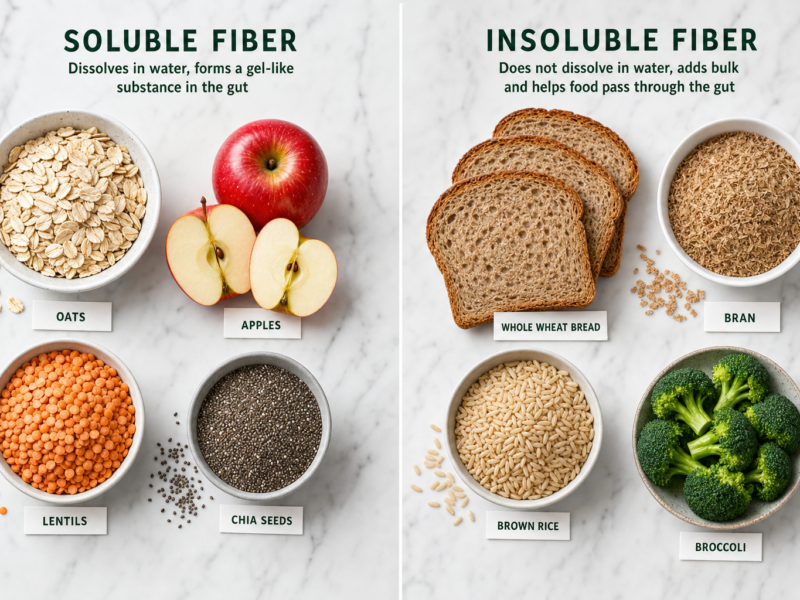
 James Hargreaves

 Daniel Brooks
 Rachel Summers