 Emma Thornton
What Are Prebiotic Fiber Foods?
Prebiotic fiber foods are plant foods containing specific types of dietary fiber — primarily inulin, fructooligosaccharides (FOS), and galactooligosaccharides (GOS) — that selectively feed and stimulate the growth of beneficial bacteria in the gut, without being absorbed or digested by the body itself. Unlike general dietary fiber, prebiotic fiber has a targeted effect on the microbiome, consistently increasing populations of beneficial Bifidobacterium and Lactobacillus species while suppressing potentially harmful bacteria. For a foundational overview of fiber types, see our complete dietary fiber guide. For the broader story of how fiber interacts with the microbiome, see our guide to gut microbiome and fiber.
The Best Prebiotic Fiber Foods
Garlic
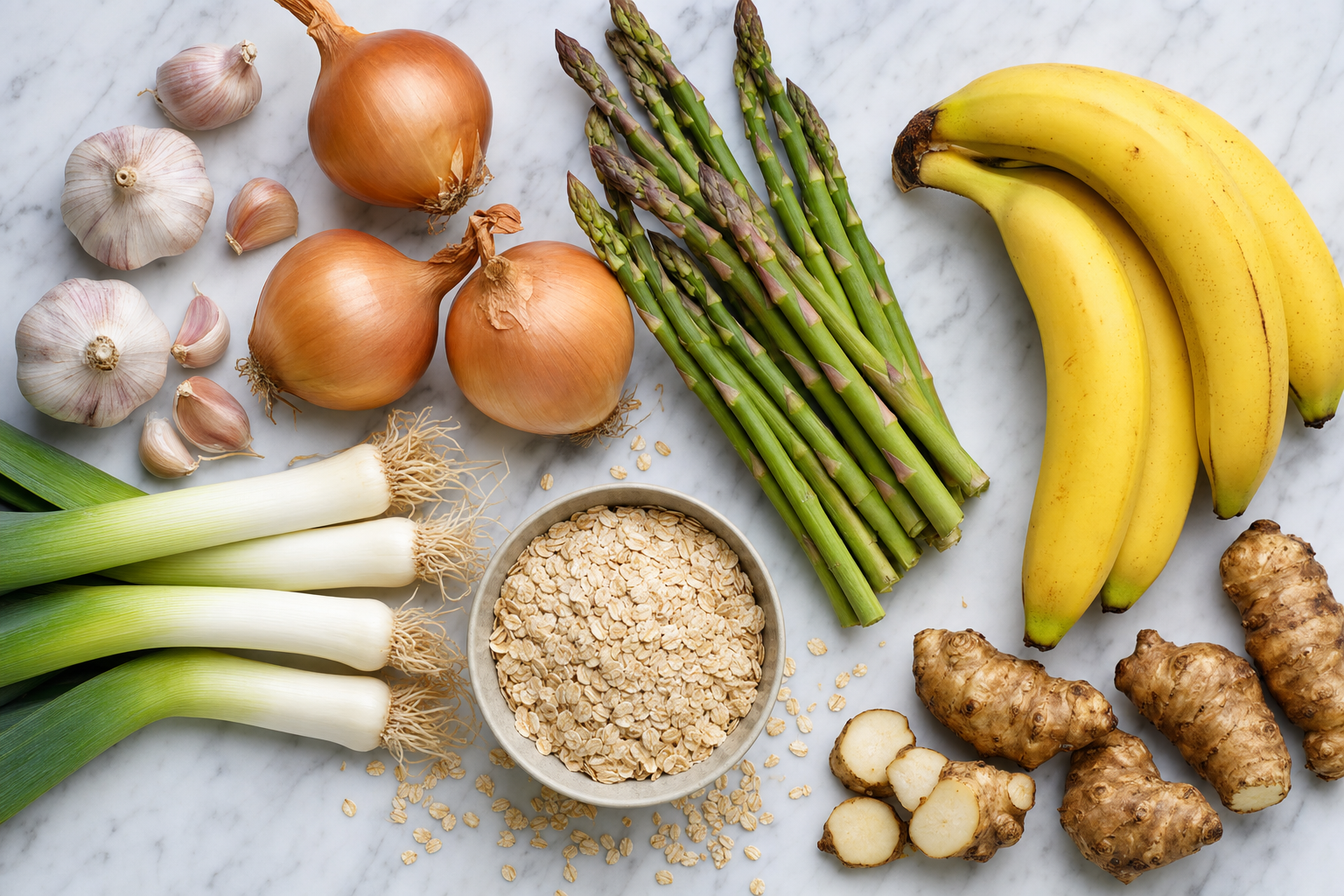
Garlic is one of the richest dietary sources of inulin and FOS — with approximately 9–16% of its dry weight consisting of prebiotic compounds. Both raw and cooked garlic provide meaningful prebiotic benefit, though raw garlic has a higher FOS content. Adding garlic to virtually every savoury dish is the simplest way to build prebiotic intake into daily meals. Even small amounts — one or two cloves per day — produce measurable microbiome effects.
Onions and Leeks
Onions provide 2–6g of inulin and FOS per 100g — making them one of the most concentrated everyday prebiotic sources. Leeks are similarly rich and also provide a wide range of polyphenols that support microbiome health synergistically. Both are best eaten partially cooked — excessive heat can degrade some prebiotic compounds — and their prebiotic content is retained well in soups and stews.
Asparagus
Asparagus contains 2–3g of inulin per 100g and is one of the most well-researched prebiotic vegetables. Studies show that regular asparagus consumption significantly increases Bifidobacterium populations in the gut. It is best steamed or lightly roasted to preserve its prebiotic fiber content.
Jerusalem Artichokes
Jerusalem artichokes (also called sunchokes) are the most concentrated whole-food source of inulin available — containing up to 20g of inulin per 100g. This makes them extraordinarily potent prebiotic foods, though their high inulin content can cause significant gas and bloating in people not accustomed to prebiotic fiber. Introduce them gradually, starting with small amounts (30–50g) and building tolerance over several weeks.
Chicory Root
Chicory root is the primary commercial source of extracted inulin — the inulin fiber added to many functional food products and fiber supplements. Eating chicory root directly (it can be roasted and used as a coffee substitute, or eaten raw as a bitter salad leaf) provides extremely high inulin content. It’s one of the most studied prebiotic fiber sources in clinical research.
Bananas — Especially Slightly Unripe
Bananas contain fructooligosaccharides and resistant starch — both of which function as prebiotic fibers. Slightly underripe bananas (with a hint of green on the skin) have significantly higher resistant starch content than fully ripe ones, as ripening converts resistant starch to digestible sugar. Eating a slightly underripe banana daily is a practical, accessible, and well-tolerated way to increase prebiotic intake.
Oats
Oats are uniquely positioned as both a prebiotic fiber source (beta-glucan is partially fermented by gut bacteria) and a source of resistant starch (particularly when cooked and cooled overnight). Overnight oats prepared the night before have measurably higher resistant starch content than freshly cooked oats — making them a particularly gut-healthy breakfast option.
How to Build Prebiotic Foods Into Your Diet
The key is consistency and variety — rather than eating large amounts of one prebiotic food, distribute small to moderate amounts of several different prebiotic foods throughout the day. Add garlic and onions to every savoury meal. Include asparagus or leeks as a vegetable side two to three times per week. Eat a slightly underripe banana or overnight oats for breakfast several times per week. Add chicory-based drinks as a coffee alternative. See our fiber for gut health guide for how these foods combine with other fiber types for maximum microbiome benefit. Our fiber-rich meal plan shows how to incorporate prebiotic foods alongside other high-fiber choices. For the best overall list of fiber foods, see our best high fiber foods guide.
FAQ
What are prebiotic foods?
Foods containing specific fiber compounds (inulin, FOS, GOS, resistant starch) that selectively feed and grow beneficial gut bacteria, particularly Bifidobacterium and Lactobacillus.
What is the best prebiotic food?
Garlic, onions, Jerusalem artichokes, asparagus, leeks, and chicory root are the most potent whole-food prebiotic sources. Slightly underripe bananas and oats are gentler, everyday options.
Do prebiotics need to be taken with probiotics?
Not necessarily, but combining prebiotic foods with probiotic foods (yogurt, kefir, kimchi, sauerkraut) produces synergistic benefits — the prebiotics feed the probiotic bacteria.
How much prebiotic fiber do I need?
Around 5g of prebiotic fiber daily is considered a meaningful dose. Two cloves of garlic, a portion of asparagus, and a slightly underripe banana together deliver approximately this amount.
Can prebiotic foods cause bloating?
Yes — particularly Jerusalem artichokes, chicory root, and raw onions in large amounts. Introduce gradually to allow your microbiome time to adapt.
Are prebiotic supplements as good as food?
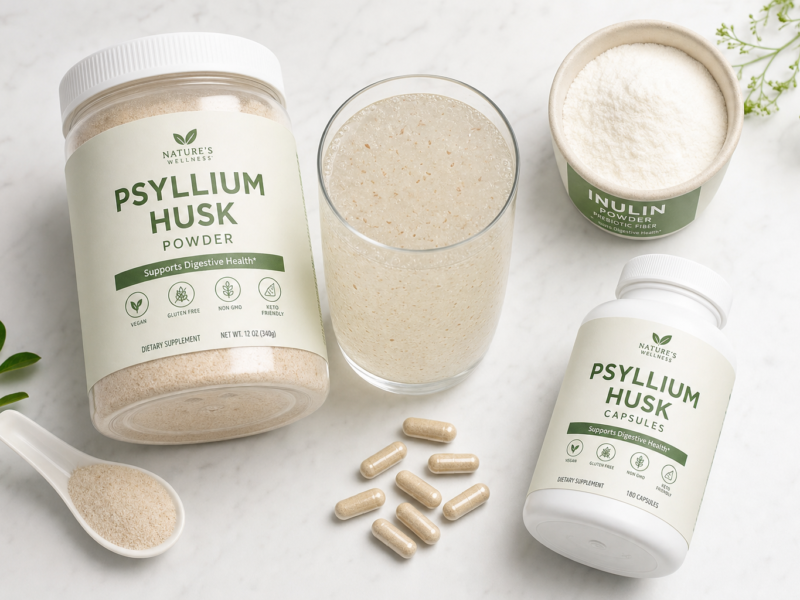
Food sources are preferable — they provide prebiotic fiber alongside polyphenols, vitamins, and minerals. Inulin supplements are a useful top-up but should not replace dietary prebiotic foods.

 Ashley
 Sarah Mitchell
 Rachel Summers
 James Hargreaves
 Daniel Brooks