
 Dr. Maya Chen
Gelatin has been used as a gut-healing food for centuries — bone broth, the most ancient gut health remedy, gets its therapeutic properties largely from its gelatin content. Modern research has begun to explain why it works. Here’s what the evidence shows about gelatin and gut health.
What Makes Gelatin Good for Gut Health?
Gelatin is cooked collagen — the most abundant protein in connective tissue. It is extraordinarily rich in glycine, proline, and hydroxyproline — amino acids that are scarce in muscle meat (chicken breast, beef steak) but abundant in the connective tissue, skin, and bones that modern diets have largely abandoned.
It’s the glycine content — approximately 27% of gelatin’s amino acids — that drives most of gelatin’s gut health benefits.
How Gelatin Supports the Gut
1. Intestinal Lining Integrity (Leaky Gut)
Glycine is a critical building block for the tight junction proteins that hold intestinal epithelial cells together — maintaining a selective barrier that allows nutrients through while keeping pathogens, toxins, and undigested food particles out. When tight junctions break down (increased intestinal permeability, or “leaky gut”), systemic inflammation results.
Animal studies consistently show glycine supplementation strengthens tight junctions and reduces intestinal permeability. Human studies are limited but directionally consistent. A 2017 study found that glycine administration protected against intestinal inflammation and preserved barrier function under inflammatory conditions.
2. Anti-Inflammatory Effects in the Gut
Glycine is a potent anti-inflammatory amino acid. It inhibits NF-κB activation in intestinal cells, reducing inflammatory cytokine production. It also binds to glycine-gated chloride channels on macrophages, hyperpolarising these immune cells and reducing their inflammatory output. This has direct implications for conditions driven by intestinal inflammation — including IBD, Crohn’s, and ulcerative colitis, where glycine has shown benefits in some animal models.
3. Gastric Acid Secretion Support
Gelatin stimulates gastric acid secretion — important because low stomach acid (hypochlorhydria) is a widespread and underappreciated cause of digestive symptoms including bloating, poor protein digestion, bacterial overgrowth, and nutrient malabsorption. Taking gelatin before or with meals supports the digestive process from the start.
4. Gut Motility
Gelatin absorbs water and forms a gel in the digestive tract, which may help normalise gut transit time — slowing transit in cases of diarrhoea and potentially improving it in constipation by adding bulk. This gel-forming property also helps soothe the intestinal lining during digestion.
Gelatin vs Bone Broth for Gut Health
| Feature | Plain Gelatin Powder | Bone Broth |
|---|---|---|
| Glycine content | High and standardised (~2–3g per tablespoon) | Variable (depends on bones and cook time) |
| Additional nutrients | None beyond amino acids | Minerals, electrolytes, fat |
Convenience
Related Articles
Related Articles
Related reading: Leaky Gut Symptoms, How to Heal Leaky Gut, Best Probiotic Strains, Is Kimchi Good for Gut Health?. 
You May Also LikeFermented Foods and Longevity: How Probiotics Are Reshaping Nutrition in 2025
Fermented foods like kimchi, yogurt, and kombucha boost gut health, reduce inflammation, and extend lifespan. Science in 2025 proves why they matter.
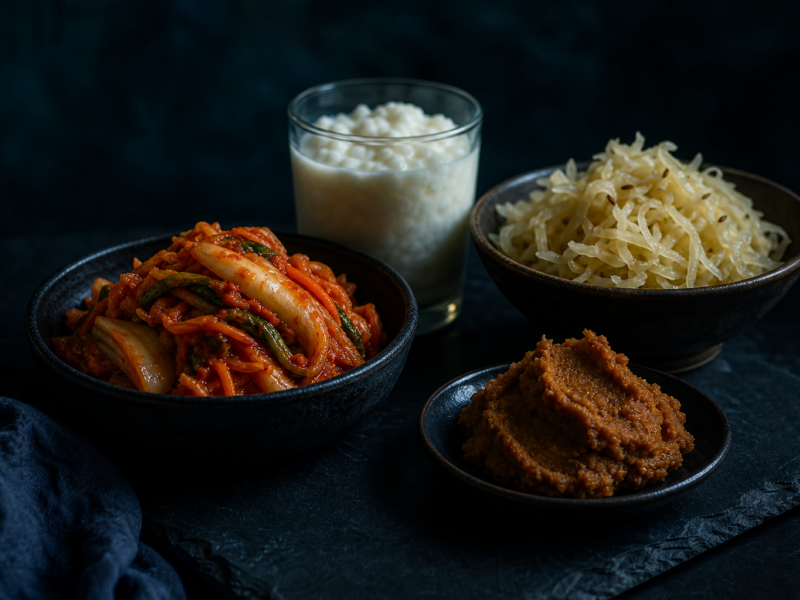
Is Kimchi Good for Gut Health? What the Research Actually Shows
Yes — kimchi contains live Lactobacillus bacteria that significantly improve gut microbiome diversity and reduce inflammation. Here’s what the research actually shows.
Bentonite Clay for Digestion: What It Actually Does, the Real Risks, and Who Should Avoid It
Bentonite clay is popular for gut health and bloating — but the evidence is thin and the risks are real. Here’s what you actually need to know before trying it.
Synbiotics vs Probiotics: What’s the Difference and Which Is Better?
Synbiotics combine probiotics with prebiotics that specifically feed them — improving survival and colonisation. Here’s how synbiotics differ from probiotics and which is better.
High-Fiber Eating in 2025: Daily Targets, Top Foods & a Simple 7-Day Plan
Most adults fall short on fiber. Get daily targets, top foods, a simple 7-day plan, label tips, and two quick videos—no strict rules.
Gut Health Tips: Simple Daily Habits to Improve Digestion (2026)
Get practical gut health tips you can use today: food choices, hydration, movement, sleep, stress management, and small habits that improve digestion naturally.
|
 Emma Thornton
 Dr. Maya Chen
 Rachel Summers
 James Hargreaves
 Daniel Brooks