James Hargreaves
Fast answer: Most adults fall short on fiber. Raising your intake with simple, whole-food swaps may support steadier energy, regular digestion, and fuller meals—without strict rules.
In this guide: what fiber is, daily targets, the best foods, a 7-day starter plan, label tips, and FAQs.
What is fiber (and why it matters)?
Fiber is a carbohydrate your body can’t digest. It passes through the gut and helps keep you full, supports regularity, and may help maintain healthy cholesterol and blood sugar when part of a balanced diet.
Two main types (both are useful):
-
Soluble fiber: forms a gel (e.g., oats, beans, apples).
-
Insoluble fiber: adds bulk (e.g., whole-wheat, veggies).

How much fiber per day?
General adult targets are often ~25 g/day (women) and ~38 g/day (men), or ~14 g per 1,000 kcal you eat. Most people get only ~15 g/day. Increase gradually and drink water.
Quick portions that add up (~25–35 g/day):
-
Breakfast: ½ cup oats (+4 g) + ½ cup berries (+4 g)
-
Snack: Apple (+4 g) + 2 Tbsp peanut butter (+2 g)
-
Lunch: 1 cup bean chili (+10 g)
-
Dinner: ½ cup quinoa (+3 g) + 1 cup broccoli (+5 g)
Go slow. Jumping from 10 g to 30 g in a day can cause gas or bloating. Add 5 g every few days and hydrate.
Fred Hutch — What is fiber? Clear overview of types and benefits
Top high-fiber foods (easy wins)
-
Beans & lentils: black beans, chickpeas, lentils
-
Whole grains: oats, quinoa, whole-wheat pasta, brown rice
-
Fruits: berries, pears, apples, oranges
-
Veggies: broccoli, carrots, leafy greens, peas
-
Nuts & seeds: almonds, chia, flax (stir into yogurt/oats)
-
Whole-food snacks: air-popped popcorn, roasted chickpeas

7-Day fiber starter plan (simple & flexible)
Rules of thumb:
-
Build each meal with protein + fiber + healthy fats.
-
Keep produce at 2–3 cups/day and whole grains/legumes most days.
-
Swap ultra-processed snacks for fruit, nuts, or yogurt.
Day 1 — Oats + berries + chia · Wrap with hummus/chicken/greens · Bean chili + salad
Day 2 — Whole-grain toast + eggs + tomatoes · Lentil soup · Salmon + quinoa + broccoli
Day 3 — Greek yogurt + pear + almonds · Brown-rice/black-bean bowl · Tofu stir-fry + soba
Day 4 — Overnight oats + cinnamon · Chickpea salad · Turkey meatballs + whole-wheat pasta + salad
Day 5 — Smoothie (spinach, berries, flax, yogurt, water) · Tuna + white-bean salad · Baked potato (skin on) + cottage cheese + veg
Day 6 — Avocado toast + orange · Quinoa tabbouleh + feta · Chili-spiced lentils + roasted veg
Day 7 — Oat-banana pancakes + berries · Leftover lentils in whole-grain wrap · Grilled chicken + farro + green beans
Label tips (60 seconds)
-
Scan ingredients: If sugars/refined flours/oils lead the list, pick another option.
-
Added sugars: Keep low; try water or unsweetened drinks.
-
Fiber line: Choose ≥ 3 g/serving when you can.
-
Protein: Aim 20–30 g/meal to help you stay full.
-
Serving size: Many packages contain 2+ servings—check the label.
FAQs
Is fiber better from food or supplements?
Food first. Whole foods bring vitamins, minerals, and phytonutrients too. Supplements (e.g., psyllium) can help some people—ask your clinician.
Will more fiber help with weight?
Fiber-rich meals are more filling and lower in energy density, which may help you eat fewer calories across the day. Results vary.
How fast should I increase fiber?
Add ~5 g every few days, drink water, and listen to your gut. If you feel gassy or bloated, slow down.
Do I need both soluble and insoluble fiber?
Yes—most foods contain a mix. Aim for variety: beans, whole grains, fruits, veggies, nuts, and seeds.
Any simple weekly habit to keep fiber high?
Batch-cook beans or lentils; freeze portions. Keep oats, frozen veg, and canned beans on hand for fast meals.
Conclusion
High-fiber eating is simple: build meals around plants and whole grains, add beans most days, and keep water handy. Start with one swap per meal this week and track how you feel.
Do this today: Add oats, beans, berries, and a leafy-green mix to your shop. That single basket sets you up for 25–35 g/day without strict rules.
References (high-authority)
-
USDA & HHS — Dietary Guidelines for Americans 2020–2025
-
Mayo Clinic — Dietary fiber overview
-
Harvard T.H. Chan — The Nutrition Source: Fiber
-
American Heart Association — Fiber intake gap


 Emma Thornton
 Dr. Maya Chen
 Sarah Mitchell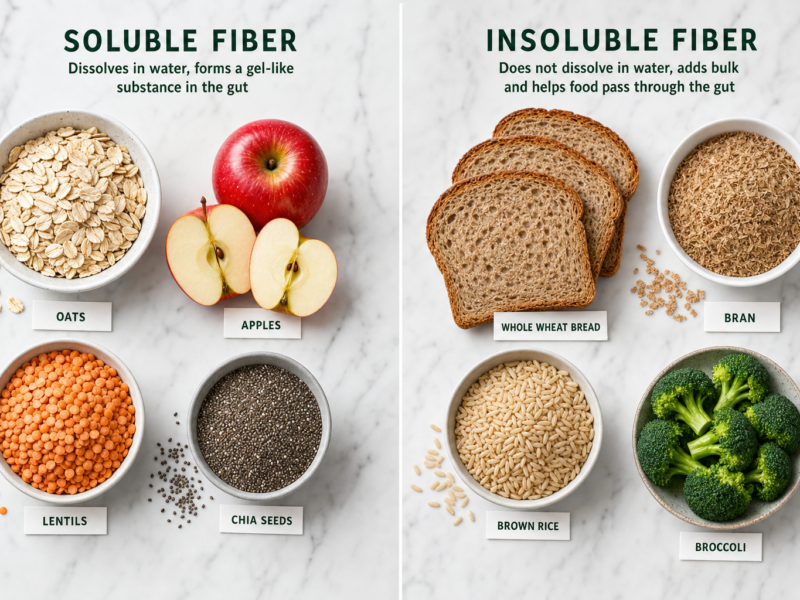
 James Hargreaves