 Ashley
Why Fiber Is the Foundation of Gut Health
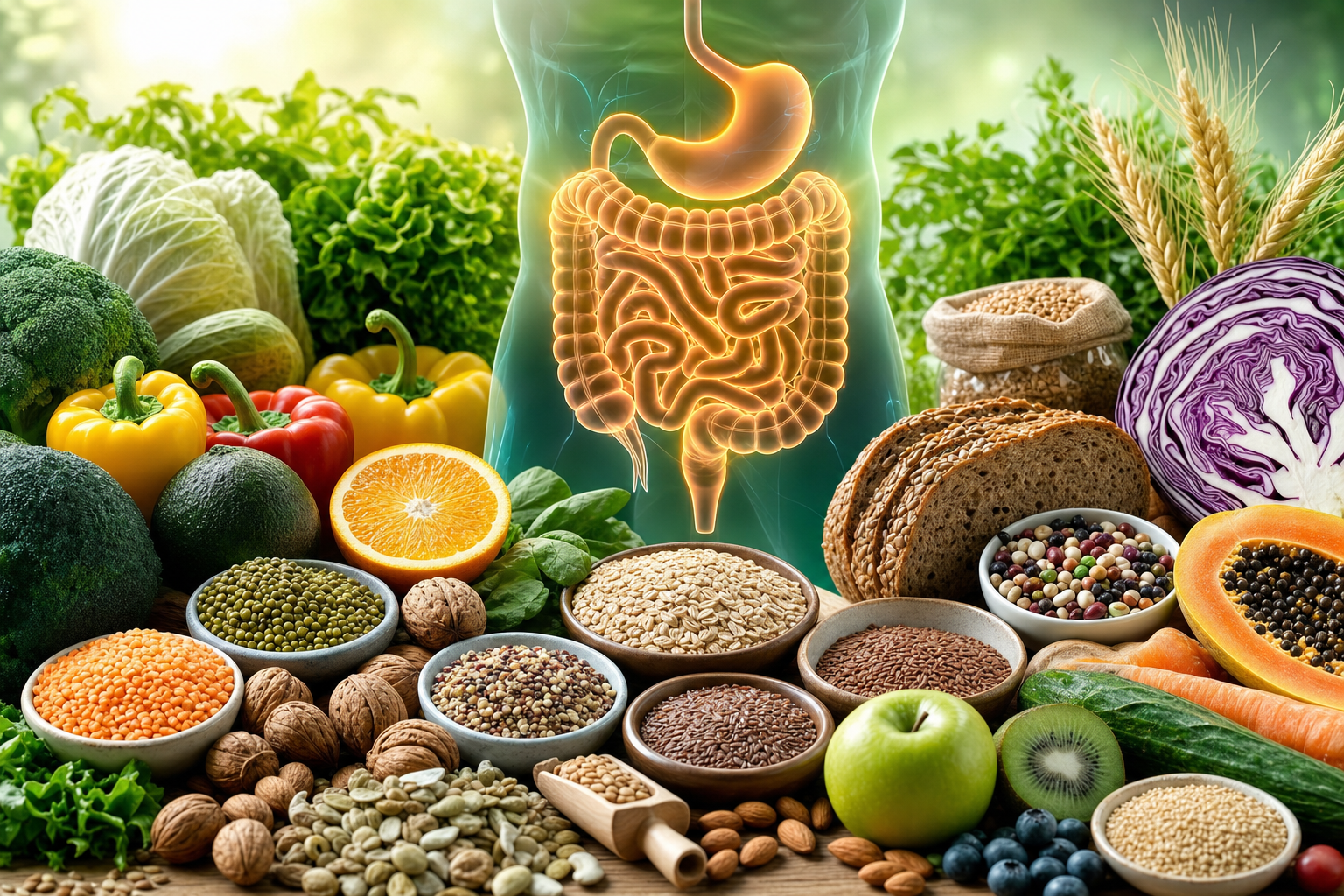
Of all the nutrients that affect gut health, dietary fiber has the most profound and wide-ranging impact. It feeds beneficial gut bacteria, regulates bowel function, strengthens the intestinal lining, reduces inflammation, and shapes the composition of your gut microbiome — the vast community of trillions of microorganisms that live in your large intestine and influence everything from digestion to immunity to mood. For a complete introduction to what fiber is and the different types, see our complete dietary fiber guide.
How Fiber Feeds Your Gut Bacteria
The human gut hosts approximately 100 trillion microorganisms — bacteria, fungi, viruses, and other microbes — that collectively form the gut microbiome. This community is essential to health, influencing immune function, inflammation, mental health, weight regulation, and metabolic health. The single most important dietary factor shaping the microbiome is what you feed it — and its preferred food is fiber.
When fiber reaches the large intestine undigested, gut bacteria ferment it as fuel. This fermentation process produces short-chain fatty acids (SCFAs) — particularly butyrate, propionate, and acetate — which are among the most health-promoting compounds the gut produces. Butyrate is the primary energy source for colonocytes (the cells lining the colon), and it plays a critical role in maintaining the integrity of the intestinal barrier and reducing colon cancer risk. Understanding how fiber interacts with the gut microbiome reveals just how fundamental it is to overall health.
Fiber and the Gut Barrier
The intestinal lining is a single layer of epithelial cells that serves as the primary barrier between the contents of your gut and your bloodstream. A strong, intact gut barrier prevents bacteria, toxins, and undigested food particles from leaking into circulation — a phenomenon sometimes called “leaky gut” or increased intestinal permeability.
Butyrate produced from fiber fermentation is the primary fuel for these epithelial cells and is essential for maintaining tight junction proteins that hold the gut barrier together. Low-fiber diets are consistently associated with reduced butyrate production, thinner gut mucus layers, and compromised barrier integrity. Higher fiber intake supports a robust, well-sealed gut lining.
Fiber and Bowel Regularity
Insoluble fiber adds bulk to stool and speeds transit time through the colon — making it the most direct dietary intervention for constipation. Soluble fiber absorbs water and softens stool, making it easier to pass. Together, the two types of fiber work synergistically to maintain healthy, regular bowel movements without straining. See our guide to fiber and digestion for a detailed look at how different fiber types affect digestive comfort and regularity. For conditions like IBS where fiber selection is more nuanced, our guide to fiber for IBS covers the evidence in depth.
Fiber, Inflammation, and Immune Function
Chronic low-grade inflammation is a root driver of nearly every major chronic disease — from heart disease and type 2 diabetes to depression and dementia. Fiber helps reduce systemic inflammation through multiple mechanisms: by feeding anti-inflammatory bacteria, by producing butyrate which directly suppresses inflammatory signalling in the gut lining, and by improving the diversity of the microbiome (greater diversity is consistently associated with lower inflammatory markers). Prebiotic fiber foods — covered in our guide to prebiotic fiber foods — are particularly potent in this regard.
The Gut-Brain Connection and Fiber
The gut and brain communicate bidirectionally through what is called the gut-brain axis — a complex network of neural, hormonal, and immune signals connecting the enteric nervous system (the gut’s own nervous system) with the central nervous system. The gut microbiome plays a central role in this communication, influencing mood, stress response, anxiety, and even cognitive function. SCFAs produced from fiber fermentation influence the production of serotonin and GABA — neurotransmitters that regulate mood and anxiety. Studies have shown that higher fiber intake and greater microbiome diversity are associated with lower rates of depression and anxiety.
How Much Fiber Does Your Gut Need?
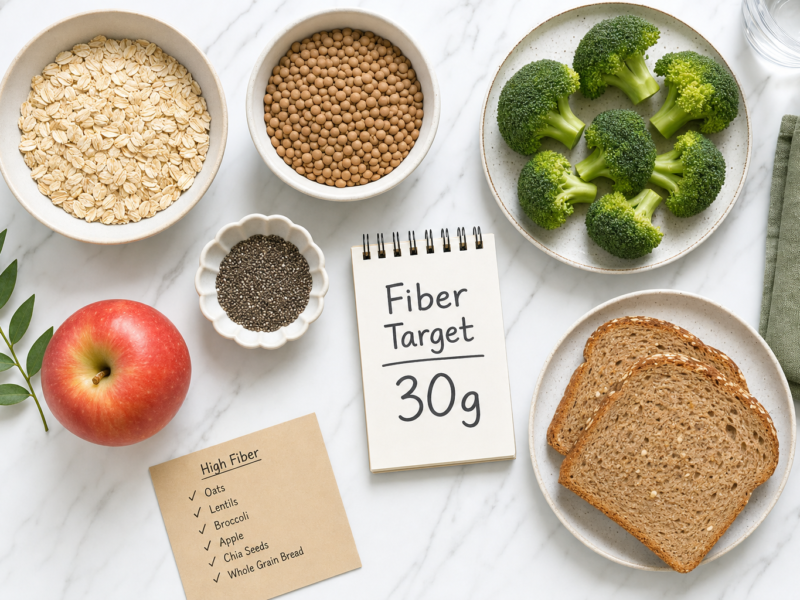
For optimal gut health, most research suggests that 30+ grams of fiber per day from a diverse range of plant foods produces the greatest microbiome benefit. Variety matters as much as quantity — different types of fiber feed different bacterial species, so eating a wide range of plant foods (the “30 plants per week” principle) is more beneficial than consuming large amounts of a single fiber source. See our guide to how much fiber per day for detailed targets and practical strategies.
FAQ
How does fiber help gut health?
Fiber feeds beneficial gut bacteria, produces health-promoting short-chain fatty acids, strengthens the gut barrier, regulates bowel movements, and reduces gut inflammation.
What type of fiber is best for gut health?
Both types are important — soluble fiber (especially prebiotic types) feeds gut bacteria best, while insoluble fiber supports regularity. Diversity of fiber sources is most beneficial overall.
How much fiber do I need for good gut health?
30+ grams per day from a variety of plant foods is the target most supported by gut health research, aiming for 30 different plant foods per week.
Does fiber help with bloating?
Introducing fiber gradually prevents bloating. Once the gut microbiome adapts (usually 2–4 weeks), most people find that higher fiber intake actually reduces chronic bloating by improving gut motility and bacteria balance.
Can fiber heal leaky gut?
High fiber intake — particularly prebiotic and butyrate-producing fibers — supports gut barrier integrity and reduces intestinal permeability over time.
What are the best foods for gut health?
Legumes, oats, vegetables, fruits, garlic, onions, leeks, asparagus, and fermented foods alongside high-fiber whole grains are the best dietary foundation for gut health.


 Ashley
 Rachel Summers
 Sarah Mitchell

 James Hargreaves