 James Hargreaves
How to Build a Supplement Stack Safely
A supplement stack is a combination of supplements taken together to support a specific health or performance goal. The concept is straightforward: individual supplements address individual gaps; stacking combines those with complementary mechanisms for greater combined effect. The key word is “complementary” — a well-designed stack avoids redundancy, unnecessary overlap, and unsafe combinations. For a foundational overview of supplements individually, see our complete supplement guide. For safety guidance on combinations, see our supplement safety guide.
The most important principle when building any stack: start with the basics (vitamin D, magnesium, omega-3s) before adding more targeted supplements. Add one new supplement at a time so you can identify what’s working. Keep the total number manageable — more is not better, and a simpler stack you actually take consistently beats a complex one you forget half of.
What a Supplement Stack Is
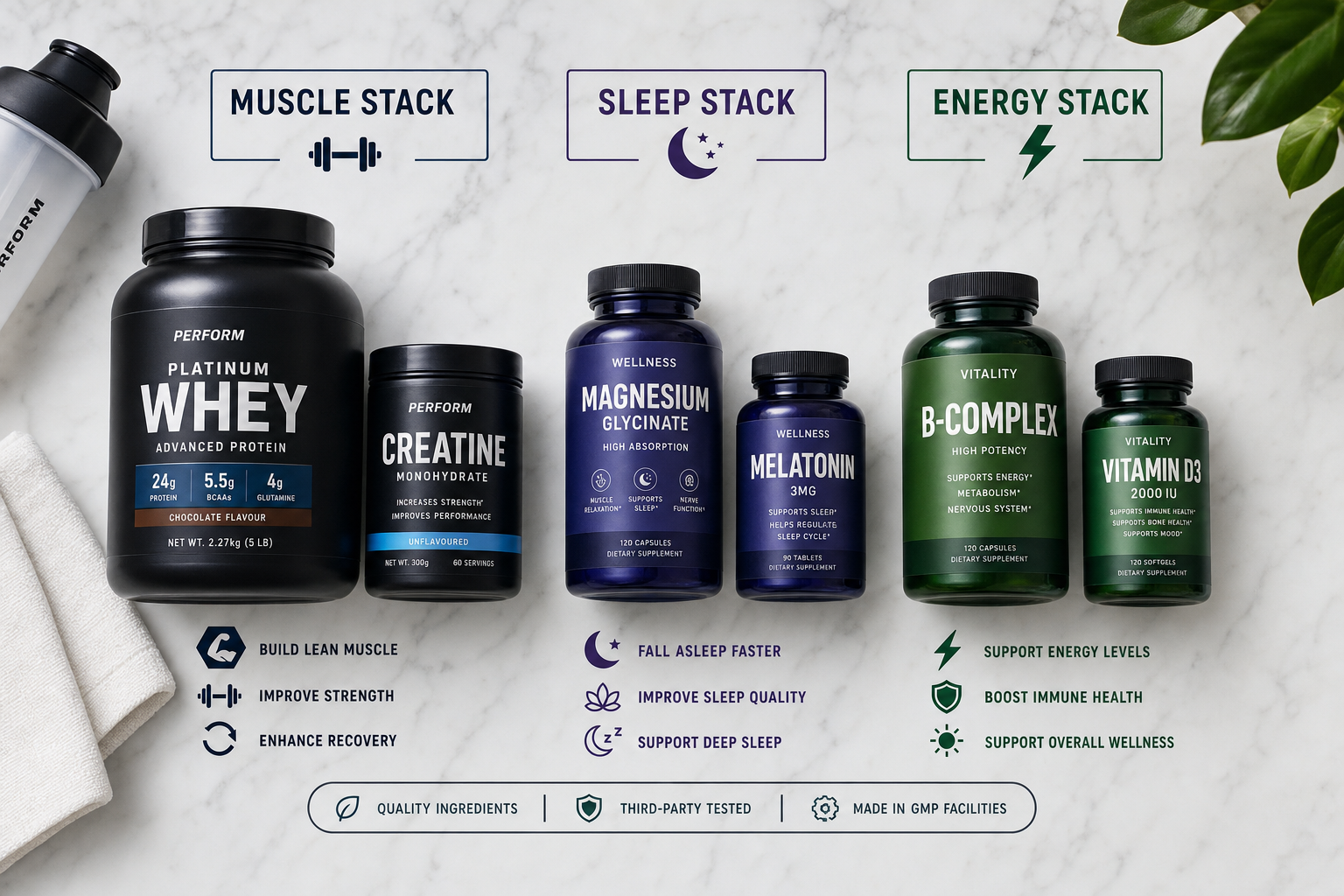
Stacking is not simply taking multiple supplements simultaneously. A true stack is intentionally designed so that the supplements included address different aspects of the same goal through complementary mechanisms. For muscle gain, the stack might combine protein (raw material), creatine (phosphocreatine energy system), and vitamin D (hormonal and immune support) — each addressing a distinct component of the muscle-building process. A poorly designed stack might combine five different products all providing similar amino acids — redundant, expensive, and not meaningfully more effective than one.
Supplement Stacks for Muscle Gain
Basic Stack
The most evidence-backed muscle gain stack is beautifully simple: creatine monohydrate (3–5g daily) + protein supplement to support daily protein targets (1.6–2.2g/kg body weight) + vitamin D3 (1,000–2,000 IU if deficient) + magnesium glycinate (200–400mg at night for sleep and muscle recovery). These four supplements address the primary drivers of muscle building: energy system capacity (creatine), protein synthesis substrate (protein), hormonal and immune environment (vitamin D), and recovery quality (magnesium + sleep). See our individual guides to creatine and protein supplements for detail.
Advanced Stack
For more experienced athletes, adding omega-3s (1–2g EPA+DHA for inflammation management and muscle protein synthesis support), collagen peptides with vitamin C (15g post-training for tendon and ligament health), and ashwagandha (300–600mg for cortisol management during heavy training) builds a more comprehensive stack. Each addition serves a distinct purpose rather than duplicating existing coverage.
Supplement Stacks for Energy
For sustained daytime energy — particularly relevant for people experiencing fatigue from deficiencies — the core stack is: vitamin D3 (corrects one of the most common energy-draining deficiencies), B-complex with methylcobalamin and methylfolate (supports mitochondrial energy production and corrects B12 deficiency), iron (only if confirmed deficient — iron deficiency is the most common cause of fatigue in premenopausal women), and magnesium glycinate (chronic magnesium insufficiency causes fatigue). See our guides to vitamin D, B vitamins, iron, and magnesium for individual details. Avoid stacking stimulant-based energy supplements (caffeine, guarana, high-dose B3) — these mask fatigue without addressing causes and carry dependency and cardiovascular risks.
Supplement Stacks for Focus
Cognitive performance supplements with credible evidence include: omega-3 DHA (structural component of brain cell membranes — foundation of any cognitive stack), lion’s mane mushroom extract (hericenones and erinacines stimulate nerve growth factor — growing evidence for neuroplasticity support), L-theanine (200mg — reduces anxiety and promotes calm focus, particularly effective combined with caffeine at a 2:1 theanine:caffeine ratio), and bacopa monnieri (300–450mg standardised extract — well-evidenced for memory consolidation and learning, effects build over 8–12 weeks). These work through distinct mechanisms and combine safely. See our omega-3 guide for brain health context.
Supplement Stacks for Sleep
The most evidence-supported sleep stack: magnesium glycinate (200–400mg — activates GABA, relaxes nervous system, supports melatonin), L-theanine (100–200mg — reduces pre-sleep mental arousal), low-dose melatonin (0.5–1mg — for circadian timing, not sedation), and ashwagandha (300–600mg — lowers cortisol, supports sleep quality and duration). Take all 30–60 minutes before bed. These work synergistically — melatonin signals biological night, magnesium and L-theanine reduce physiological arousal, ashwagandha modulates the HPA axis. See our best sleep supplements guide and ashwagandha guide for individual detail.
Supplement Stacks for Recovery and General Wellness
For general health optimisation and recovery support: vitamin D3 (1,000–2,000 IU) + magnesium glycinate (200–400mg) + omega-3s (1g+ EPA+DHA) + vitamin B12 (if vegan/vegetarian or over 50) + probiotics (multi-strain formula). This covers the most prevalent nutrient gaps in Western diets, supports immune function, gut health, cardiovascular health, sleep, and energy — a practical foundation that most adults would benefit from.
Supplements to Avoid Combining
Certain combinations carry real risks: iron should not be combined with calcium, antacids, or zinc (all reduce iron absorption significantly); high-dose zinc should not be taken long-term without copper; vitamin D should be taken with vitamin K2 at high doses to prevent calcium dysregulation; multiple fat-soluble vitamins (A, D, E, K) at high doses together risk toxicity accumulation; blood-thinning supplements (high-dose fish oil, vitamin E, ginkgo, garlic extract) should not be combined with anticoagulant medications. When in doubt, always check for interactions using a reputable drug-supplement interaction checker or pharmacist.
Timing and Dosing Schedule
Morning (with breakfast): vitamin D3, omega-3s, B-complex, probiotics, creatine. With or post-workout: protein supplement, creatine (if not taken in morning). Evening (30–60 minutes before bed): magnesium glycinate, L-theanine, low-dose melatonin, ashwagandha. Iron (if prescribed): on empty stomach, with vitamin C, 2 hours apart from other supplements. Separating supplements with known absorption interactions (iron and calcium, zinc and copper) by at least 2 hours preserves the efficacy of each.
FAQ
What is a supplement stack?
A curated combination of supplements taken together to address different aspects of a specific health or performance goal through complementary mechanisms.
What supplements stack well together?
Vitamin D + magnesium + omega-3s is the safest and most broadly beneficial foundational stack. Creatine + protein for muscle. Magnesium + L-theanine + melatonin for sleep. These combinations have no significant interactions and address distinct mechanisms.
What is the best stack for muscle gain?
Creatine monohydrate (3–5g) + protein supplement to hit daily targets + vitamin D3 (if deficient) + magnesium glycinate (for recovery and sleep quality).
What is the best supplement stack for sleep?
Magnesium glycinate (200–400mg) + L-theanine (100–200mg) + low-dose melatonin (0.5–1mg) + ashwagandha (300–600mg) — all taken 30–60 minutes before bed.
Are supplement stacks safe?
Well-designed stacks using evidence-based supplements at appropriate doses are generally safe. Risks arise from high-dose combinations, unverified herbal products, and combinations with prescription medications. Always check for interactions.
Related reading: Longevity Supplements, Best Supplements for Energy, Vitamin D Benefits.
Related: Best Supplements for Energy and Longevity Supplements.Related: Hydration and Longevity: How Water Shapes Energy, Skin, and Aging


 Dr. Rachel Stone
 Sarah Mitchell
 Elena Voss

 Rachel Summers