 Ashley
Why Iron Is Essential
Iron is a trace mineral essential for oxygen transport, energy production, immune function, and cognitive performance. It is the core component of haemoglobin (the protein in red blood cells that carries oxygen from the lungs to every tissue in the body) and myoglobin (the equivalent protein in muscle cells). Without adequate iron, red blood cells cannot carry oxygen efficiently — causing iron deficiency anaemia, one of the most prevalent nutritional deficiencies globally, affecting approximately 25% of the world’s population. For a full supplement context, see our complete supplement guide.
Iron Benefits
When iron intake is adequate, it supports: optimal oxygen delivery to muscles and organs (supporting energy, endurance, and cognitive function); immune cell production and function; regulation of body temperature; healthy hair, skin, and nail growth (iron deficiency classically causes brittle nails and hair loss); and neurotransmitter synthesis (iron is required for the production of serotonin and dopamine). Correcting iron deficiency consistently improves fatigue, exercise tolerance, cognitive function, and mood.
Iron Deficiency and Anaemia
Iron deficiency develops in stages: first, iron stores (ferritin) are depleted; then, iron transport (transferrin saturation) becomes impaired; finally, haemoglobin falls and anaemia develops. Symptoms worsen progressively: early iron deficiency (before anaemia) may cause fatigue, reduced exercise tolerance, difficulty concentrating, and cold hands and feet. Frank iron deficiency anaemia causes pale skin, severe fatigue, breathlessness on exertion, rapid heart rate, dizziness, and pica (craving non-food substances like ice or clay). A full blood count with serum ferritin is the appropriate screening test — ferritin below 12 mcg/L indicates depleted stores, while ferritin below 30 mcg/L may impair function even without anaemia.
Who May Need Iron Supplements
Iron supplementation should only be undertaken with confirmed deficiency or insufficiency — iron excess is harmful and iron supplements are not appropriate for everyone. Groups at highest risk for deficiency: premenopausal women (menstrual blood loss); pregnant women (dramatically increased requirement); infants and young children (rapid growth with low dietary iron); teenagers (growth spurt combined with often poor diets); elite endurance athletes (foot-strike haemolysis, sweating, and increased red blood cell demand); vegans and vegetarians (non-haem iron from plant foods is less bioavailable than haem iron from animal products); and people with conditions causing blood loss or malabsorption (coeliac disease, Crohn’s, inflammatory bowel disease).
How to Improve Iron Absorption
Iron with Vitamin C
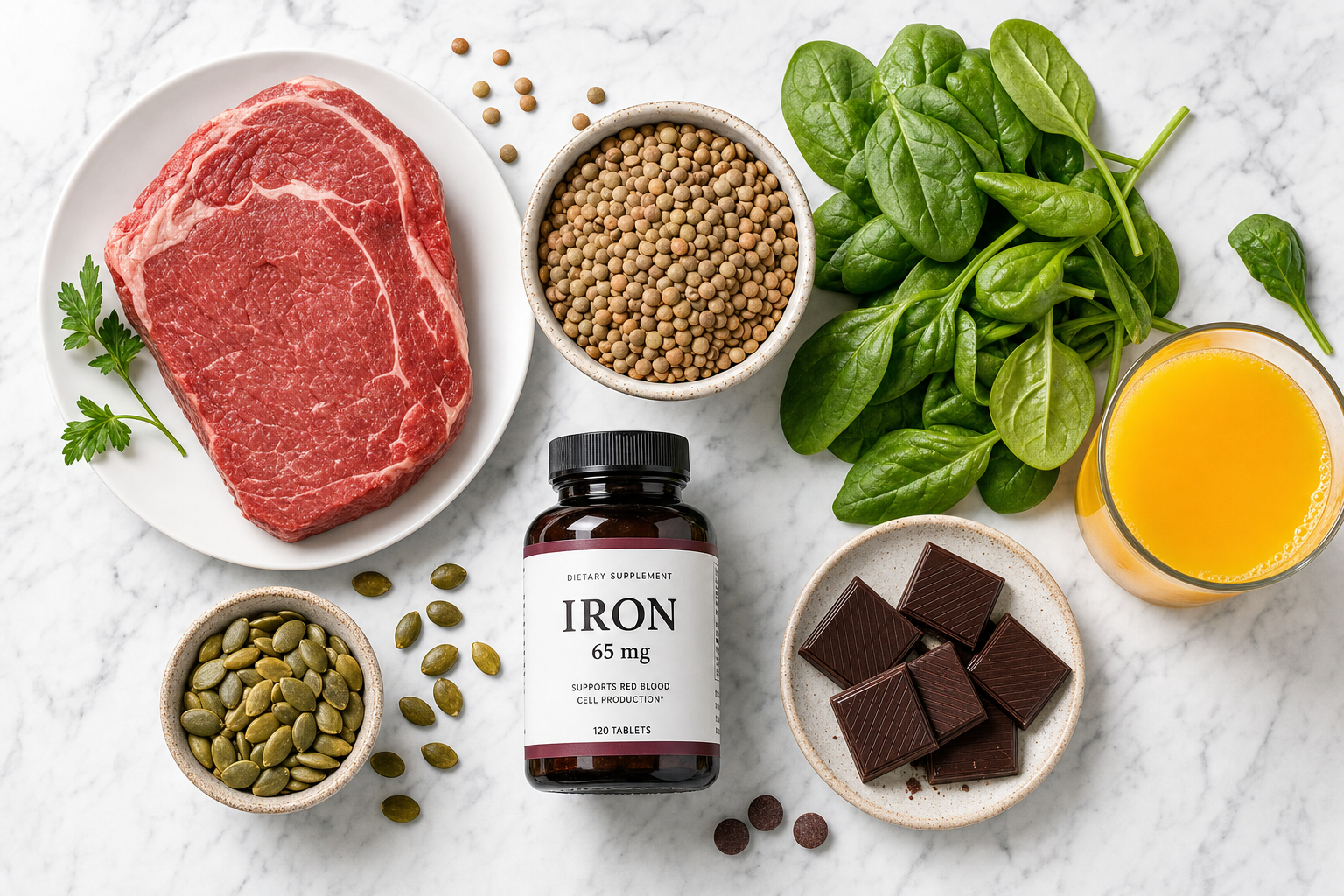
Vitamin C dramatically enhances the absorption of non-haem iron (the form found in plant foods and supplements) by reducing ferric iron (Fe³⁺) to ferrous iron (Fe²⁺), which is more readily absorbed. Taking iron supplements with a glass of orange juice or a vitamin C supplement can increase absorption by 2–3 fold — a simple and effective strategy for maximising the benefit of each dose.
Timing Iron with Food and Medications
Iron is best absorbed on an empty stomach — but this often causes significant gastrointestinal side effects (nausea, constipation, abdominal cramps). Taking with a small amount of food reduces side effects at the cost of some absorption. Iron should be taken at least 2 hours apart from calcium supplements, antacids, and certain antibiotics (tetracyclines, fluoroquinolones) that significantly reduce its absorption.
Iron Supplement Forms
Ferrous Sulfate vs Other Forms
Ferrous sulfate is the most commonly prescribed and cheapest iron supplement. It is effective but causes the most gastrointestinal side effects. Ferrous gluconate and ferrous fumarate are gentler alternatives with similar efficacy. Ferric iron forms (ferric maltol, ferric ammonium citrate) are better tolerated but more expensive and slightly less well-absorbed. Liquid iron formulations are useful for children and those with swallowing difficulties. Liposomal iron — iron enclosed in lipid particles — has excellent tolerance with good absorption, though at significantly higher cost.
Signs of Too Much Iron
Iron overload is serious — excess iron is a pro-oxidant that damages tissues. Acute iron overdose (most commonly in children who accidentally ingest iron tablets) is a medical emergency. Chronic iron overload (haemochromatosis, or from excessive supplementation) causes liver damage, heart disease, diabetes, and joint problems. This is why iron supplementation without confirmed deficiency is inappropriate. Always confirm deficiency with blood testing before starting supplementation and retest to monitor response and avoid over-correction.
FAQ
Who should take iron supplements?
People with confirmed iron deficiency or iron deficiency anaemia — diagnosed through blood testing. Those at high risk (pregnant women, heavy menstrual bleeders, endurance athletes, vegans) should be regularly screened.
What are signs of iron deficiency?
Fatigue, pale skin, breathlessness, rapid heartbeat, cold extremities, difficulty concentrating, brittle nails, hair loss, and restless legs syndrome.
What form of iron is best?
Ferrous sulfate is the most widely used and cost-effective. Ferrous gluconate or fumarate for better tolerance. Liposomal iron for the best combination of tolerability and absorption if cost is not a concern.
How do I avoid constipation from iron?
Take with a small amount of food, increase dietary fiber and fluid intake, consider ferrous gluconate or liposomal iron instead of ferrous sulfate, and start at a lower dose then build up.
Can too much iron be harmful?
Yes — iron overload damages the liver, heart, and joints. Never supplement iron without confirmed deficiency, and retest blood levels after 3 months to ensure you’re not overcorrecting.

 James Hargreaves
 James Holloway
 Emma Thornton
 Dr. Rachel Stone

 Daniel Brooks