 Emma Thornton
How to Use Supplements Safely
Supplements occupy a unique regulatory space — they are not classified as medicines, do not require proof of safety or efficacy before going to market in most countries, and are not subject to the same rigorous manufacturing standards as pharmaceuticals. This doesn’t mean supplements are inherently unsafe — many are very well tolerated with excellent safety records. But it does mean that the responsibility for safety falls more heavily on the consumer than it does with prescription or over-the-counter medicines. For a foundational overview of what supplements are and how to choose quality products, see our complete supplement guide.
Common Supplement Risks
The most common supplement risks fall into several categories. Contamination: supplements may contain unlisted ingredients, heavy metals, pesticides, or pharmaceutical drugs — a particular risk in the herbal, weight loss, sexual performance, and sports performance categories where adulteration is most prevalent. Incorrect dosing: products may contain more or less of an ingredient than stated on the label. Interactions: supplements can interact with prescription medications — sometimes dangerously. Toxicity: fat-soluble vitamins (A, D, E, K) and certain minerals (iron, zinc at high doses) can accumulate to toxic levels. Misrepresentation: products marketed with wildly exaggerated claims may cause people to forgo evidence-based medical treatment or spend significant money on ineffective products.
Supplements That May Interact With Medications
Drug-supplement interactions are more common and more clinically significant than most people realise. Key interactions to be aware of: St John’s Wort reduces blood levels of dozens of drugs including oral contraceptives, antiretrovirals, warfarin, cyclosporin, certain antidepressants, and cancer medications (by inducing liver CYP3A4 enzymes). High-dose fish oil and vitamin E increase bleeding risk and may interact with anticoagulants. Vitamin K reduces warfarin efficacy. Grapefruit-containing supplements inhibit CYP3A4, raising blood levels of many medications. Calcium and magnesium reduce absorption of many antibiotics, thyroid medication, and bisphosphonates. Kava interacts with sedatives, alcohol, and hepatotoxic drugs. Iron reduces absorption of fluoroquinolone and tetracycline antibiotics. Always disclose every supplement you’re taking to your prescribing doctor and pharmacist, particularly before surgery.
Red Flags on Supplement Labels
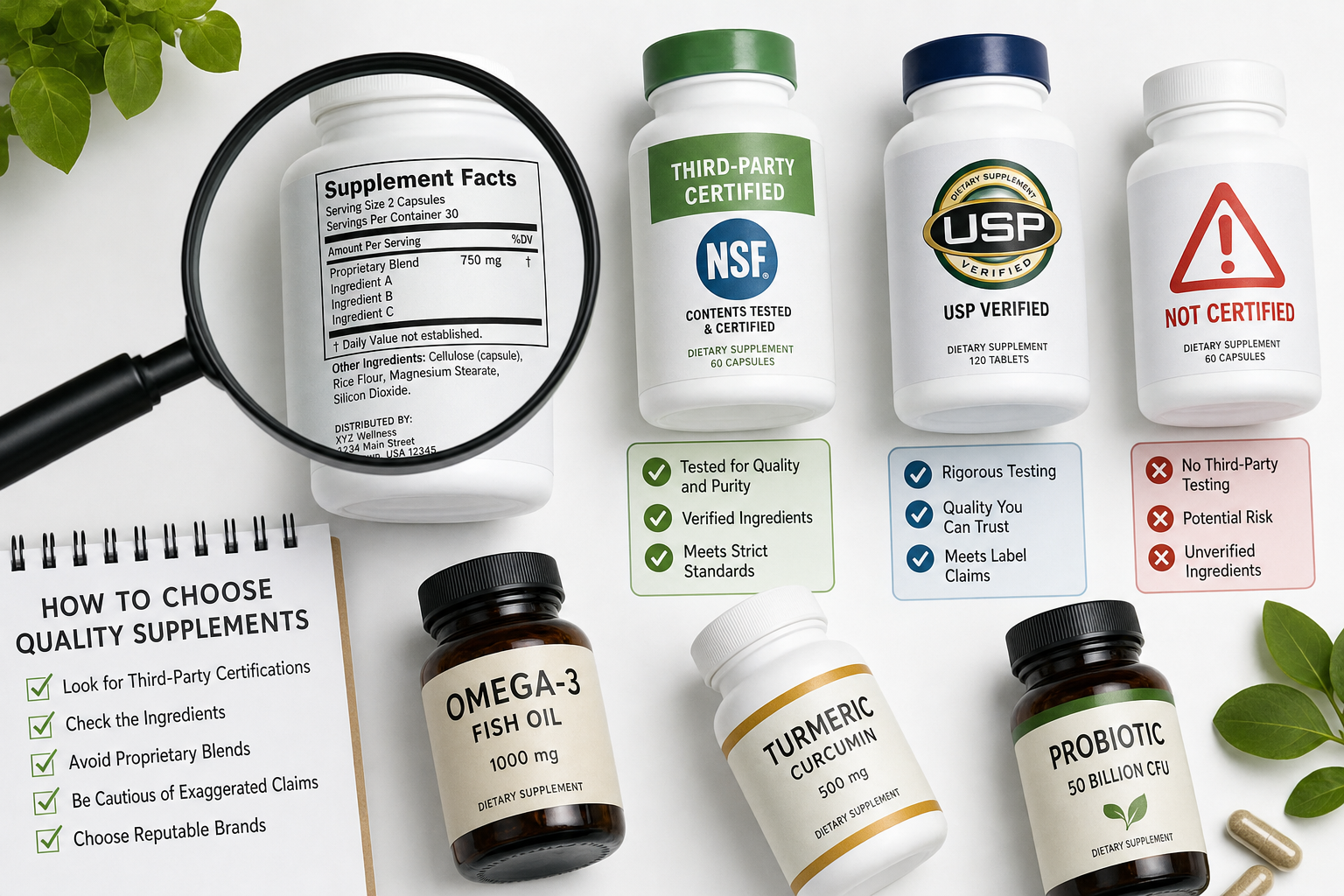
Certain marketing patterns are reliable warning signs of low-quality or potentially unsafe products. Watch for: “proprietary blend” without individual ingredient doses — this hides underdosing and allows manufacturers to include impressive ingredients at ineffective amounts; claims to “cure,” “treat,” or “prevent” specific diseases (supplements cannot legally make these claims in most countries — any product doing so is either lying or should be classified as a medicine); extreme dose claims (“mega-dose” approaches far beyond clinical evidence rarely provide extra benefit and often carry safety risks); before/after photos and testimonials as primary evidence; products marketed with urgent “limited time” language or sold through single-page websites without transparent company information. See our best supplements for health guide for what evidence-backed supplements actually look like.
How to Spot Adulterated or Contaminated Products
Third-Party Testing and Certifications
Third-party testing is the most reliable protection against contamination and mislabelling. The most respected certifications: NSF International (verifies contents, purity, and manufacturing practices); USP (United States Pharmacopeia — similar standards to NSF); Informed Sport and Informed Protein (particularly important for athletes — specifically test for banned substances not covered by other certifications); ConsumerLab (independent testing organisation that publishes results on supplement quality — subscription-based but valuable for research). Products carrying these marks have been independently verified to contain what they claim, in the stated amounts, without significant contamination. Choosing certified products is the single most effective step most supplement users can take to reduce their risk.
“Detox,” “Fat Burner,” and “Testosterone Booster” Claims
Three supplement categories warrant particular scepticism. “Detox” supplements — the liver and kidneys perform all necessary detoxification; there is no credible evidence that any supplement meaningfully enhances this process. “Fat burner” supplements — the weight loss supplement industry is among the most adulterated in the market, with numerous products found to contain undisclosed stimulants, diuretics, and pharmaceutical drugs including sibutramine (a banned appetite suppressant). “Testosterone booster” supplements — the vast majority have no credible evidence for meaningfully raising testosterone in healthy males; some have been found to contain undisclosed anabolic steroids. These three categories have the highest rates of adverse events and regulatory actions in the supplement industry.
High-Dose Vitamins and Potential Harm
The principle “if some is good, more is better” is consistently wrong for micronutrients. Fat-soluble vitamins accumulate: vitamin A toxicity (from supplements, not food) causes liver damage, bone thinning, and birth defects — the tolerable upper limit is 3,000 mcg RAE per day; vitamin D toxicity (hypercalcaemia) at doses above 10,000 IU/day sustained; vitamin E at high doses increases all-cause mortality in large meta-analyses and increases bleeding risk. Water-soluble vitamins have lower toxicity risk but are not exempt: B6 causes irreversible sensory neuropathy at doses above 50mg daily long-term; niacin at high doses causes flushing, liver stress, and gout exacerbation; folic acid at high doses may mask B12 deficiency and potentially promote certain cancers. Iron supplementation without confirmed deficiency is genuinely dangerous — iron overload is a serious condition. Always match doses to what clinical evidence supports, not to what manufacturers print on labels.
When to Stop and Talk to a Doctor
Stop taking a supplement and consult a doctor if you experience: unexplained nausea, vomiting, or abdominal pain; jaundice (yellowing of skin or eyes — a sign of liver stress); rapid or irregular heartbeat; severe headaches; allergic reactions; or any new symptom that develops after starting supplementation. Always talk to a doctor before starting supplements if you: are pregnant or planning to become pregnant; have any chronic disease; take prescription medications; have a liver or kidney condition; are scheduled for surgery within the next few months; or are giving supplements to children.
FAQ
Are supplements safe?
Most common supplements at appropriate doses are safe for healthy adults. Risks arise from contamination (most prevalent in weight loss, sexual performance, and herbal categories), incorrect dosing, drug interactions, and fat-soluble vitamin toxicity at high doses.
What supplements should I avoid?
“Fat burner,” “detox,” and “testosterone booster” products without independent third-party testing; high-dose vitamin A; iron without confirmed deficiency; high-dose vitamin E; any supplement with proprietary blends hiding individual doses; products making disease cure claims.
How do I know if a supplement is contaminated?
Choose products with NSF International, USP, Informed Sport, or Informed Protein certifications. These independently verify that products contain what they claim without significant contamination. Check ConsumerLab for independent testing results.
Can supplements interact with prescription medications?
Yes — many supplements interact significantly with medications. St John’s Wort, high-dose fish oil, vitamin K, calcium, magnesium, iron, and kava have the most clinically significant interactions. Always disclose supplement use to your doctor and pharmacist.
What are the biggest supplement safety red flags?
Proprietary blends hiding doses; disease cure claims; extreme “mega-dose” marketing; products without third-party certification; categories with high adulteration rates (fat burners, testosterone boosters, detox products); supplements sold through unverifiable websites without transparent company information.


 Dr. Rachel Stone
 James Hargreaves
 Dr. Maya Chen
 Ashley
 Daniel Brooks