 Dr. Rachel Stone
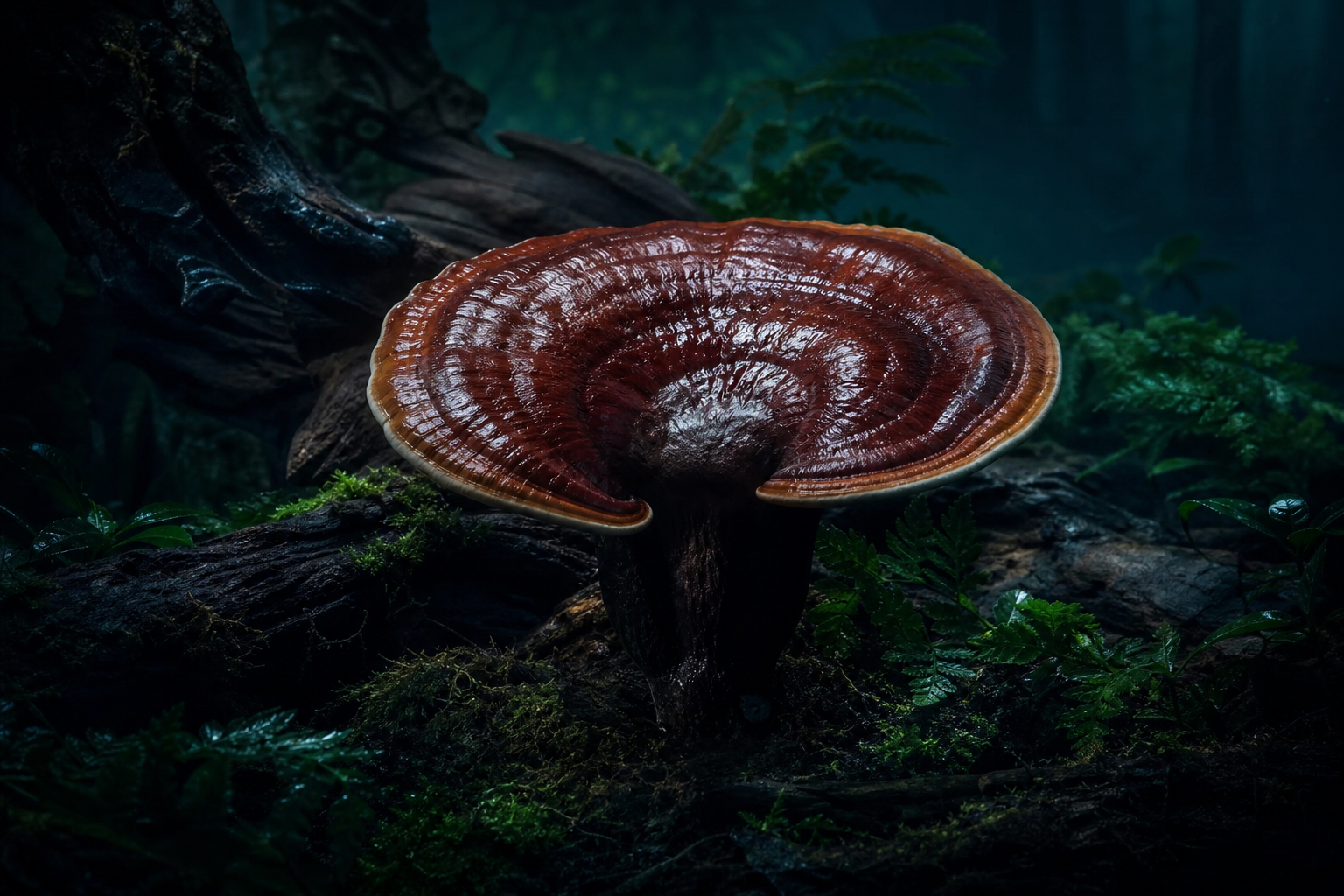
Reishi (Ganoderma lucidum) has been called the “mushroom of immortality” in traditional Chinese and Japanese medicine for over 2,000 years. Modern science has begun to validate this reputation — with a growing body of research on its immune-modulating, anti-cancer, adaptogenic, and liver-protective properties. Here’s what the evidence actually shows.
1. Immune System Modulation
This is reishi’s most robustly studied benefit. Reishi contains beta-glucan polysaccharides — complex carbohydrates that interact directly with immune cell receptors (particularly dectin-1 on macrophages and dendritic cells) to modulate immune activity. Unlike simple “immune boosters,” reishi doesn’t just stimulate the immune system — it modulates it, enhancing immune surveillance while dampening inappropriate inflammatory responses.
Specific documented effects include: activation of natural killer (NK) cells, increased macrophage activity, enhanced T-cell and B-cell function, and upregulation of cytokines involved in anti-tumour immunity. A 2016 meta-analysis found reishi supplementation significantly improved natural killer cell activity and lymphocyte counts in cancer patients receiving conventional therapy.
2. Anti-Cancer Properties
Reishi is one of the most studied natural compounds in oncology — particularly in Japan and China, where it has been used as an adjunct to conventional cancer treatment for decades. Its anti-cancer mechanisms include:
- Immune enhancement: Increasing NK cell and T-cell activity against tumour cells
- Anti-tumour polysaccharides: Beta-glucans directly inhibit tumour cell proliferation in laboratory studies
- Apoptosis induction: Reishi triterpenes trigger programmed cell death in cancer cell lines
- Angiogenesis inhibition: Reishi compounds reduce tumour blood vessel formation (starving tumours of nutrients)
A 2016 Cochrane review found insufficient evidence to recommend reishi as a primary cancer treatment, but concluded it may be used as an adjunct to conventional therapy in cancer patients due to its immune-enhancing properties. It’s used as an adjunct in conventional oncology in Japan under the name “Mannentake.”
3. Adaptogenic and Stress-Reducing Effects
Reishi’s triterpenes — particularly ganoderic acids A, B, C, and D — have demonstrated adaptogenic properties in multiple studies. They modulate the HPA (hypothalamic-pituitary-adrenal) axis, reducing cortisol output and supporting adrenal function. Animal studies consistently show reduced stress hormones and reduced anxiety-like behaviour with reishi supplementation.
Human research is more limited but consistent with the animal data: a 2012 study in cancer patients found reishi supplementation significantly reduced fatigue and improved quality of life, with improvements in anxiety and depression scores over 4 weeks.
4. Sleep Quality
Reishi has been used as a sleep aid in traditional medicine for centuries. Modern research supports this use: animal studies show reishi water extract increases total sleep time and non-REM sleep time through GABA-A receptor modulation. The triterpene ganoderic acid A appears to enhance slow-wave sleep.
Human data is limited but a 2013 study found reishi supplementation improved sleep quality in a sample of community-dwelling adults over 8 weeks. The mechanism is distinct from sedatives — reishi doesn’t cause sedation but supports the parasympathetic nervous system and reduces the cortisol-driven alertness that can interfere with sleep onset.
5. Liver Protection
Reishi’s ganoderic acids have hepatoprotective (liver-protecting) effects documented in multiple animal studies. They reduce liver enzyme elevation (ALT and AST), protect against chemical-induced liver injury, and support liver regeneration. Clinical research in hepatitis B patients found reishi supplementation reduced viral load and improved liver function markers.
6. Cardiovascular Health
Reishi has demonstrated modest but consistent cardiovascular effects in research: reduced blood pressure through ACE inhibition, improved lipid profiles (lower LDL, reduced triglycerides), and reduced platelet aggregation (mild blood-thinning effect — relevant to both cardiovascular benefit and potential drug interactions).
7. Blood Sugar Regulation
Reishi polysaccharides have demonstrated blood sugar-lowering effects in animal models and several human trials, including improvements in insulin sensitivity and reduction of post-meal glucose spikes. A 2016 meta-analysis found reishi supplementation significantly reduced fasting blood glucose and HbA1c in diabetic patients, though the evidence quality was rated as moderate.
How to Take Reishi
| Form | Dose | Notes |
|---|---|---|
| Whole dried mushroom (tea/decoction) | 3–5g daily | Traditional method; bitter taste |
| Hot water extract (powder) | 1–2g daily | Concentrated; most common supplement form |
| Dual extract (water + alcohol) | 1–2g daily | Extracts both polysaccharides and triterpenes |
| Liquid extract/tincture | 1–2ml, 2–3x daily | Convenient; look for standardised extracts |
Look for products standardised to beta-glucan content (≥30%) and/or triterpene content (≥10%). Dual extracts (hot water + alcohol) are considered superior as water extraction captures polysaccharides while alcohol extraction captures triterpenes.
Frequently Asked Questions
The most evidence-backed benefits of reishi are: immune system modulation (enhanced NK cell and macrophage activity), cancer adjunct therapy (widely used in Japanese oncology), adaptogenic stress and cortisol reduction, improved sleep quality through GABA-A receptor modulation, liver protection through ganoderic acids, cardiovascular benefits, and blood sugar regulation. It’s one of the most thoroughly studied medicinal mushrooms in the world.
Yes — reishi has documented sleep-promoting effects through modulation of GABA-A receptors and the parasympathetic nervous system. It doesn’t sedate but reduces the cortisol-driven alertness that disrupts sleep onset. Animal studies show increased total sleep time and non-REM sleep. Human research supports improved sleep quality with consistent supplementation over weeks.
Reishi’s effects build gradually with consistent use. Initial improvements in sleep and stress response may be noticeable within 1–2 weeks. Immune modulation and more significant adaptogenic effects develop over 4–8 weeks. Research trials typically run 4–12 weeks. Like most adaptogens, reishi works through cumulative biological adaptation rather than immediate pharmacological effects.
Yes — reishi has an excellent safety profile in clinical research. Studies up to 12 months have not found significant adverse effects at standard doses. The main precautions: mild blood-thinning properties mean caution is warranted for people on anticoagulants; it may interact with immunosuppressant medications; and very high doses in some people cause mild GI discomfort. Always consult a healthcare provider if you take medications or have liver disease.
This article is for informational purposes only and does not constitute medical advice. Reishi may interact with blood-thinning and immunosuppressant medications. Consult a healthcare provider before use.
Related reading: Benefits of Functional Mushrooms, Cordyceps Benefits, Is Turkey Tail Mushroom Good for You?, Is Reishi Mushroom Psychedelic?.


 Elena Voss
 Dr. Maya Chen
 James Holloway
 Dr. Rachel Stone