 James Holloway
Functional mushrooms — lion’s mane, chaga, reishi, turkey tail, cordyceps, shiitake, and maitake — are having a cultural moment. But unlike many wellness trends, this one has a genuine scientific foundation. Here’s what functional mushrooms actually are, what they do, and which ones have the best evidence.
What Are Functional Mushrooms?
The term “functional mushroom” refers to mushroom species used for health benefits beyond basic nutrition. They are distinguished from culinary mushrooms (button, portobello) by their higher concentrations of bioactive compounds — primarily beta-glucans, triterpenes, polysaccharopeptides, and in some species, unique compounds like lion’s mane’s hericenones and erinacines.
Most functional mushrooms have been used in traditional Chinese medicine, Japanese Kampo medicine, and Ayurvedic medicine for centuries. Modern pharmacology has begun validating many of their traditional applications through laboratory, animal, and clinical studies.
The Most Evidence-Backed Functional Mushrooms
Turkey Tail (Trametes versicolor)
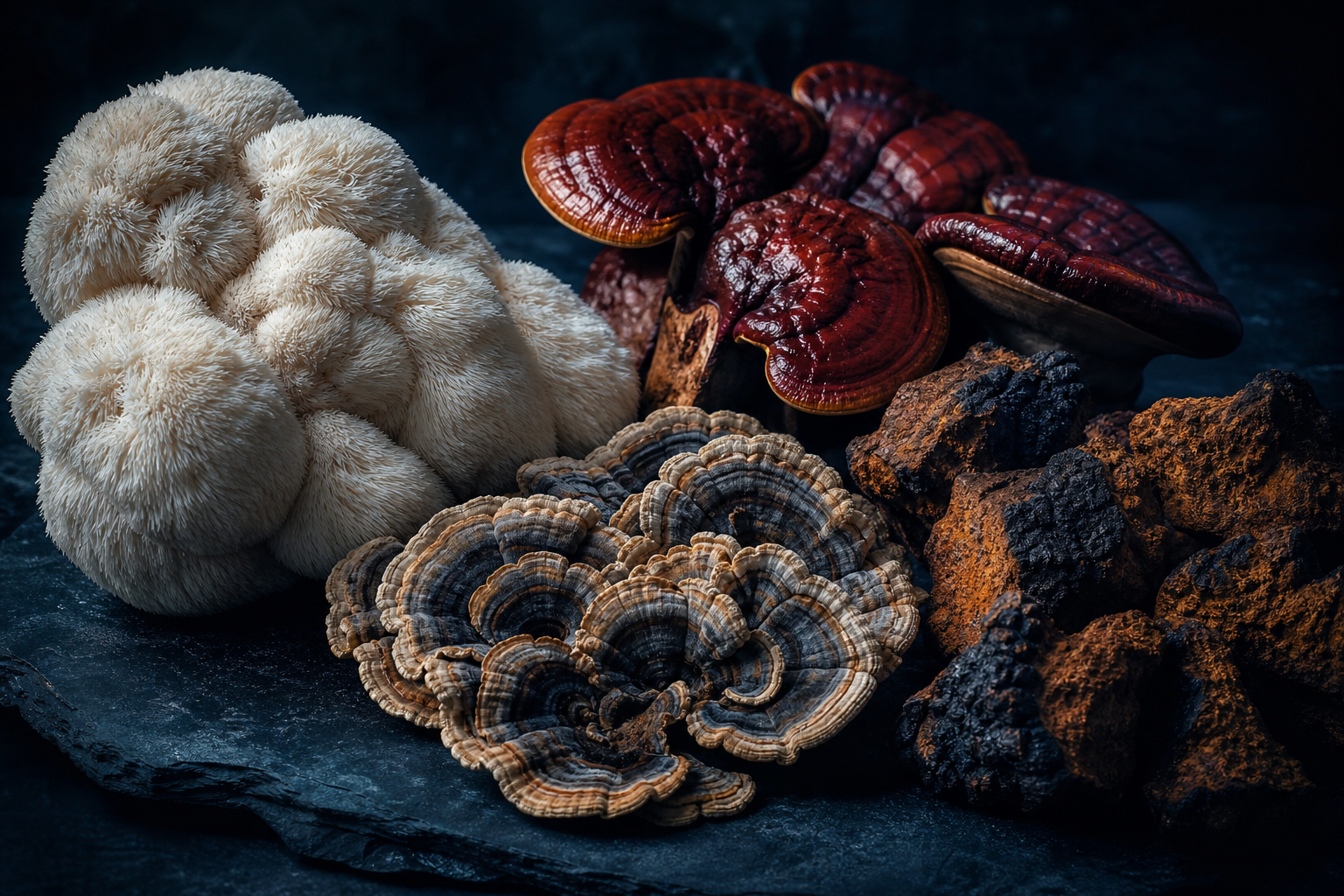
Best for: Immune support, cancer adjunct therapy, gut microbiome. Has the strongest human clinical evidence of all functional mushrooms. PSK (polysaccharide K) is an approved cancer adjunct in Japan with hundreds of clinical trials. A 2012 NIH-funded trial showed dose-dependent immune enhancement in breast cancer patients.
Lion’s Mane (Hericium erinaceus)
Best for: Cognitive function, neuroplasticity, anxiety, early Alzheimer’s support. Unique as the only food source of NGF-stimulating hericenones and erinacines. Multiple human RCTs show cognitive improvements and anxiety reduction. A 2023 pilot study showed cognitive improvements in mild Alzheimer’s.
Reishi (Ganoderma lucidum)
Best for: Immune modulation, sleep quality, stress and fatigue. Ganoderic acids (triterpenes) in reishi have well-documented immune and anti-inflammatory effects. Human trials show improvements in fatigue, quality of life in cancer patients, and sleep. It is mildly sedating — making it the most appropriate functional mushroom for evening use.
Cordyceps (Cordyceps sinensis / C. militaris)
Best for: Athletic performance, energy, VO2 max, libido. Cordyceps contain cordycepin and adenosine, which support ATP (energy) production in mitochondria. Multiple RCTs show improved VO2 max, reduced exercise fatigue, and enhanced oxygen utilisation. Also has evidence for improving kidney function and testosterone in older men.
Chaga (Inonotus obliquus)
Best for: Antioxidant protection, immune support, anti-inflammation. Highest antioxidant score of any natural substance. Betulinic acid and melanin have well-documented anti-inflammatory and antioxidant properties. Human clinical evidence is more limited than turkey tail or lion’s mane.
Shiitake (Lentinus edodes)
Best for: Cholesterol reduction, immune support, cardiovascular health. AHCC (active hexose correlated compound) derived from shiitake is one of the most studied mushroom extracts in oncology. Eritadenine in shiitake directly inhibits cholesterol synthesis — clinical trials show 10–15% LDL reductions with regular consumption.
The Core Mechanism: Beta-Glucans
Almost all functional mushrooms share one foundational active compound category: beta-glucans. These polysaccharides bind to immune cell receptors (particularly Dectin-1 and TLR-2 on macrophages and NK cells), activating innate immunity without causing inflammation. This immunomodulation is why functional mushrooms consistently show benefits across immune resilience, gut health, and cancer support.
How to Choose a Functional Mushroom Product
- Fruiting body vs. mycelium: Fruiting body extracts generally contain higher bioactive compound concentrations; mycelium-on-grain products are often mostly starch with low beta-glucan content
- Dual extract: Hot water extraction captures polysaccharides (beta-glucans); alcohol extraction captures triterpenes. Dual-extracted products provide the full spectrum of bioactives
- Beta-glucan content: Look for products that specify beta-glucan content (ideally ≥20–30%) rather than just “polysaccharides”
- Third-party testing: Essential for heavy metals and authenticity, particularly for chaga and wild-harvested species
Frequently Asked Questions
Functional mushrooms provide immune modulation (via beta-glucans), cognitive support (lion’s mane’s NGF stimulation), anti-inflammatory effects (chaga’s betulinic acid, reishi’s triterpenes), athletic performance enhancement (cordyceps), cholesterol reduction (shiitake), and cancer adjunct support (turkey tail’s PSK). The specific benefits depend on which mushroom or combination you use.
Turkey tail has the strongest human clinical evidence for immune support — its PSK compound is an approved immunotherapy adjunct in Japan. Reishi and chaga also have significant immunomodulatory evidence. For general immune maintenance, a blend of turkey tail, reishi, and chaga provides complementary mechanisms.
Yes — combining functional mushrooms is standard practice and appears safe and potentially synergistic. Lion’s mane + cordyceps is popular for daytime focus and energy; reishi + ashwagandha is popular for evening stress and sleep. No significant negative interactions have been documented between the major functional mushrooms.
The major functional mushrooms (lion’s mane, turkey tail, reishi, cordyceps, chaga, shiitake, maitake) have excellent safety profiles. Rare side effects include mild gastrointestinal upset and, very rarely, allergic reactions. Chaga has high oxalate content requiring caution for kidney stone risk. People on immunosuppressants, blood thinners, or diabetes medications should consult a doctor before use.
This article is for informational purposes only and does not constitute medical advice.
Related reading: Reishi Mushroom Benefits, Cordyceps Benefits, Is Turkey Tail Mushroom Good for You?, What Is Chaga Mushroom Good For?.
Also: Adaptogens List.

 James Holloway
 Elena Voss

 Dr. Maya Chen