 Dr. Maya Chen
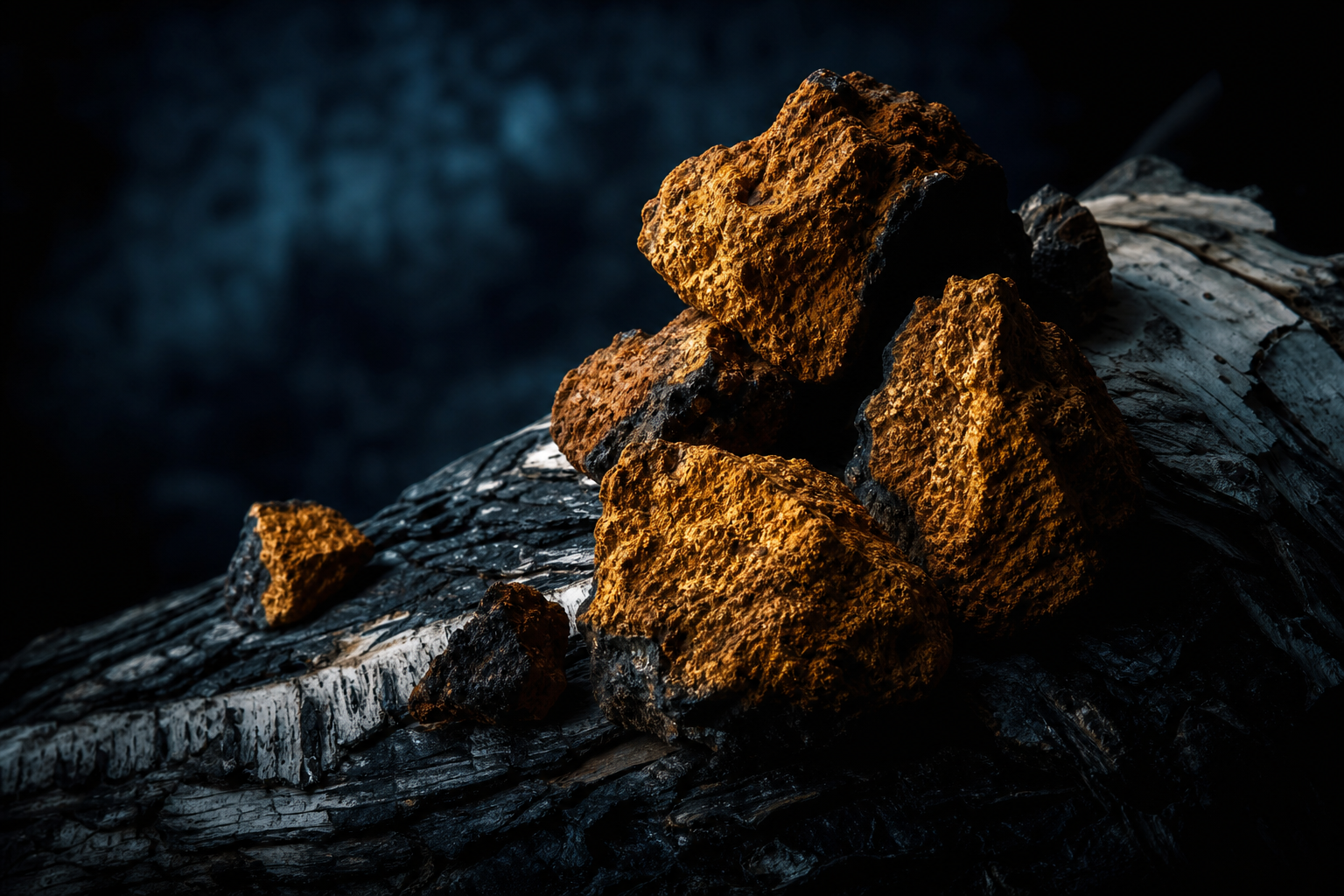
Chaga (Inonotus obliquus) is a fungal parasite that grows primarily on birch trees in cold northern climates — Siberia, Canada, Alaska, Scandinavia. It looks more like a burnt piece of coal than a conventional mushroom, but contains one of the highest ORAC (antioxidant capacity) scores of any natural substance ever measured. Here’s what the science actually shows.
What Makes Chaga Bioactive?
Chaga’s primary bioactive compounds include:
- Betulinic acid and betulin: Derived from birch bark, these compounds have demonstrated anti-tumour, antiviral, and anti-inflammatory activity in laboratory studies
- Beta-glucans: Immunomodulatory polysaccharides that activate innate immune cells
- Melanin: Responsible for chaga’s dark colour and its exceptional antioxidant properties
- Inotodiol: A triterpenoid with anti-inflammatory and potentially anti-cancer properties
- Polyphenols: Including hispidin — a potent antioxidant unique to chaga
What Is Chaga Mushroom Good For?
1. Antioxidant Activity
Chaga has one of the highest antioxidant scores ever recorded — higher than acai, blueberries, or any conventional superfood. Its melanin and hispidin compounds are particularly potent free radical scavengers. Oxidative stress is a driver of ageing, inflammation, and chronic disease, making chaga’s antioxidant profile genuinely significant for health maintenance.
2. Immune Modulation
Chaga’s beta-glucans activate macrophages, natural killer cells, and dendritic cells — key players in both innate and adaptive immunity. Multiple animal studies have shown enhanced immune responses to pathogens with chaga supplementation. Human clinical data is limited, but the immunomodulatory mechanism is well-characterised and consistent with other beta-glucan-rich mushrooms like turkey tail.
3. Anti-Inflammatory Effects
Chaga inhibits NF-κB — the master inflammatory transcription factor — through betulinic acid and inotodiol. Multiple in vitro and animal studies show significant reductions in pro-inflammatory cytokines including TNF-alpha, IL-1β, and IL-6. These are the same cytokines elevated in chronic inflammatory conditions including metabolic syndrome, arthritis, and IBD.
4. Blood Sugar Regulation
Several animal studies have found chaga extracts reduce fasting blood glucose and improve insulin sensitivity. The mechanisms include alpha-glucosidase inhibition (slowing carbohydrate digestion) and improved hepatic glucose metabolism. Human trials are lacking, but the mechanistic evidence parallels other well-evidenced compounds like berberine and acarbose.
5. Cancer Research
Betulinic acid and inotodiol have shown anti-tumour activity in laboratory studies against multiple cancer cell lines — inducing apoptosis (programmed cell death) in cancer cells while sparing healthy cells. This research is primarily in vitro and in animal models; human clinical trials on chaga for cancer specifically are lacking. It should not be used as a cancer treatment.
An Honest Assessment
Chaga is genuinely bioactive, with plausible mechanisms for antioxidant, anti-inflammatory, immunomodulatory, and metabolic effects. However, the human clinical trial evidence is far less developed than for turkey tail or lion’s mane. Most of what we know comes from laboratory and animal research. Chaga is promising but should be understood as a supplement with strong mechanistic rationale rather than one with a robust human clinical evidence base.
How to Take Chaga
- Form: Tea (most traditional), powder, or dual-extract capsules
- Dose: 1–2g of extract daily; tea is typically made with 5–10g of dried chaga per litre
- Quality: Wild-harvested Siberian chaga from birch trees is considered highest quality; lab-grown chaga contains significantly less betulinic acid (which comes from birch bark absorption)
- Caution: High in oxalates — people with kidney stones or kidney disease should limit intake
Frequently Asked Questions
Chaga has strong mechanistic evidence for antioxidant activity (among the highest recorded in any natural substance), immune modulation through beta-glucans, anti-inflammatory effects through NF-κB inhibition, and potential blood sugar regulation. Human clinical trials are limited, so it should be considered a supplement with strong biological rationale rather than proven clinical outcomes.
For most healthy people, yes — daily chaga tea or supplementation is well-tolerated. The main caution is its high oxalate content, which can contribute to kidney stone formation in susceptible individuals. People with kidney disease, a history of kidney stones, or those taking blood thinners should consult a doctor before daily use.
Chaga is generally well-tolerated. The main documented concerns are its high oxalate content (kidney stone risk with very high consumption) and potential interactions with blood thinners (chaga has some anti-coagulant activity). It may also affect blood sugar — monitor carefully if you’re on diabetes medication.
Chaga tea has a mild, slightly earthy, vanilla-like flavour — less bitter and more pleasant than most mushroom teas. It’s often described as tasting somewhat like coffee but without the bitterness, which is why it’s a popular coffee substitute for those reducing caffeine intake.
This article is for informational purposes only. Consult a healthcare professional before supplementing with chaga, particularly if you have kidney disease, take blood thinners, or are being treated for cancer.
Related reading: Reishi Mushroom Benefits, Cordyceps Benefits, Is Turkey Tail Mushroom Good for You?, Benefits of Functional Mushrooms.


 Dr. Maya Chen
 Dr. Rachel Stone
 Elena Voss

 James Holloway