 Rachel Summers
Introduction
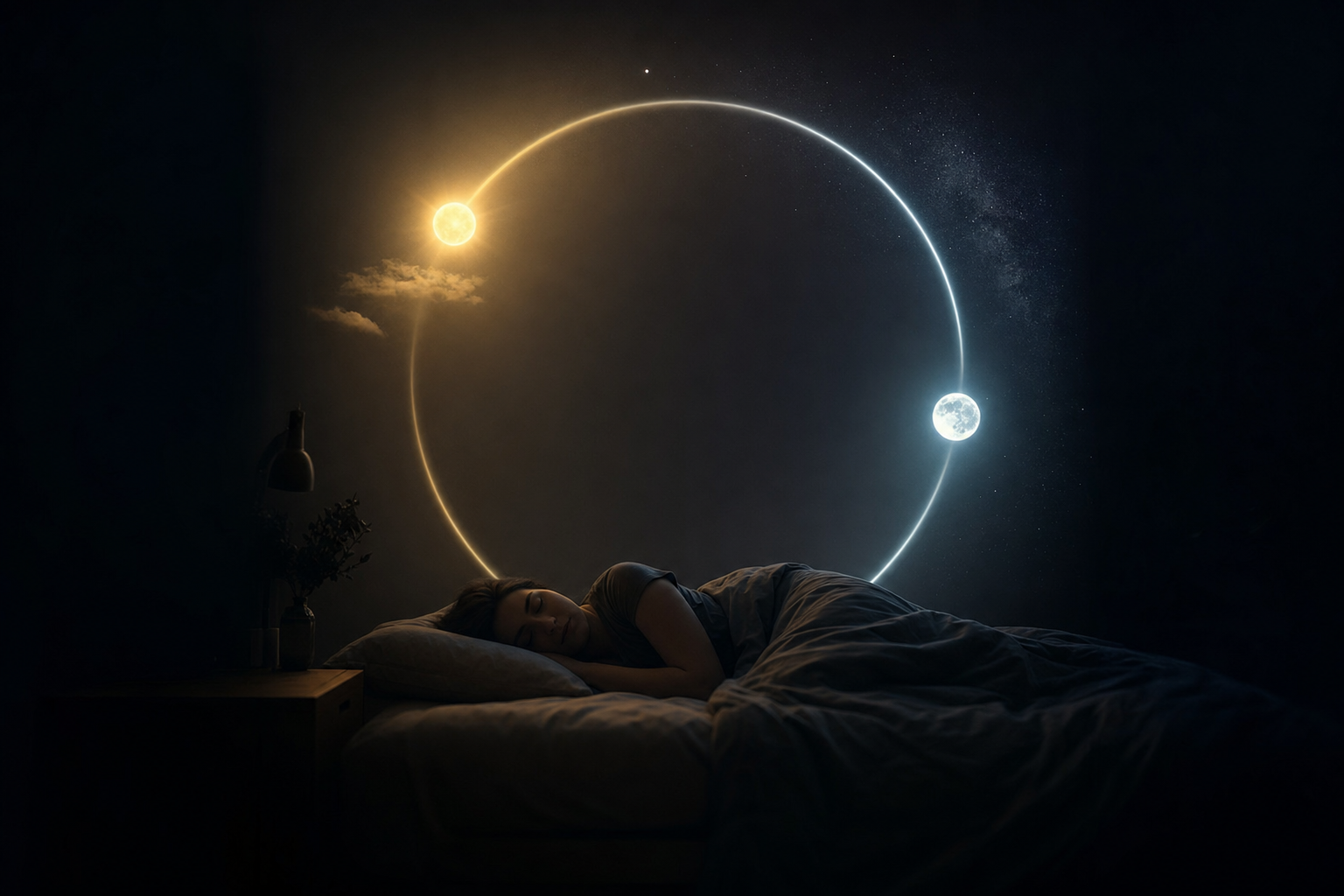
Most people think longevity is about eating kale, hitting the gym, or taking supplements. But in 2025, scientists are saying one of the most powerful longevity hacks is already inside you: your circadian rhythm.
Your circadian rhythm — your body’s internal 24-hour clock — doesn’t just regulate sleep. It controls hormones, metabolism, brain function, and cellular repair. When it’s aligned, your body heals and thrives. When it’s disrupted, disease risk skyrockets and aging accelerates.
The truth? Modern life — screens, night shifts, late-night meals — is wrecking our body clocks. And the cost is premature aging.
This article reveals how your circadian rhythm shapes longevity — and how you can reset it to slow down aging.
What Is the Circadian Rhythm?
Your circadian rhythm is your body’s built-in timing system, guided by the suprachiasmatic nucleus (SCN) in your brain. It synchronizes:
-
Sleep-wake cycles
-
Hormone release (melatonin, cortisol, growth hormone)
-
Metabolism & digestion
-
Cellular repair & detoxification
Think of it as your biological orchestra conductor. When it’s in sync, every system plays in harmony. When it’s offbeat, chaos — and aging — follow.
Dr. Andrew Huberman: Circadian Rhythm — The Hidden Key to Improved Mental Health
Circadian Disruption: The Silent Aging Accelerator
Health Risks of a Broken Body Clock
-
Metabolic disorders: Misaligned rhythms increase obesity and type 2 diabetes risk.
-
Cognitive decline: Poor circadian health is linked to dementia and Alzheimer’s.
-
Shortened lifespan: Mice with disrupted circadian genes age faster and die younger.
Real-Life Causes
-
Artificial light from screens late at night
-
Skipping mornings outdoors
-
Eating late-night meals
-
Working rotating or night shifts
-
Chronic sleep deprivation
Authority Link: National Institutes of Health – Circadian Rhythms and Aging
How Circadian Rhythm Slows Aging
Hormone Balance
-
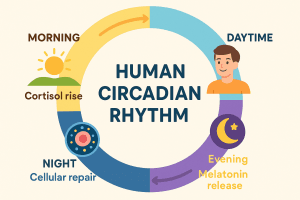
Melatonin peaks at night, repairing DNA and reducing oxidative stress.
-
Cortisol rises in the morning, giving energy and mental clarity.
-
Growth Hormone is released during deep sleep, aiding muscle and tissue repair.
Cellular Health
Circadian alignment enhances autophagy (cellular cleanup) and mitochondrial repair, both critical for slowing aging.
Practical Hacks to Align Your Circadian Rhythm
-
Morning Sunlight Exposure
Get 10–15 minutes of outdoor sunlight within an hour of waking. Resets your SCN and boosts morning cortisol. -
Time Your Meals
Eat most calories earlier in the day. Late-night eating disrupts insulin and fat metabolism. -
Control Light at Night
Use dim, warm lighting. Avoid screens 1–2 hours before bed (or use blue-light blockers). -
Consistency Is King
Wake up and sleep at the same time daily — even weekends. -
Temperature Cues
Cool rooms at night (18–20°C) trigger melatonin and deep sleep.
Authority Link: Sleep Foundation – Circadian Rhythms Explained

FAQs
Q: Can supplements fix my circadian rhythm?
Melatonin can help reset short-term jet lag, but long-term solutions require light, food timing, and routine.
Q: Is napping bad for circadian health?
Short naps (<30 minutes) are fine. Long, irregular naps may disrupt night sleep.
Q: How does circadian rhythm affect aging?
It regulates DNA repair, hormone balance, and inflammation — all key drivers of aging.
Q: What about night-shift workers?
They’re at higher risk of chronic disease. Strong light cues, meal timing, and blackout curtains can help.
Summary Checklist
✅ Get morning sunlight daily
✅ Keep meals earlier and consistent
✅ Use warm light at night, limit screens
✅ Maintain a steady sleep-wake schedule
✅ Cool down your room for deeper rest
Related reading: Sleep and Longevity, Biological Age, Autophagy and Aging.
Related: Hydration and Longevity: How Water Intake Shapes Energy, Skin, and Aging


 Emma Thornton
 Rachel Summers
 Ashley

 Dr. Rachel Stone
 Sarah Mitchell