 Emma Thornton
Introduction to Sleep Deprivation
Sleep deprivation is one of the most widespread and consequential public health problems of the modern age — yet it is so normalised that most people experiencing it don’t recognise its full impact. The effects of insufficient sleep extend far beyond feeling tired: sleep deprivation impairs every system in the body, from brain function and immune defence to cardiovascular health, metabolic function, and emotional stability. Understanding what actually happens when you don’t sleep enough is the most compelling argument for prioritising sleep. For a complete guide to sleep and recovery, see our complete sleep and recovery guide.
Short-Term Effects
Focus and Memory Problems
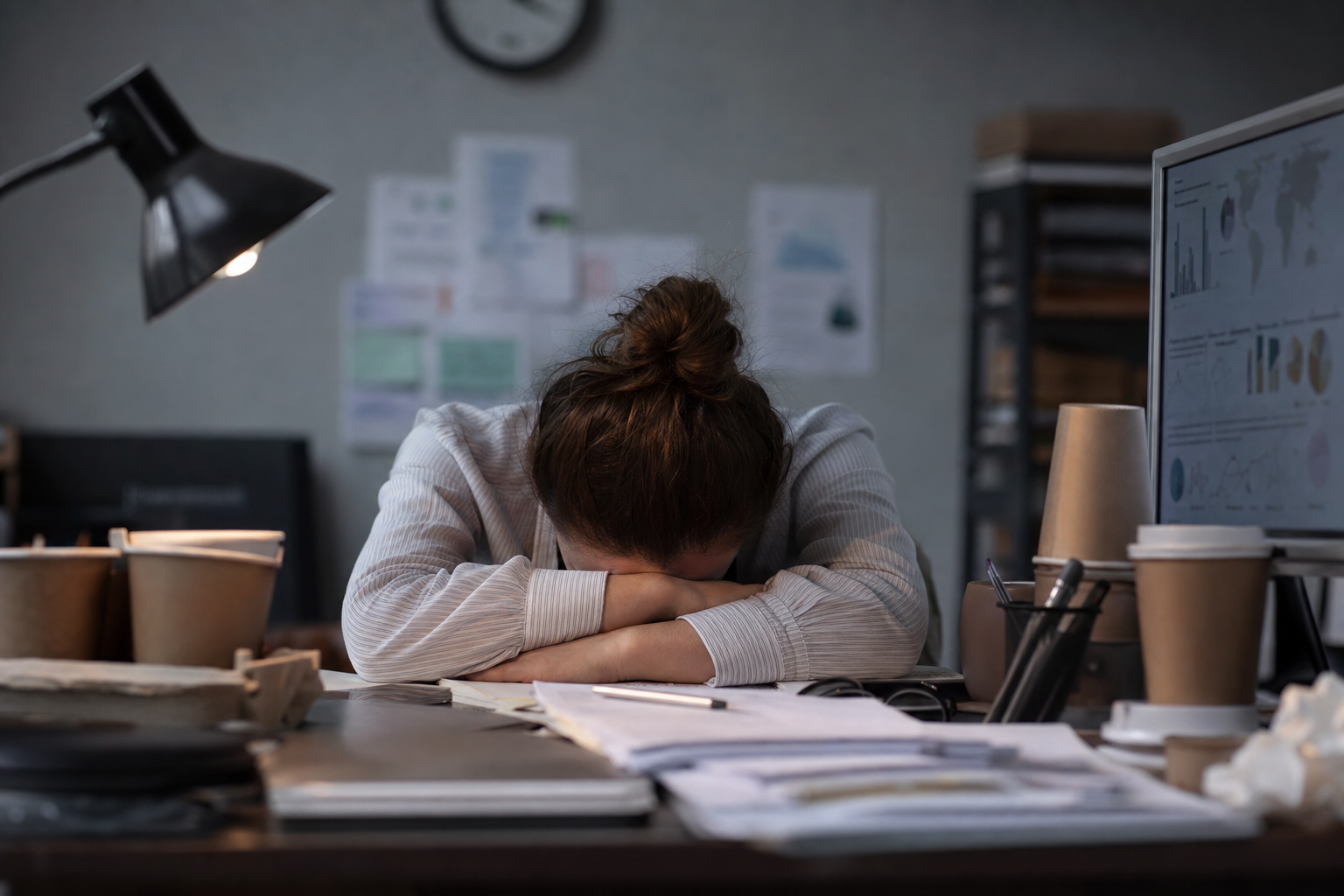
Even a single night of insufficient sleep (less than 6 hours) measurably impairs attention, working memory, executive function, and processing speed. The prefrontal cortex — the brain region responsible for planning, decision-making, impulse control, and complex reasoning — is disproportionately sensitive to sleep loss. Research by Matthew Walker and colleagues found that 17 hours without sleep produces cognitive impairment equivalent to a blood alcohol level of 0.05% — and 24 hours without sleep is equivalent to 0.10% (legally drunk in most jurisdictions). Chronically sleeping 6 hours per night accumulates equivalent impairment over 10 days.
Mood Changes
Sleep deprivation dramatically amplifies negative mood states. Neuroimaging studies show that the amygdala — the brain’s threat-detection and emotional reactivity centre — shows 60% greater reactivity to negative stimuli in sleep-deprived subjects compared to well-rested controls. Simultaneously, the connection between the amygdala and the prefrontal cortex (which normally modulates emotional responses) is weakened. The result is more intense emotional reactions, reduced ability to regulate them, increased irritability, reduced empathy, and greater interpersonal conflict. See our guide to sleep and mental health for the full emotional impact of poor sleep.
Slower Reaction Time
Reaction time slows progressively with accumulated sleep debt. Driving while sleep-deprived is as dangerous as driving drunk — drowsy driving causes approximately 20% of serious road accidents in most developed countries. Microsleeps — involuntary brief episodes of sleep lasting 2–30 seconds — occur without awareness in severely sleep-deprived individuals, during which they are completely unresponsive to the environment. These are particularly dangerous during driving, operating machinery, or performing any task requiring sustained attention.
Long-Term Health Effects
Immune Function
Sleep is when the immune system performs its most intensive work — producing cytokines, T-cells, and natural killer cells. Chronically sleeping less than 7 hours more than triples the risk of catching a cold when exposed to a rhinovirus (Carnegie Mellon University study). Sleep deprivation reduces vaccine efficacy — subjects who slept less than 6 hours the night before and after a hepatitis B vaccination produced less than half the antibody response of those who slept 8+ hours. See our guide to how much sleep you need for immune function context.
Weight and Metabolism
Chronic sleep deprivation is a significant and independent risk factor for obesity and type 2 diabetes. It disrupts hunger hormones (raising ghrelin, lowering leptin), increases appetite for high-calorie foods, reduces glucose tolerance, increases insulin resistance, elevates cortisol (which promotes fat storage), and reduces NEAT. People who chronically sleep less than 6 hours are 30% more likely to be obese than those sleeping 7–9 hours. See our guide to sleep and weight loss for the full metabolic picture.
Heart Health
Sleeping less than 6 hours per night is associated with a 48% increased risk of developing heart disease and a 15% increased stroke risk. Sleep deprivation raises blood pressure (particularly nighttime diastolic blood pressure, which normally drops during sleep), increases inflammatory markers (CRP, IL-6), promotes atherosclerosis, and elevates sympathetic nervous system tone — all established cardiovascular risk factors. The cardiovascular effects of chronic sleep deprivation are among the most robustly replicated findings in sleep medicine.
Performance Effects
Work Productivity
Sleep-deprived workers are less productive, make more errors, have worse interpersonal relationships, take more sick days, and are more likely to be involved in workplace accidents. The RAND Corporation estimated that sleep deprivation costs the US economy $411 billion annually in lost productivity. Yet most organisations still normalise and even celebrate sleep deprivation as a badge of work ethic — at significant cost to performance and safety.
Exercise Performance
Sleep deprivation reduces maximal strength, power output, endurance capacity, reaction time, accuracy, and motivation to exercise. It increases perceived exertion (the same workload feels harder), reduces pain tolerance, and increases injury risk. Chronically sleep-deprived athletes cannot realise their training potential because adaptation is impaired. See our guide to sleep and muscle recovery for athlete-specific impacts.
Driving Safety
Drowsy driving is responsible for an estimated 20% of serious road accidents. The risk escalates dramatically with each additional hour of sleep deprivation. Driving after being awake for 24 hours impairs driving ability equivalently to a blood alcohol level of 0.10%. Critically, sleep-deprived people consistently underestimate their own impairment — believing they are functioning adequately when objective tests reveal significant deficits.
How to Recover from Sleep Deprivation
Prioritise Sleep
The primary intervention is obvious but important: commit to getting 7–9 hours every night. The most common barrier is not time but prioritisation — sleep is the first thing sacrificed when schedules are busy, despite being the foundation upon which productivity, health, and wellbeing depend.
Strategic Naps
During acute recovery from sleep deprivation, strategic naps can help restore short-term alertness and performance while nighttime sleep patterns are being corrected. A 20-minute power nap reduces sleepiness and improves cognitive performance for 2–3 hours. See our guide to napping benefits and rules.
Consistent Bedtimes
During sleep debt recovery, going to bed at a consistent time (even earlier than usual) and allowing yourself to wake naturally — without an alarm — for a period of days to weeks allows the body to repay sleep debt at its own pace. Most people in genuine sleep debt find they sleep 9–10 hours for the first several nights before settling back to their natural requirement. See our guide to sleep hygiene habits for sustainable sleep scheduling.
FAQ
What are the effects of sleep deprivation?
Impaired cognition, memory, and reaction time; increased emotional reactivity; weakened immunity; weight gain; increased cardiovascular disease risk; reduced exercise performance; and long-term increased risk of dementia, diabetes, and early mortality.
How many nights does it take to recover?
Short-term performance deficits can partially recover with a few nights of adequate sleep. Full cognitive recovery from extended sleep debt takes longer — weeks of consistent adequate sleep may be needed to fully restore hormonal, immune, and metabolic function.
Can sleep deprivation be dangerous?
Yes — acutely, through increased accident risk (particularly driving); chronically, through dramatically increased risk of cardiovascular disease, metabolic disease, immune dysfunction, and cognitive decline including dementia.
How much sleep loss is too much?
Even one night below 7 hours produces measurable cognitive and emotional impairment. Chronic sleep below 6 hours is associated with significantly increased risk across virtually all major disease categories.
Does caffeine fix sleep deprivation?
Caffeine temporarily reduces perceived sleepiness by blocking adenosine receptors, but it does not restore cognitive function to rested levels, does not produce the restorative biological effects of actual sleep, and can impair subsequent sleep if consumed too late.
Is one bad night of sleep serious?
One night of poor sleep produces measurable but reversible impairment. The concern is chronic sleep restriction — consistently sleeping less than 7 hours per night accumulates deficits that do not resolve without dedicated sleep recovery periods.

 Ashley
 James Hargreaves
 Emma Thornton
 Rachel Summers

 Daniel Brooks