 Daniel Brooks
Introduction to Sleep and Weight
The relationship between sleep and weight is one of the most robust — and most overlooked — connections in metabolic health. Chronic sleep deprivation is a significant and independent risk factor for weight gain, obesity, and metabolic dysfunction. Understanding this link explains why many people struggle to lose weight despite dieting: if sleep is inadequate, the hormonal environment consistently works against fat loss. For a complete overview of sleep and physical recovery, see our complete sleep and recovery guide.
How Sleep Affects Weight Loss
Hunger Hormones
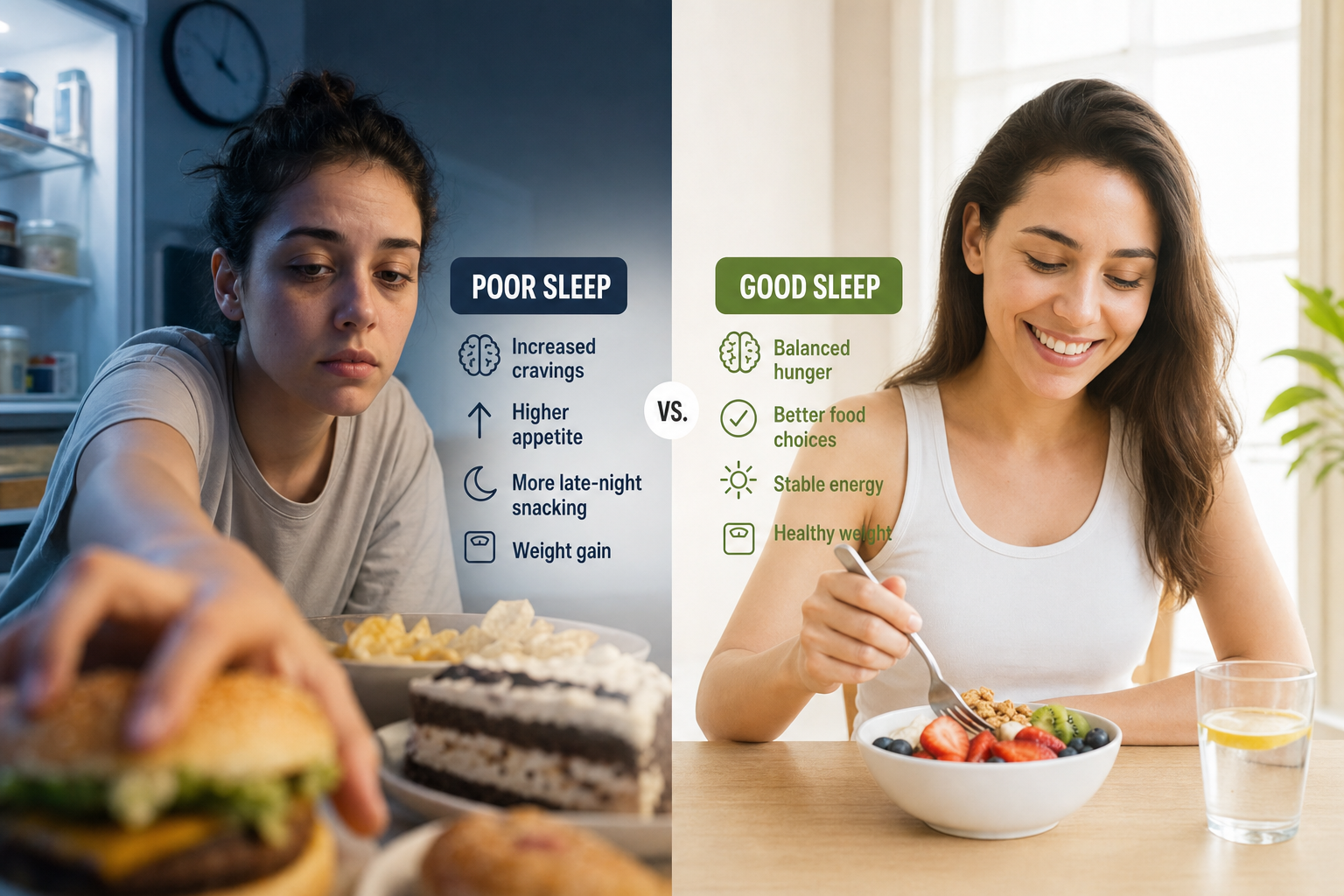
Sleep deprivation profoundly disrupts the two primary appetite-regulating hormones: ghrelin and leptin. Ghrelin — the hunger hormone — increases when sleep is insufficient, signalling the brain to eat more. Leptin — the satiety hormone that signals fullness — decreases. The net effect is increased appetite and reduced satiety signals even after eating, making it significantly harder to maintain a caloric deficit. Studies show that just two nights of sleeping 4–5 hours increases ghrelin by 28% and reduces leptin by 18% — a hormonal combination that increases appetite substantially, particularly for high-calorie, high-carbohydrate foods.
Cravings and Food Choices
Sleep-deprived brains make systematically worse food choices. Neuroimaging studies show that the reward centres of the brain respond more strongly to high-calorie foods when sleep-deprived, while the prefrontal cortex (which governs impulse control and rational decision-making) is suppressed. The practical result is stronger cravings for sugary, fatty, processed foods and reduced ability to resist them. This is not a willpower failure — it is a neurological consequence of insufficient sleep.
Energy and Activity
Sleep deprivation reduces spontaneous physical activity throughout the day — not just formal exercise, but general movement (NEAT: non-exercise activity thermogenesis). Fatigue from poor sleep leads to more time sitting, less incidental walking, and reduced motivation for planned exercise. NEAT can account for several hundred calories of daily energy expenditure in active individuals — making its suppression through poor sleep a significant contributor to a positive energy balance and weight gain over time.
Why Poor Sleep Can Lead to Weight Gain
More Snacking
Sleep-deprived individuals snack more — particularly in the evening and late at night when the endocannabinoid system is most active. Studies consistently find that short sleepers consume 300–500 more calories per day than adequate sleepers, largely from snacking on high-calorie foods after 9pm when metabolic processing is less efficient.
Lower Exercise
Fatigue from poor sleep reduces exercise motivation and performance. Workout quality deteriorates — speed, strength, power output, and endurance all decline measurably with sleep deprivation. People who regularly sleep poorly are significantly less likely to adhere to exercise programmes over time.
Stress Eating
Sleep deprivation elevates cortisol — the stress hormone — which directly stimulates appetite for calorie-dense foods and promotes fat deposition, particularly visceral (abdominal) fat. Cortisol also increases insulin resistance, making the body more likely to store calories as fat rather than use them for energy.
Habits That Support Sleep and Weight Goals
Meal Timing
Eating in alignment with your circadian rhythm — consuming most calories during daylight hours and finishing eating 2–3 hours before bed — supports both sleep quality and metabolic efficiency. Late-night eating raises core body temperature (delaying sleep onset) and is processed less efficiently metabolically than earlier meals.
Exercise Timing
Regular exercise improves both sleep quality and weight management, but timing matters. Morning or afternoon exercise is most supportive of sleep. Evening exercise (particularly high intensity within 1–2 hours of bed) can delay sleep in some individuals by raising core temperature and cortisol. See our guide to sleep and muscle recovery for exercise-sleep timing guidance.
Sleep Schedule
Consistent sleep timing supports circadian-aligned metabolism. The circadian system regulates when the body is primed for fat burning versus fat storage — and aligning sleep, eating, and activity with this rhythm optimises metabolic outcomes. See our guide to circadian rhythm and sleep.
FAQ
Does lack of sleep cause weight gain?
Yes — through multiple mechanisms: increased hunger hormones (ghrelin rises, leptin falls), stronger cravings for high-calorie foods, reduced exercise motivation and NEAT, elevated cortisol promoting fat storage, and late-night snacking behaviour.
Can better sleep help you lose weight?
Yes — improving sleep quality and duration to 7–9 hours per night normalises hunger hormones, reduces cravings, improves exercise adherence, and creates a more favourable metabolic environment for fat loss.
What is the best bedtime for weight loss?
Earlier bedtimes (10–11pm) that allow 7–9 hours before a consistent morning wake time tend to produce better metabolic outcomes than late bedtimes. Consistency matters more than the specific time.
How many calories does poor sleep add?
Studies show that short sleepers consume approximately 300–500 additional calories per day compared to adequate sleepers, primarily from late-night snacking on high-calorie foods.
Does sleep affect metabolism?
Yes — sleep deprivation reduces resting metabolic rate, impairs glucose metabolism, increases insulin resistance, and elevates cortisol, all of which shift the body toward fat storage rather than fat burning.
Is sleep more important than diet for weight loss?
Diet and sleep are complementary — inadequate sleep undermines dietary efforts significantly. You cannot out-diet chronic sleep deprivation. Both must be addressed for sustainable weight management.


 Daniel Brooks
 Emma Thornton

 James Hargreaves
 Ashley
 Rachel Summers