 James Hargreaves
Walk into any health food store or scroll through any wellness account and you’d think everyone needs a stack of 12 supplements just to function. The reality is much simpler — and much cheaper.
Most supplements that are heavily marketed have weak evidence. Most supplements with strong evidence are boring and inexpensive. The gap between what’s popular and what’s actually supported by research is enormous, and navigating it requires ignoring a lot of confident-sounding claims.
Here’s the short list of what has genuine evidence behind it — targeted at actual needs rather than general “wellness” — and which popular ones are largely a waste of money.
The Problem With “Best Supplements” Lists
Most best-supplement lists are written to sell supplements. They recommend broad stacks, include everything, and treat weak observational evidence as if it were clinical proof. The reality is more useful and more boring: the supplements with genuine evidence are few, specific, and most effective when targeted at an actual need or deficiency rather than taken as a general insurance policy.
Here’s what the evidence actually supports for overall health in otherwise healthy adults — and what it doesn’t.
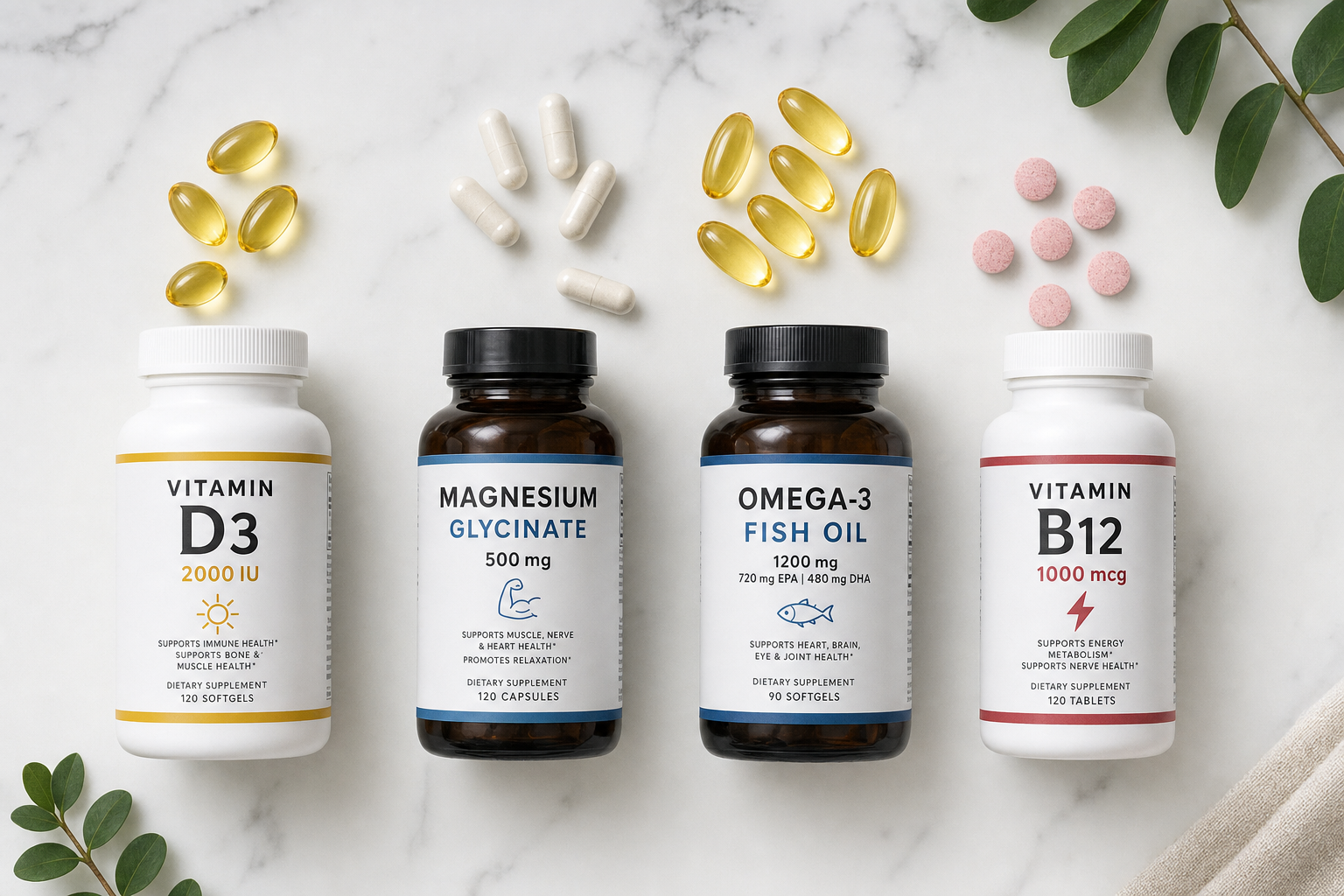
Vitamin D — If You’re Deficient or Low
Vitamin D deficiency affects an estimated one billion people worldwide. It’s associated with weakened immune function, poor bone health, muscle weakness, low mood, and increased risk of several chronic diseases. Supplementation in people who are deficient or insufficient has good evidence for correcting these issues.
The important nuance is that vitamin D supplementation in people who are already sufficient doesn’t produce the same benefits — you’re correcting a deficiency, not topping up a tank that’s already full. Get your 25-OH vitamin D level tested before deciding on a dose. Most adults with limited sun exposure benefit from 1,000–2,000 IU daily to maintain sufficiency, though some people need more.
Vitamin D works better with adequate vitamin K2 (which directs calcium to bones rather than arteries) and magnesium (which is required for vitamin D conversion). If you’re supplementing D at higher doses, it’s worth considering these co-factors.
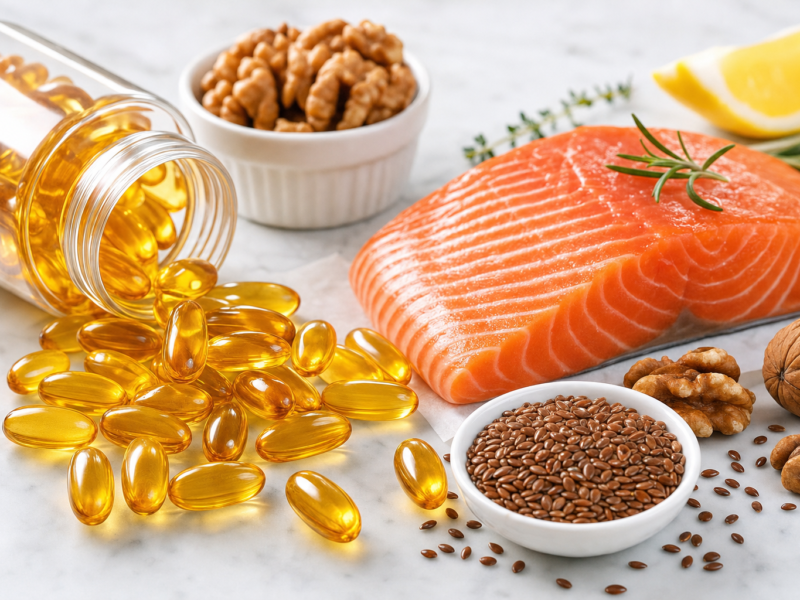
Omega-3 (EPA and DHA) — If You Don’t Eat Fatty Fish
EPA and DHA — the long-chain omega-3 fatty acids in fish and fish oil — have the strongest evidence for lowering triglycerides (at 2–4g/day), reducing inflammation, and supporting fetal brain development during pregnancy. The cardiovascular evidence in the general population is weaker than commonly marketed, but for people with elevated triglycerides or who don’t eat fatty fish regularly, the case for supplementation is reasonable.
Two servings of fatty fish per week provides roughly adequate EPA and DHA for most people. If you don’t eat fish — whether by preference or dietary choice — algae-based omega-3 is the cleanest alternative, providing EPA and DHA directly without the fish.
A standard 1,000mg fish oil capsule provides approximately 180mg EPA and 120mg DHA — much less than the therapeutic doses used in cardiovascular trials. If you’re targeting a specific effect like triglyceride reduction, you need a concentrated product or multiple capsules per day.
Creatine Monohydrate — For Anyone Who Exercises
Creatine is one of the most well-researched supplements in existence, with hundreds of clinical trials supporting its safety and efficacy. It increases phosphocreatine stores in muscle, allowing faster ATP regeneration during high-intensity exercise — which translates to more strength, more power, better recovery between sets, and over time, more muscle mass.
What’s less well-known is that creatine also has emerging evidence for cognitive benefits, particularly in older adults and in situations of sleep deprivation. The brain uses creatine for energy too, and supplementation appears to support mental performance under stress.
3–5g of creatine monohydrate per day is the standard effective dose. No loading phase is necessary. Monohydrate is the best-studied form — fancier, more expensive versions (creatine HCl, kre-alkalyn) have no demonstrated superiority. It’s one of the few supplements where the cheap generic version is genuinely optimal.
Magnesium — For Sleep, Muscle Function, and More
Magnesium is involved in over 300 enzymatic reactions and is the fourth most abundant mineral in the body. Dietary deficiency is common in Western populations due to soil depletion and processed food consumption. Low magnesium is associated with poor sleep, muscle cramps, anxiety, constipation, and migraine frequency.
The strongest evidence for supplementation is in migraine prevention (several meta-analyses confirm benefit), sleep quality improvement, and muscle cramp reduction. Evidence for general anxiety reduction is more mixed but plausible given magnesium’s role in GABA function.
Form matters: magnesium glycinate and magnesium threonate are better absorbed and better tolerated than magnesium oxide (which is cheap but poorly absorbed and causes diarrhoea at higher doses). Glycinate is the best all-purpose choice. Typical effective doses are 200–400mg elemental magnesium per day.
Vitamin B12 — For Vegans and Some Older Adults
B12 is found almost exclusively in animal products. Vegans and strict vegetarians are at genuine risk of deficiency. Older adults are also at risk because stomach acid production decreases with age, reducing B12 absorption from food — and many are on PPIs (proton pump inhibitors) which further reduce absorption.
B12 deficiency causes neurological damage, anaemia, and cognitive decline — and it can develop slowly and silently before symptoms appear. Supplementation in people at risk is straightforward and low-cost. Methylcobalamin or cyanocobalamin are both effective forms at 500–1,000mcg daily or higher.
Protein — If You’re Not Meeting Your Target From Food
Protein isn’t a supplement in the traditional sense, but protein powders are among the most evidence-backed “supplements” for body composition, muscle maintenance, and satiety. The evidence for adequate protein intake — particularly for older adults trying to prevent muscle loss, and for people trying to lose fat while preserving muscle — is strong and well-replicated.
If you’re consistently meeting your protein target (roughly 1.6–2.2g per kg of body weight if active, or at minimum 1.2g/kg for older adults), you don’t need powder. If you’re not, whey protein (or pea/rice protein for plant-based eaters) is the most cost-effective and evidence-supported way to close the gap.
What Doesn’t Live Up to the Hype
Multivitamins
Multiple large, well-designed trials including the USPSTF review have found that multivitamins do not meaningfully reduce the risk of cancer, cardiovascular disease, or premature death in generally healthy adults. They provide nutritional insurance against deficiency in a broad sense, but the evidence for health benefits beyond correcting documented deficiencies is weak. Fixing specific deficiencies with targeted supplements is more effective than a broad multivitamin.
Antioxidant Megadoses
High-dose vitamin C, vitamin E, and other antioxidant supplements have repeatedly failed to show benefit in large trials and in some cases (particularly beta-carotene in smokers) have shown harm. Antioxidants from food are beneficial; isolated supplements at high doses disrupt the body’s own antioxidant signalling rather than supplementing it.
Most “Longevity” Supplements
NMN, resveratrol, berberine, and other longevity supplements have interesting mechanistic evidence from animal studies and some early human data. None have robust, replicated human clinical trial evidence for extending lifespan or significantly slowing aging in healthy people. They may be worth considering in specific contexts, but treating them as established interventions rather than experimental ones misrepresents the evidence.
How to Actually Choose Supplements
The most useful framework is: identify a specific need, then check whether a supplement has evidence for that specific need at an appropriate dose. Questions worth asking:
- Do I have a documented deficiency or insufficiency? (Get tested for vitamin D, B12, iron, magnesium if relevant)
- Do I have a specific goal this supplement has evidence for? (Creatine for strength, omega-3 for elevated triglycerides, magnesium for migraines)
- Am I in a population with genuinely elevated need? (Vegan, pregnant, older adult, athlete)
If the answer to all three is no, you likely don’t need the supplement — and a better diet will outperform any stack for overall health.
Frequently Asked Questions
What are the best supplements for overall health?
The supplements with the strongest evidence for most people are vitamin D (if deficient), omega-3 (if low fish intake), creatine monohydrate (if active), magnesium glycinate (if low or for specific symptoms), and vitamin B12 (if vegan or older adult with absorption issues). These are targeted interventions, not a general stack everyone needs.
Do multivitamins actually work?
For correcting specific deficiencies, yes. For improving health outcomes in people without deficiencies, the evidence from large trials is consistently weak. Targeted supplements for documented needs outperform multivitamins.
What supplements do most people actually need?
Vitamin D is the most commonly deficient nutrient in developed countries and the most widely applicable supplement. Beyond that, it depends on your diet, age, health status, and specific goals. Testing is more useful than guessing.
Is creatine safe for long-term use?
Yes — creatine monohydrate has been studied for decades with no credible safety concerns at standard doses (3–5g/day) in healthy people. The concerns about kidney damage and hair loss that circulate online are not supported by the research literature.
What supplements are a waste of money?
Multivitamins for healthy people without deficiencies, high-dose antioxidant supplements (vitamin E, C megadoses), most detox or cleanse products, and many “proprietary blend” products where you can’t verify the dose of the active ingredients.
The Bottom Line
The best supplements for overall health are the ones you actually need. Vitamin D if you’re deficient, omega-3 if you don’t eat fish, creatine if you exercise, magnesium if you sleep poorly or get migraines, B12 if you’re vegan or older. Everything else — the broad stacks, the longevity blends, the detoxes — has much weaker evidence and often none at all. The money most people spend on supplements would produce better health outcomes if redirected toward food quality.

 Rachel Summers
 Ashley
 Dr. Maya Chen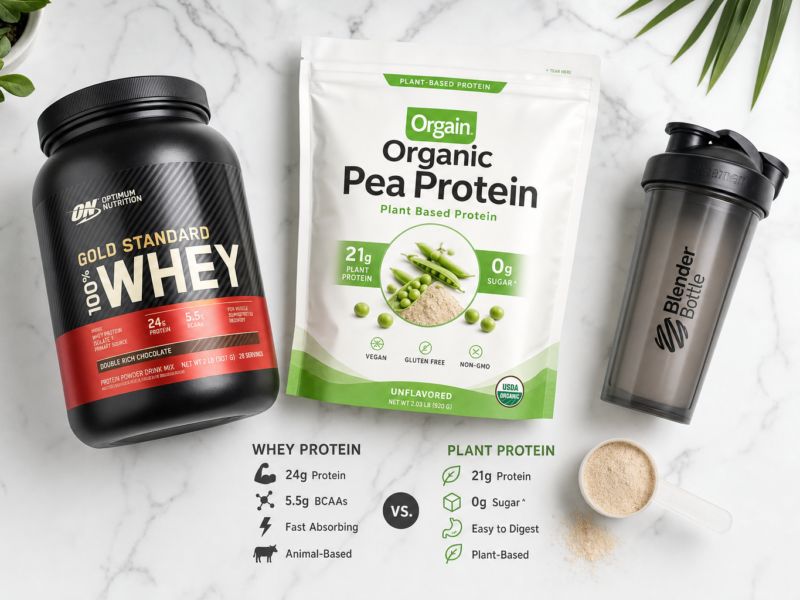
 Sarah Mitchell
 Dr. Rachel Stone