 Sarah Mitchell
Introduction to Sleep Hygiene
Sleep hygiene refers to the collection of behaviours, habits, and environmental conditions that support consistent, high-quality sleep. Unlike medications or supplements, sleep hygiene works by addressing the root causes of poor sleep — inconsistent timing, high pre-sleep arousal, suboptimal environment, and lifestyle factors that undermine the body’s natural sleep-wake system. Good sleep hygiene is the foundation upon which all other sleep interventions rest. For a complete understanding of why these habits matter, see our complete sleep and recovery guide.
Core Sleep Hygiene Habits
Consistent Bedtime
Going to bed at the same time each night — even on weekends — synchronises your sleep drive with your circadian rhythm. When bedtime is consistent, the body begins releasing melatonin and reducing core temperature at the appropriate time, making falling asleep easier and more predictable. Irregular bedtimes, even by 1–2 hours, create a form of “social jetlag” that impairs sleep quality and daytime alertness throughout the week.
Consistent Wake Time
A fixed wake time is even more important than a fixed bedtime. Your wake time determines your circadian anchor — the reference point from which your body calculates all subsequent biological timing. Waking at the same time every day (including weekends) is the single most impactful scheduling habit for sleep quality. It builds consistent sleep pressure by bedtime and ensures your sleep window aligns with your biological clock. See our guide to circadian rhythm and sleep for the science behind this.
Bedroom Setup
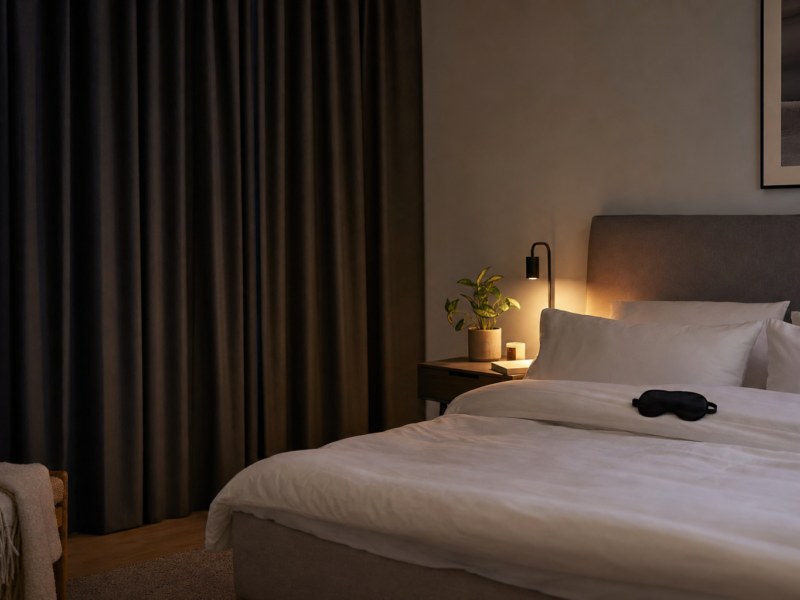
The bedroom should be used only for sleep and intimacy — not work, television, or phone use. This conditions the brain to associate the bedroom with sleep (a principle called stimulus control), making it easier to fall asleep upon entering the bedroom. The ideal sleep environment is dark (blackout curtains or a sleep mask), cool (16–18°C), and quiet (earplugs or white noise). See our detailed guide to how to improve sleep quality for full environment setup guidance.
Habits That Hurt Sleep Hygiene
Late Caffeine
Caffeine has a half-life of 5–7 hours, meaning a 3pm coffee still has 50% of its stimulant effect at 9pm. Caffeine blocks adenosine receptors — the same receptors that build sleep pressure throughout the day — preventing the sleepiness signal from reaching the brain. For most people, stopping caffeine by 1–2pm is ideal. Those highly sensitive to caffeine may need to stop by noon.
Late Screen Time
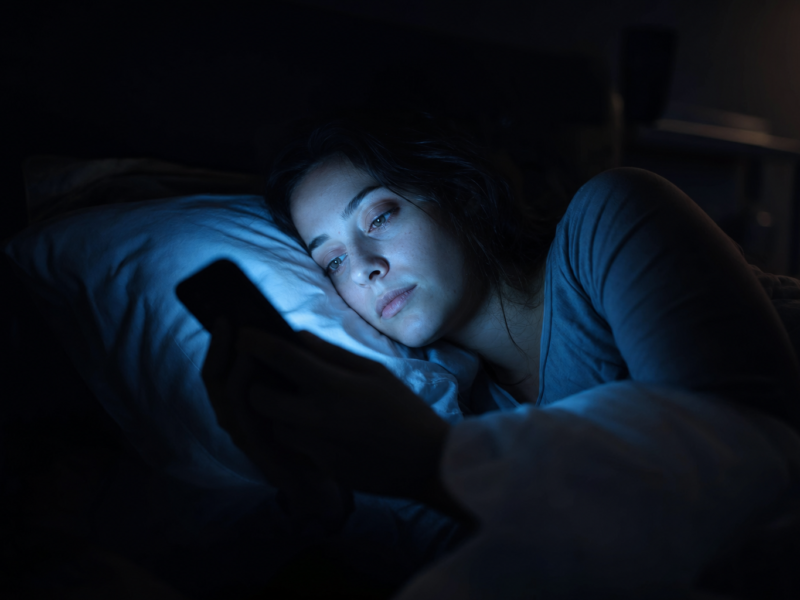
Screens emit blue wavelength light that suppresses melatonin and delays the onset of the biological night signal. But beyond the light, the content itself — news, social media, email, video games — activates alerting neural circuits that directly oppose sleep onset. Stopping screen use 60–90 minutes before bed is recommended; at minimum, using blue light filters and reducing content engagement in the final hour before sleep.
Irregular Schedules
Shift work, highly variable social schedules, travel across time zones, and weekend sleep timing that differs significantly from weekdays all fragment the circadian rhythm and impair sleep quality. If schedule variability is unavoidable, keeping wake time consistent (even when bedtime varies) provides the strongest possible circadian anchor.
Nighttime Routine Examples
Wind-Down Routine
A 60–90 minute wind-down routine before bed significantly improves sleep onset. A practical template: 90 minutes before bed, dim household lights and turn off overhead lighting. 60 minutes before, stop screens or switch to low-stimulation content with a blue light filter. 30 minutes before, begin a calming activity — reading a physical book, gentle stretching, a warm shower or bath (the post-bath temperature drop accelerates sleep onset), or journaling. 10–15 minutes before, get into bed in a cool, dark, quiet room.
Relaxation Techniques
Progressive muscle relaxation (systematically tensing and releasing muscle groups), body scan meditation, diaphragmatic breathing (4-7-8 breathing or box breathing), and cognitive shuffling (deliberately imagining random unconnected images to prevent ruminative thinking) are all evidence-supported techniques for reducing pre-sleep arousal. See our guide to insomnia causes and solutions for more on CBT-I-based techniques.
Sleep Hygiene Checklist
Light
Morning: get 10–30 minutes of bright natural light within 1 hour of waking. Evening: dim artificial lights from 2 hours before bed; avoid bright overhead lighting; use warm-toned lamps; switch screens to night mode or turn off entirely from 60–90 minutes before sleep.
Noise
A quiet sleep environment is ideal. If eliminating noise isn’t possible, a consistent background of white noise (a fan, white noise machine, or app) can mask intermittent disturbing sounds by providing a stable auditory baseline. Earplugs are an effective solution for partners who snore or noisy environments.
Temperature
Set the bedroom to 16–18°C (60–65°F). If this isn’t controllable, a fan, lightweight breathable bedding, or cooling mattress topper can reduce sleeping surface temperature. A warm shower or bath 1–2 hours before bed paradoxically improves sleep by causing the rapid post-bath temperature drop that mimics the natural temperature decrease that initiates sleep.
FAQ
What is sleep hygiene?
Sleep hygiene is the set of habits, behaviours, and environmental conditions that support consistent, high-quality sleep. It addresses the behavioural and lifestyle factors that most commonly disrupt natural sleep.
What are the most important sleep hygiene habits?
A consistent wake time, a cool dark quiet bedroom, stopping caffeine by early afternoon, and a wind-down routine without screens are the four highest-impact habits for most people.
How long does sleep hygiene take to work?
Improvements in sleep onset and quality are typically noticeable within 1–2 weeks of consistent sleep hygiene implementation. For people with chronic insomnia, additional CBT-I techniques may be needed alongside good sleep hygiene.
Does sleeping with the TV on hurt sleep?
Yes. Even low-level light and audio stimulation from a TV delays sleep onset, reduces deep sleep, and increases nighttime waking. The bedroom should be as dark and quiet as possible.
Does a nap count as bad sleep hygiene?
Not necessarily — a short nap (10–20 minutes) before 3pm typically doesn’t disrupt nighttime sleep. Long or late naps do reduce sleep pressure and can make falling asleep at night harder. See our napping guide for optimal nap rules.
Is it bad to use your phone in bed?
Yes — for two reasons. The light delays melatonin, and the content (social media, news, email) activates alerting brain circuits. Using your phone in bed also weakens the mental association between bed and sleep (stimulus control).

 James Hargreaves
 Daniel Brooks
 Emma Thornton
 Rachel Summers