 Rachel Summers
Introduction to Napping
Napping is one of the most researched and consistently validated performance enhancement tools available — yet it remains underused and culturally stigmatised in many Western workplaces. A well-timed nap improves alertness, mood, cognitive performance, and reaction time. A poorly timed or too-long nap impairs nighttime sleep and leaves you groggy. The difference between a helpful and harmful nap comes down to timing, duration, and individual context. For a complete overview of sleep science, see our complete sleep and recovery guide.
Benefits of Napping
Better Alertness
A short nap of 10–20 minutes produces dramatic improvements in alertness that last 2–3 hours. NASA research on sleepy military pilots found that a 40-minute nap improved performance by 34% and alertness by 100%. The alertness benefit of a nap is comparable to a dose of caffeine — and the two can be synergistically combined (the “nappuccino”: drink a coffee then immediately nap for 20 minutes, waking just as the caffeine kicks in).
Improved Mood
Sleep deprivation increases irritability, emotional reactivity, and stress sensitivity. A short nap partially restores emotional regulation by allowing the brain to process accumulated emotional information and reduce amygdala reactivity. Studies show that afternoon nappers report lower levels of frustration, impulsiveness, and negative mood compared to non-nappers on the same total sleep.
Performance Boost
Napping improves a wide range of cognitive and physical performance metrics: working memory, processing speed, reaction time, decision-making accuracy, and creative problem-solving. For athletes, a post-training nap accelerates recovery and can improve same-day second-session performance. See our guide to sleep and muscle recovery for napping in an athletic context.
Best Nap Lengths
10–20 Minutes — The Power Nap
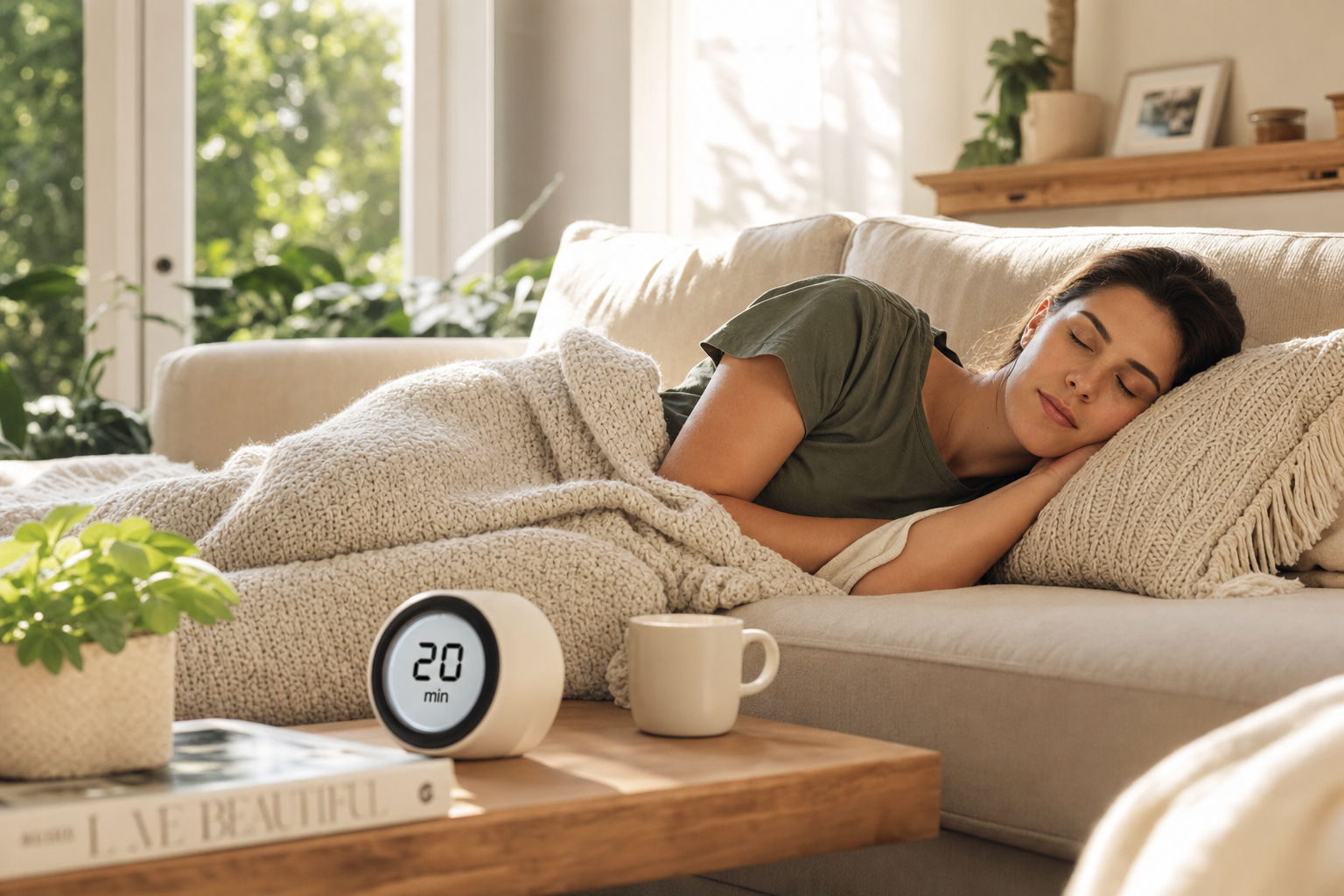
The 10–20 minute nap is the gold standard for most people in most situations. This duration keeps you in N1 and N2 light sleep stages, producing significant alertness and performance benefits without entering deep sleep. Crucially, it avoids sleep inertia — the grogginess that comes from waking during deep sleep. Set an alarm for 20 minutes and you will wake naturally refreshed and ready to go within minutes.
30 Minutes
A 30-minute nap carries more risk of sleep inertia because you may be entering N3 deep sleep when the alarm sounds. Many people wake from a 30-minute nap feeling groggy for 20–30 minutes. If you choose this duration, allow for a grogginess recovery period. Some people find 30 minutes works well with practice; others consistently feel worse after it than they would from a 20-minute nap.
90-Minute Recovery Naps
A 90-minute nap completes approximately one full sleep cycle — moving through N1, N2, N3, and REM sleep. This produces the deepest recovery benefits, including muscle repair (from N3 growth hormone release) and cognitive consolidation (from REM). Waking at the end of a 90-minute cycle also minimises sleep inertia. The tradeoff: 90-minute naps significantly reduce nighttime sleep pressure and can make falling asleep at night harder. Best reserved for shift workers, athletes with heavy training loads, or during sleep debt recovery. See our guide to sleep stages and cycles for why 90 minutes matters.
Best Time to Nap
Early Afternoon
The early afternoon (1–3pm) is the optimal napping window for most people. This aligns with a natural post-lunch dip in circadian alertness that most people experience — a genuine biological phenomenon (not simply caused by eating) driven by a brief suppression of the arousal signal from the circadian clock. Napping during this window takes advantage of naturally increased sleepiness and is far enough from bedtime to avoid significant impact on nighttime sleep.
Avoid Late-Day Naps
Napping after 3pm (in people with a standard sleep schedule) significantly reduces sleep pressure at bedtime, making it harder to fall asleep and reducing deep sleep during the subsequent night. The later the nap, the greater the disruption to nighttime sleep. If you nap regularly and have difficulty sleeping at night, nap timing is the first variable to adjust. See our guide to sleep hygiene habits for managing daytime habits that affect nighttime sleep.
When Napping Can Be a Problem
Insomnia
For people with insomnia — particularly difficulty falling or staying asleep at night — daytime napping is generally contraindicated. Napping reduces the sleep pressure (adenosine buildup) that makes falling asleep at night easier, further impairing already compromised nighttime sleep. If you have insomnia, avoiding naps entirely and allowing sleep pressure to build is one of the core strategies of CBT-I. See our guide to insomnia causes and solutions.
Sleep Debt
Napping is not a substitute for adequate nighttime sleep — it addresses symptoms (alertness, performance) without restoring all the physiological benefits of full sleep cycles. People relying heavily on naps to function through the day should address the root cause of their sleep insufficiency rather than relying on naps as a permanent coping strategy.
FAQ
Are naps good for you?
Yes — for most people, a short (10–20 minute) afternoon nap improves alertness, mood, memory, and performance. Regular napping is associated with lower rates of cardiovascular disease in some populations.
How long should a nap be?
10–20 minutes is optimal for most situations — long enough for significant benefit, short enough to avoid sleep inertia and nighttime sleep disruption. 90 minutes is the next best option for deeper recovery, if nighttime sleep won’t be affected.
Do naps affect nighttime sleep?
Short naps (20 minutes) before 3pm have minimal impact on nighttime sleep for most people. Long or late naps meaningfully reduce sleep pressure and can impair falling asleep at night.
What is a power nap?
A power nap is a short nap of 10–20 minutes that captures the alertness and performance benefits of sleep without entering deep sleep stages that cause grogginess upon waking.
Is it normal to need a nap every day?
A mild mid-afternoon dip in alertness is biologically normal. Regular overwhelming sleepiness during the day, however, often indicates insufficient nighttime sleep and should prompt addressing the underlying sleep deficit.
Can napping make up for lost sleep?
Partially. Naps can reduce performance deficits from prior sleep loss but cannot fully restore all the physiological and hormonal recovery that occurs during a full night of sleep.

 James Hargreaves
 Ashley

 Daniel Brooks