 Ashley
Introduction to Sleep Tracking
Sleep tracking wearables have become one of the most popular health technology categories — with tens of millions of people now wearing devices that claim to measure their sleep duration, stages, quality, and recovery every night. But how accurate are these devices really? And how should you use the data they generate? This guide provides an honest, evidence-based answer. For context on what healthy sleep looks like and why it matters, see our complete sleep and recovery guide.
What Wearables Measure
Sleep Duration
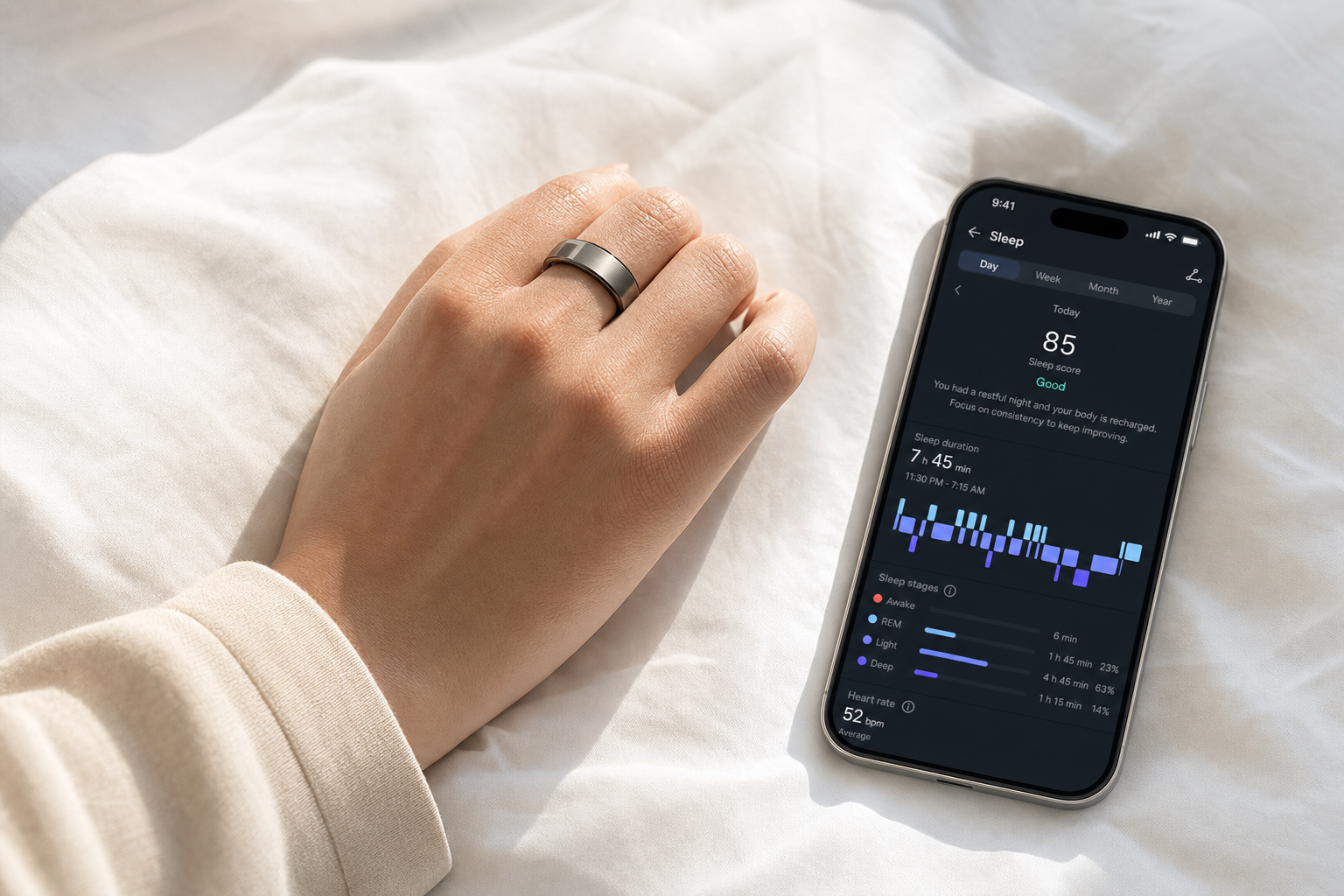
Total sleep duration is the most accurate metric consumer sleep trackers provide. By detecting periods of stillness and low heart rate variability, most devices can estimate total sleep time within 30 minutes of what polysomnography (clinical sleep study) would show. This makes wearables reasonably reliable for tracking sleep duration trends over time.
Sleep Stages
Sleep stage classification is where consumer devices are significantly less accurate. Clinical sleep staging requires EEG (brainwave measurement) — a technology not available in wrist-worn consumer devices. Instead, wearables infer sleep stages from heart rate, heart rate variability (HRV), respiratory rate, movement, and skin temperature. These correlates are real — HRV does differ between sleep stages — but they are imprecise proxies. Studies comparing consumer wearables against polysomnography consistently show overestimation of deep sleep and REM sleep, and poor agreement on specific staging transitions. For understanding what sleep stages actually mean, see our guide to sleep stages and cycles.
Heart Rate and Movement
Heart rate measurement during sleep is generally accurate in modern optical PPG sensors, particularly for average overnight heart rate and broad trends. Movement detection (actigraphy) is reliable for distinguishing active waking from sleep. Heart rate variability (HRV) — a measure of autonomic nervous system recovery status — is increasingly used by devices as a readiness and recovery metric, and has reasonable validity as a relative (day-to-day) measure within an individual, even if absolute values vary between devices.
Accuracy and Limitations
Consumer Devices
Leading consumer sleep trackers (Oura Ring, Apple Watch, Fitbit, Garmin, WHOOP) have improved significantly in recent years. For sleep duration and broad sleep quality trends, they are reasonably useful. However, they should not be treated as medical diagnostic devices. A consumer tracker cannot diagnose sleep apnoea, confirm narcolepsy, or accurately characterise clinical insomnia. For clinical sleep concerns, a formal sleep study remains the gold standard.
Sleep Staging Accuracy
The most honest summary of consumer sleep tracker staging accuracy: better than nothing, but not reliable for granular stage-level analysis. If your tracker tells you that you got 45 minutes of deep sleep versus 90 minutes, this difference may reflect genuine variation — or it may be measurement error. Use staging data as a rough guide and focus more on trends over time than on any single night’s numbers.
How to Use Sleep Data Well
Identify Patterns
The most valuable use of sleep tracking data is identifying patterns over time: Does alcohol reduce your HRV? Does exercise improve your deep sleep score? Does a late dinner delay your sleep onset? These correlational patterns — visible over weeks of data — can guide meaningful behaviour change more effectively than any single night’s readout.
Improve Habits
Use your tracker’s data to test sleep hygiene interventions. Try stopping caffeine earlier, keeping the bedroom cooler, or setting a consistent wake time — then watch how your data responds over 1–2 weeks. This behavioural feedback loop is the most practical and scientifically sound way to use consumer sleep tracking. See our sleep hygiene guide for the interventions most worth tracking.
Avoid Obsessing Over Scores
“Orthosomnia” — a clinical term coined by sleep researchers to describe anxiety about sleep tracker data — is a genuine phenomenon. Some people become so focused on achieving a perfect sleep score that the anxiety itself worsens their sleep. If you find yourself anxious about your sleep score, or checking your tracker as the first thing every morning, consider taking a break from tracking. Good sleep is the goal, not a good number on an app.
Best Use Cases for Tracking
Athletes
For athletes, HRV-based readiness scores can provide useful guidance on training intensity decisions — particularly for identifying when accumulated fatigue warrants a recovery day. Combined with subjective wellbeing ratings, HRV trends over weeks of training can help prevent overreaching. See our guide to sleep and muscle recovery for how recovery tracking fits into training.
Insomnia Monitoring
For people working to improve their sleep, a tracker can provide useful objective data on sleep timing, duration, and basic quality trends — complementing subjective sleep diary ratings used in CBT-I. However, if tracking data becomes a source of anxiety, it should be discontinued. See our guide to insomnia causes and solutions for CBT-I-based approaches.
FAQ
Are sleep trackers accurate?
For total sleep duration: reasonably accurate (within 30 minutes). For sleep stages: moderately accurate at a broad level, but not reliable for granular staging. For clinical diagnosis: not appropriate — formal sleep studies are required.
What do sleep wearables measure?
Movement (actigraphy), heart rate, heart rate variability, respiratory rate, skin temperature, and (in some devices) blood oxygen saturation. Sleep stages are inferred from these signals rather than directly measured.
Can sleep tracking improve sleep?
Yes — if used to identify patterns and guide evidence-based behaviour change. No — if it creates anxiety about scores. The key is using the data to change habits, not to stress about numbers.
Which sleep tracker is most accurate?
The Oura Ring and WHOOP consistently perform well in independent validation studies, particularly for HRV and sleep duration. No consumer device accurately stages sleep at the level of clinical polysomnography.
Should I wear a sleep tracker every night?
If the data motivates positive behaviour change and doesn’t cause anxiety, yes. If you find yourself stressed about your scores or checking data obsessively, taking breaks from tracking is sensible.
Can a sleep tracker detect sleep apnoea?
Some newer devices can flag potential sleep apnoea risk through blood oxygen desaturation patterns, but this is not equivalent to clinical diagnosis. If you suspect sleep apnoea, seek a formal sleep study.


 James Hargreaves
 Emma Thornton
 Rachel Summers