 James Hargreaves
Introduction to Sleep Duration
One of the most common questions in health and wellness is deceptively simple: how much sleep do you actually need? The answer varies by age, activity level, health status, and genetics — but the research is clear that most adults dramatically underestimate their sleep needs, and that the consequences of even modest chronic sleep restriction are significant. For a complete overview of why sleep is so critical for recovery and health, see our complete sleep and recovery guide.
Recommended Sleep by Age
Sleep needs change across the lifespan, reflecting the different demands of development, growth, and maintenance at each stage of life.
Adults (18–64 years)
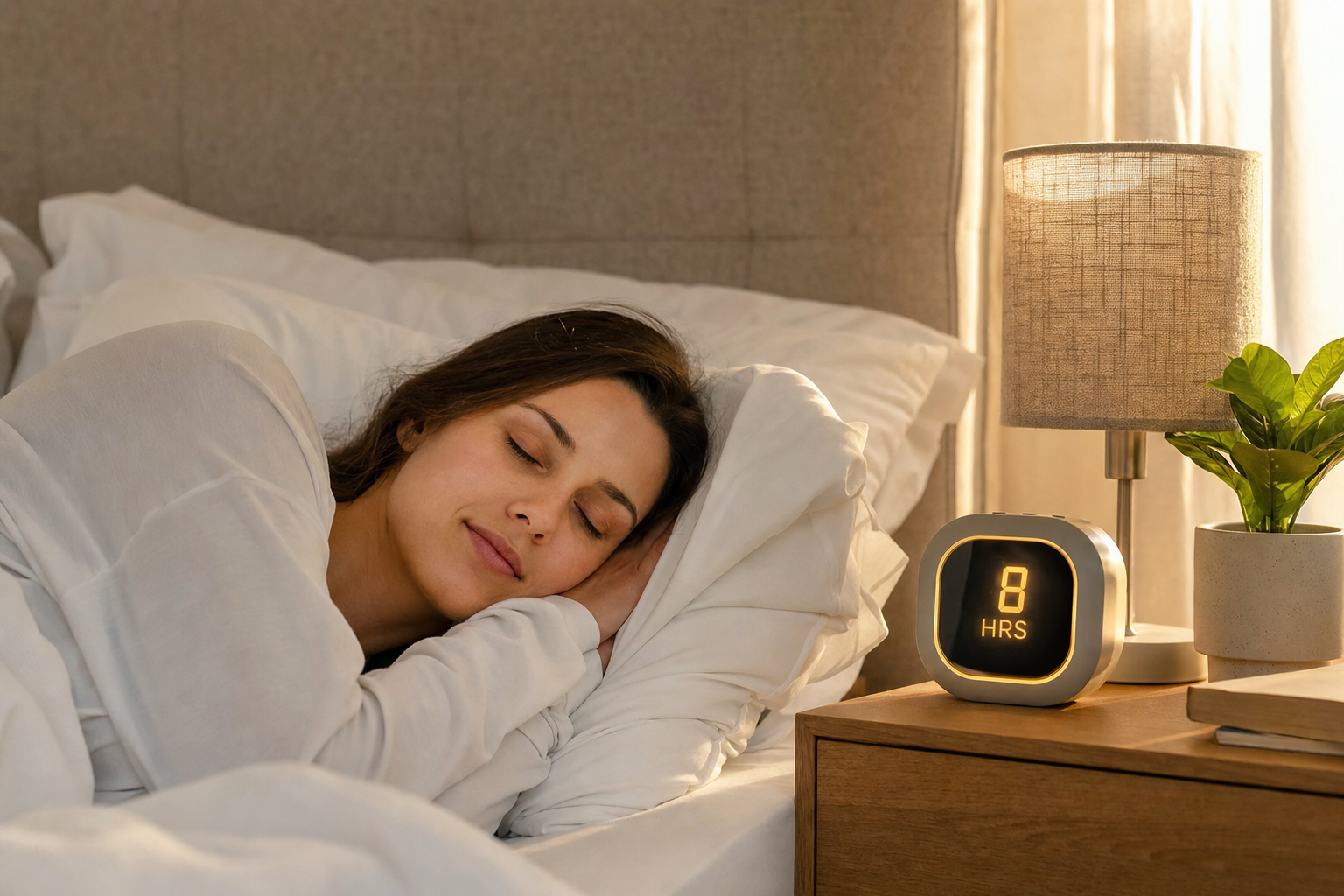
The National Sleep Foundation and the American Academy of Sleep Medicine both recommend 7–9 hours of sleep per night for adults aged 18–64. Research consistently shows that adults who regularly sleep fewer than 7 hours perform worse on cognitive tests, have higher rates of obesity, diabetes, cardiovascular disease, and mortality, and report significantly lower quality of life. The 6-hour sleeper who feels fine is almost certainly experiencing chronic sleep deprivation — numerous studies show that people who are chronically sleep-restricted lose the ability to accurately perceive how impaired they are. Older adults (65+) typically need 7–8 hours and often experience more fragmented sleep.
Teenagers (14–17 years)
Teenagers need 8–10 hours of sleep per night — more than adults — due to the intense physical and neurological development occurring during adolescence. Yet teenagers are among the most sleep-deprived population segments, partly due to the biological delay in their circadian rhythm (which shifts sleep timing later in adolescence) and partly due to early school start times. Chronic sleep deprivation in teenagers is associated with increased depression, anxiety, poor academic performance, risk-taking behaviour, and obesity.
Children
Younger children need significantly more sleep than adults: school-age children (6–13 years) need 9–11 hours; preschoolers (3–5 years) need 10–13 hours including naps; toddlers need 11–14 hours; and newborns need 14–17 hours. Sleep is when the majority of growth hormone is released — making adequate sleep essential for physical development — and when neural pruning and consolidation of learning occur, making it critical for cognitive development.
Signs You Are Not Getting Enough Sleep
Daytime Sleepiness
The most direct sign of insufficient sleep is sleepiness during the day — particularly falling asleep during passive activities like watching television, sitting in a meeting, or riding in a car. If you fall asleep within 5 minutes of lying down, you are likely severely sleep-deprived. Healthy, well-rested people take 10–20 minutes to fall asleep. Needing an alarm clock to wake up is also a reliable sign that you haven’t completed your natural sleep requirement.
Mood and Focus Problems
Irritability, emotional reactivity, difficulty concentrating, impaired working memory, poor decision-making, and reduced creativity are all early signs of sleep insufficiency. Sleep loss disproportionately affects the prefrontal cortex — the area of the brain responsible for executive function, impulse control, and emotional regulation — making sleep-deprived people more reactive, more impulsive, and less able to think clearly. See our guide to sleep and mental health for the full picture.
What Affects Sleep Needs
Activity Level
Athletes and highly physically active people consistently need more sleep than sedentary individuals. During sleep, the body repairs exercise-induced muscle damage, consolidates motor skill learning, and releases the growth hormone necessary for strength and endurance adaptations. Research on elite athletes shows that extending sleep to 9–10 hours per night improves sprint speed, reaction time, accuracy, and mood. See our guide to sleep and muscle recovery for detail on athletic sleep needs.
Stress
High psychological stress increases sleep need and simultaneously makes achieving high-quality sleep harder. Stress hormones fragment sleep architecture, reduce deep sleep, and increase nighttime cortisol — meaning stressed people need more sleep but get less restorative sleep per hour. Managing stress is therefore integral to sleep adequacy, not separate from it.
Illness and Recovery
During illness, the immune system’s demand for sleep increases significantly. Inflammatory cytokines released during infection directly promote sleepiness — this is why you feel exhausted when ill. This increased sleep need is a feature, not a bug: the immune system requires deep sleep to produce the lymphocytes, natural killer cells, and inflammatory mediators needed to fight infection. Resisting this increased sleep need during illness slows recovery.
How to Know Your Ideal Sleep Amount
Sleep Tracking
Consumer sleep trackers — while imperfect in their staging accuracy — can provide useful data on sleep duration trends, consistency, and correlations with next-day performance. See our guide to sleep tracking and wearables for an honest assessment of what these devices can and can’t tell you.
Self-Assessment
The simplest self-assessment involves a sleep vacation: spend a week without an alarm clock, going to bed when you feel sleepy and waking when your body naturally completes its sleep. After a few nights of catching up on any debt, your body will settle into its natural duration — typically 8–9 hours. This is your biological sleep requirement.
FAQ
Is 7 hours enough for everyone?
For most adults, 7 hours is at the lower end of sufficient. Approximately 30% of adults need more than 7 hours to perform at their best. A small percentage of people (estimated at under 3%) carry a genetic variant that allows them to genuinely thrive on 6 hours — but most people who think they are this person are simply adapted to feeling chronically underslept.
Can you catch up on sleep?
Partially. A weekend of extended sleep can partially reduce performance deficits from the preceding week, but studies show it does not fully restore all cognitive and metabolic impairments. Consistently adequate sleep is far superior to cycles of deprivation and recovery.
Do athletes need more sleep?
Yes — elite athletes typically perform best with 9–10 hours of sleep per night. Studies across multiple sports have shown that sleep extension (increasing sleep from 8 to 9–10 hours) improves sprint speed, accuracy, reaction time, and mood in competitive athletes.
What happens if I sleep too much?
Consistently sleeping more than 9–10 hours (in adults without illness or sleep debt) is associated with worse health outcomes, though this is likely because illness and depression — rather than the sleep itself — cause both the extended sleep and the health problems.
Does age affect how much sleep you need?
Sleep needs decrease slightly from childhood through adulthood. Older adults (65+) may sleep slightly less than younger adults but still require 7–8 hours. Changes in sleep architecture (less deep sleep, more fragmentation) are common with ageing.
Can I train myself to need less sleep?
No. Sleep need is largely biologically determined. While some adaptation to sleep restriction occurs (you feel less sleepy), the underlying cognitive and physiological impairments persist and accumulate. There is no evidence that the body genuinely adapts to need less sleep through training.
Related reading: Sleep and Longevity, How Much Deep Sleep Do You Need?, Can Sleep Deprivation Cause Nausea?.

 James Hargreaves
 Daniel Brooks
 Rachel Summers