 James Holloway
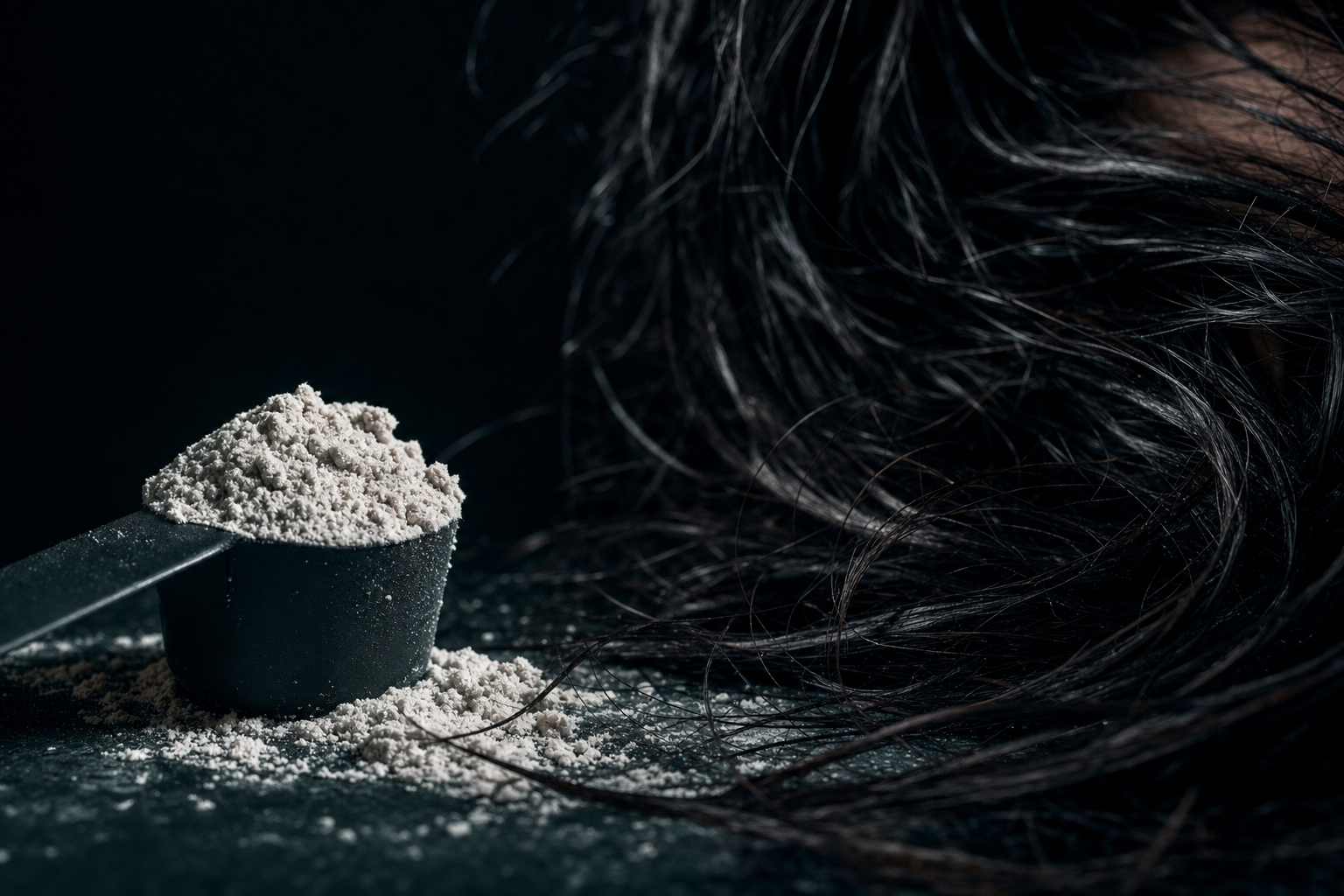
Creatine is one of the most studied and widely used supplements in sport and fitness. But in recent years, a persistent claim has circulated online: that creatine causes hair loss. If you’re considering creatine — or already taking it and noticing changes — here’s what the science actually shows.
Does Creatine Cause Hair Loss?
The short answer: there is no direct evidence that creatine causes hair loss. No published study has shown creatine supplementation leads to clinically significant hair shedding or accelerated male or female pattern baldness.
However, there is one study — frequently cited and frequently misunderstood — that links creatine to a hormonal marker associated with hair loss. Understanding what that study actually found is critical.
The DHT Study — What It Actually Found
A 2009 study published in the Clinical Journal of Sport Medicine examined 20 college-aged rugby players who took creatine for 3 weeks. The study found that creatine supplementation increased levels of dihydrotestosterone (DHT) — a hormone derived from testosterone that is strongly associated with androgenetic alopecia (male and female pattern hair loss).
Specifically, DHT levels increased by approximately 56% after a loading phase and remained 40% above baseline after a maintenance phase. The ratio of DHT to testosterone also increased significantly.
This is concerning on paper — but here’s what the study did NOT find:
- It did not measure hair loss
- It did not follow participants long enough to assess hair changes
- It had only 20 participants with no control group
- The DHT increase, while statistically significant, remained within normal physiological ranges
- No subsequent study has replicated these DHT findings
What Is DHT and Why Does It Matter?
DHT (dihydrotestosterone) is produced from testosterone by the enzyme 5-alpha-reductase. In people genetically predisposed to androgenetic alopecia, DHT binds to receptors in hair follicles and causes them to miniaturise over time — producing progressively thinner, shorter hairs until the follicle stops producing hair entirely.
The key phrase is genetically predisposed. DHT only causes hair loss in people who carry the relevant androgen receptor sensitivity. If you don’t have the genetic predisposition for pattern baldness, elevated DHT alone won’t cause you to lose hair.
The Bottom Line on Creatine and Hair Loss
| What We Know | What We Don’t Know |
|---|---|
| One small study found creatine increased DHT by 40–56% | Whether this DHT increase actually causes hair loss |
| DHT is associated with androgenetic alopecia | Whether the effect is replicated in other populations |
| Hair loss requires genetic predisposition to DHT sensitivity | Long-term effects of creatine on DHT levels |
| No study has directly observed creatine causing hair loss | Whether the effect varies by creatine dose or form |
Who Should Be Cautious?
If you have a strong family history of male or female pattern baldness — particularly on your mother’s side (which carries the primary genetic risk) — and you’re already experiencing early hair thinning, the potential DHT-raising effect of creatine is worth factoring into your decision. It doesn’t mean you will lose hair, but it may be a variable worth monitoring.
For people with no genetic predisposition to pattern baldness, the available evidence gives no reason to avoid creatine on hair loss grounds.
Frequently Asked Questions
There is no direct evidence that creatine causes hair loss. One small 2009 study found creatine increased DHT (a hormone linked to pattern baldness) by 40–56%, but no study has directly observed creatine causing hair shedding or follicle miniaturisation. The theoretical concern applies mainly to people genetically predisposed to androgenetic alopecia.
If you have a strong family history of pattern baldness and are already experiencing early thinning, the potential DHT-raising effect is worth considering. However, the evidence is weak — one unreplicated small study — and creatine’s well-established performance and health benefits are substantial. Discuss with a dermatologist or doctor who can assess your individual risk.
One 2009 study of 20 rugby players found creatine increased DHT levels by 40–56% during supplementation. However, the finding has not been replicated in subsequent research, the sample size was very small, and the DHT levels remained within normal physiological ranges. The mechanism by which creatine would raise DHT is not well understood.
Yes — creatine monohydrate is one of the most studied supplements in existence. Decades of research show it is safe for long-term use in healthy adults with no significant adverse effects on kidney function, liver health, or other organ systems when used at recommended doses (3–5g daily).
This article is for informational purposes only and does not constitute medical advice.
Related reading: Castor Oil for Hair Growth, Do Prenatal Vitamins Help Hair Growth?, Creatine Benefits.

 Emma Thornton
 James Holloway
 Sarah Mitchell
 Rachel Summers
 Dr. Maya Chen
 Dr. Rachel Stone