
 Dr. Maya Chen
Collagen is the most abundant protein in the human body — making up 75% of skin’s dry weight, 70% of cartilage, and significant portions of bones, tendons, and ligaments. After age 25, collagen production declines by approximately 1.5% per year, leading to the skin changes and joint issues associated with ageing. Collagen supplementation has moved from beauty trend to evidence-backed intervention for both skin and joint health.
How Collagen Affects Skin
Skin’s structural integrity — its firmness, elasticity, and hydration — depends on a dense collagen matrix in the dermis. As collagen degrades with age (and is further broken down by UV exposure, smoking, and high sugar diets), the dermis thins, loses resilience, and wrinkles form. The question is whether oral collagen supplements can meaningfully reverse this decline — and the answer, based on a growing body of RCT evidence, is yes.
Evidence for Collagen for Skin
Multiple randomised controlled trials have examined collagen peptide supplementation for skin ageing:
- A 2019 systematic review of 11 RCTs found collagen supplementation (2.5–10g daily for 8–24 weeks) produced significant improvements in skin elasticity, hydration, and reduced wrinkle depth compared to placebo
- A 2014 double-blind RCT found women taking 2.5g of collagen peptides daily for 8 weeks showed 20% reduction in eye wrinkle volume
- A 2015 RCT showed 2.5g daily collagen supplementation over 8 weeks significantly increased skin moisture and reduced transepidermal water loss
- Studies consistently show improvements in skin elasticity measured by cutometry — an objective mechanical measurement, not just self-report
The mechanism: hydrolysed collagen peptides (small collagen fragments) are absorbed intact through the gut, enter the bloodstream, and accumulate in skin tissue where they stimulate fibroblasts to produce new collagen, elastin, and hyaluronic acid — effectively signalling the skin that collagen breakdown has occurred and repair is needed.
Evidence for Collagen for Joints
Cartilage is 70% collagen — primarily type II collagen. Joint cartilage has poor blood supply and limited self-repair capacity, making it particularly vulnerable to age-related decline and physical wear. Research on collagen for joints:
- A 2017 meta-analysis of 5 RCTs found undenatured type II collagen (UC-II) significantly reduced osteoarthritis pain and improved function, with effects superior to glucosamine and chondroitin
- A 2008 landmark RCT in athletes found 24 weeks of collagen supplementation (10g daily) significantly reduced joint pain during activity compared to placebo — particularly relevant for sports-related joint stress
- Studies in osteoarthritis patients show collagen supplementation reduces WOMAC pain scores and improves joint mobility
- A 2019 study in older adults with knee osteoarthritis found 5g collagen peptides daily for 12 weeks significantly improved pain and function scores
Types of Collagen for Skin vs Joints
| Type | Primary Role | Best For | Source |
|---|---|---|---|
| Type I | Skin, bones, tendons | Skin elasticity, wrinkles, wound healing | Bovine, marine |
| Type II | Cartilage | Joint pain, osteoarthritis | Chicken sternum (UC-II) |
| Type III | Skin, blood vessels, organs | Skin hydration and elasticity | Bovine |
How to Supplement Collagen
- For skin: Hydrolysed collagen peptides (Type I/III), 2.5–10g daily; marine collagen is Type I dominant with good bioavailability; bovine collagen provides both Type I and III
- For joints: Undenatured Type II collagen (UC-II, 40mg daily) or hydrolysed collagen (10g daily); take with vitamin C (required for collagen synthesis)
- Vitamin C co-supplementation is essential — collagen synthesis requires vitamin C as a cofactor; take 500–1000mg alongside collagen
- Best timing: Morning on an empty stomach or post-workout (exercise increases collagen synthesis signalling)
Frequently Asked Questions
Yes — multiple RCTs confirm collagen peptide supplementation improves skin elasticity, hydration, and reduces wrinkle depth with measurable objective outcomes (not just self-report). The mechanism is well-understood: absorbed collagen peptides stimulate dermal fibroblasts to produce new collagen and elastin. Consistent use (2.5–10g daily) for at least 8–12 weeks is required to see results.
Yes — particularly for osteoarthritis and exercise-related joint pain. Undenatured Type II collagen (UC-II at 40mg daily) works via oral tolerance, reducing the immune attack on cartilage. Hydrolysed collagen peptides (10g daily) provide building blocks that accumulate in cartilage and stimulate chondrocyte activity. A 2008 RCT in athletes showed 24 weeks of 10g collagen significantly reduced joint pain during physical activity.
For skin, hydrolysed marine collagen (Type I) is often considered optimal due to smaller peptide size and high bioavailability. Bovine collagen provides both Type I and III (which is also important for skin). The key factors: hydrolysed (not whole collagen), from a quality verified source, at doses of 2.5–10g daily, always taken with vitamin C, for a minimum of 8–12 weeks. Brand-specific clinically tested collagen peptides (Verisol, Peptan) have the strongest evidence base.
This article is for informational purposes only. Collagen supplements are generally very safe, but consult a healthcare provider if you have allergies to fish or beef.


 Emma Thornton
 Dr. Rachel Stone
 Sarah Mitchell
 James Holloway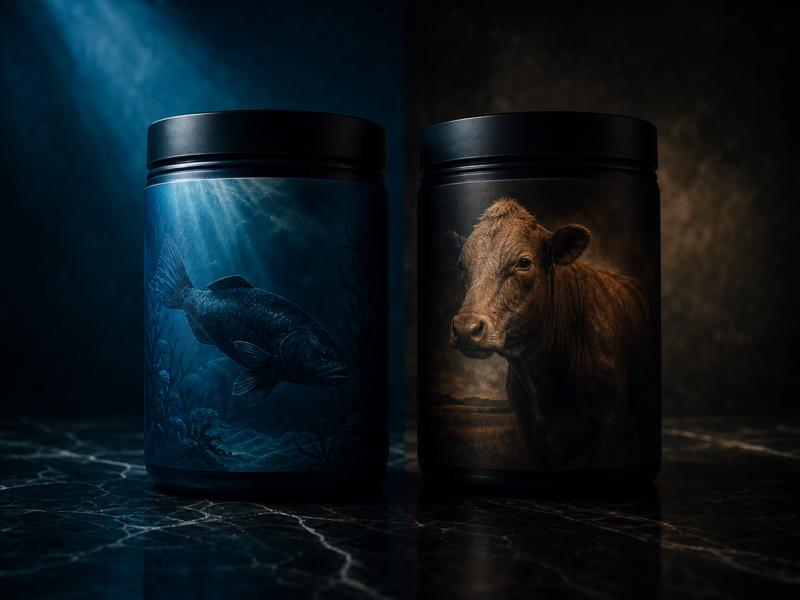
 Elena Voss