 Elena Voss
Sea moss has had an extraordinary run on social media. Celebrity endorsements, TikTok tutorials, and a cascade of wellness accounts have turned this obscure red algae into one of the most searched supplements of the past few years. The claims range from plausible to frankly extraordinary — thyroid support, gut healing, immune boosting, clear skin, increased energy, and the famous assertion that it contains “92 of the 102 minerals the human body needs.”
That last claim is not supported by nutritional analysis data. It appears to have originated in marketing and spread from there. Sea moss is genuinely nutrient-dense, but the gap between what’s in it and what it’s claimed to do is wider than most coverage acknowledges.
Here’s what the evidence actually shows — and where the real cautions are.
What Sea Moss Actually Is
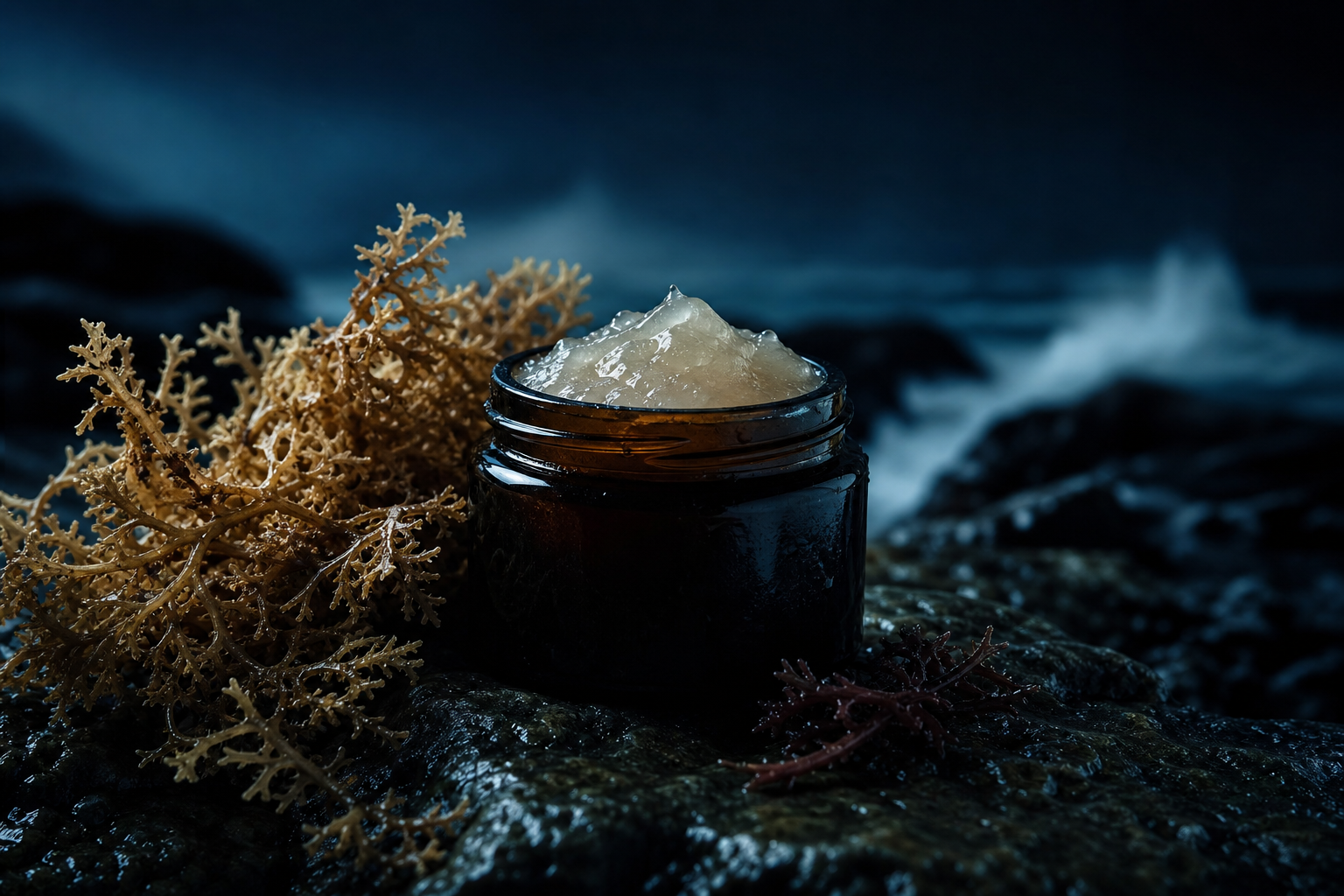
Sea moss is a broad term that usually refers to Chondrus crispus (Irish moss) or various Gracilaria species — types of red algae that grow along rocky Atlantic coastlines. It has been eaten in Ireland and the Caribbean for centuries, mainly as a thickening agent in cooking and as a traditional remedy for coughs and respiratory congestion. The gel it forms when soaked in water is the form most commonly sold as a supplement today.
Nutritionally, it’s a reasonably interesting food. It contains iodine, potassium, magnesium, calcium, iron, zinc, B vitamins, and some omega-3 fatty acids. It’s rich in carrageenan — a type of soluble fibre — and contains various polysaccharides and antioxidant compounds. As sea vegetables go, it has a legitimate nutritional profile. The question is whether the supplement form delivers the claimed benefits at the doses people actually take.
What Has Reasonable Evidence Behind It
Iodine and Thyroid Function
This is the most legitimate claim — and also the most double-edged. Iodine is essential for thyroid hormone production. Deficiency causes hypothyroidism and goitre. Sea moss is one of the richest natural dietary sources of iodine, and if you’re genuinely deficient, it could help.
The problem is that iodine is one of those nutrients where the therapeutic window matters enormously. Too little causes thyroid dysfunction. Too much also causes thyroid dysfunction — both hypothyroidism and hyperthyroidism can be triggered by iodine excess, and this is well-documented. Sea moss iodine content varies wildly depending on species, where it was harvested, and how it was processed. Some products contain iodine levels that, consumed daily, could easily push intake into problematic territory.
Most people in developed countries are not iodine deficient — they get adequate amounts from iodised salt, dairy, seafood, and bread. For these people, sea moss doesn’t provide a thyroid benefit — it adds iodine they don’t need. For people with existing thyroid conditions, it carries real risk.
Gut Health and Prebiotics
This is where sea moss has its most plausible biological case. The soluble fibres in sea moss — carrageenan, agar, furcellaran — act as prebiotics, feeding beneficial gut bacteria. Animal studies have shown increases in Lactobacillus and Bifidobacterium populations with sea moss supplementation. The gel consistency may also coat the gut mucosa and reduce irritation.
The evidence is real but preliminary. Human clinical trials on sea moss and gut health are sparse. What exists is mechanistically plausible but not at the level where you can say “sea moss heals the gut” with any confidence. It’s a reasonable prebiotic food source — not a gut treatment.
Immune Support
Sea moss contains beta-glucans and sulphated polysaccharides with immunomodulatory properties in laboratory and animal research. These compounds activate innate immune cells and appear to enhance pathogen recognition. The mechanistic evidence is reasonably strong. Human clinical trial evidence specifically on sea moss is essentially absent.
Anti-Inflammatory Properties
The fucoidans and other sulphated compounds in sea moss inhibit pro-inflammatory pathways in laboratory studies. The same caveat applies — this is interesting preliminary science, not proven clinical benefit in people.
Claims That Run Ahead of the Evidence
Weight loss, skin health, hair growth, “detox,” and general energy are commonly associated with sea moss in wellness content. None of these have meaningful clinical evidence. The weight-related claims are mechanistically adjacent to the fibre and satiety research on seaweeds generally, but sea moss hasn’t been specifically studied for fat loss in humans. The skin and hair claims are essentially testimonial.
The “92 minerals” claim is marketing, not nutrition science. Nutritional analysis of sea moss does not support it.
The Safety Issues Worth Taking Seriously
Iodine overload — the most significant concern. Daily sea moss consumption, particularly from high-iodine varieties, can push iodine intake well above safe upper limits. The consequences can include suppressed thyroid function, which is precisely the opposite of what most people taking it for thyroid support intend. If you have any thyroid condition — hypothyroidism, hyperthyroidism, Hashimoto’s, Graves’ disease — speak to your doctor before taking sea moss.
Heavy metal contamination — sea algae bioaccumulate heavy metals from seawater, including arsenic, mercury, cadmium, and lead. The levels vary enormously by harvest location and processing. Third-party testing for heavy metals is not optional if you’re taking sea moss regularly — it’s essential. Products without a certificate of analysis showing heavy metal testing should be avoided.
Carrageenan controversy — some animal research at high doses suggests processed carrageenan may promote gut inflammation. The evidence in humans at dietary doses is not conclusive, but it’s a reason to be cautious about very high regular intake, particularly in people with IBD.
Medication interactions — the high iodine content can interact with thyroid medications and iodine-containing drugs. The blood-thinning properties of some polysaccharides may interact with anticoagulants. If you take any regular medications, this is worth checking with your pharmacist.
How to Use It If You Choose To
1–2 tablespoons of sea moss gel daily is the generally cited range. The most important variable is iodine — choose a product with a clear certificate of analysis that includes iodine content per serving. Avoid products with no third-party testing.
If you’re buying gel, look for products made from wildcrafted or certified-clean sources, not pool-grown sea moss (which has a different nutrient profile and may contain bleaching agents).
Don’t take it if you have thyroid disease without medical guidance. Be conservative with daily intake if you consume other high-iodine foods regularly.
Frequently Asked Questions
What are the benefits of sea moss?
The best-supported benefits are iodine provision for thyroid function (if you’re deficient), prebiotic fibre for gut bacteria, and immunomodulatory polysaccharides. Anti-inflammatory properties are plausible based on laboratory research. Claims about weight loss, skin, hair, and energy are not backed by clinical evidence.
Does sea moss actually have 92 minerals?
No — this claim is not supported by nutritional analysis data. Sea moss is genuinely nutrient-dense, but the “92 minerals” figure is a marketing claim, not a scientific measurement.
Is sea moss safe to take every day?
For most healthy people without thyroid conditions, moderate daily consumption appears safe. The main risk is iodine overconsumption, particularly in combination with other iodine sources. People with thyroid conditions, those on blood thinners, and pregnant women should consult a healthcare provider first.
Does sea moss help with thyroid problems?
Not reliably — and it can make them worse. Iodine is needed for thyroid function, but sea moss contains highly variable amounts, and iodine excess is just as harmful to the thyroid as deficiency. People with thyroid conditions should not take sea moss without specific medical advice.
How much sea moss per day is safe?
1–2 tablespoons of sea moss gel, or 1–2g of powder, is the generally cited range. The constraint is iodine content, which varies significantly between products. Start with a lower dose and choose a product with verified iodine content per serving.
The Bottom Line
Sea moss is a nutritious sea vegetable with real but limited clinical evidence behind its health claims. The gut health and immune support mechanisms are plausible. The thyroid claim cuts both ways — iodine helps if you’re deficient, but excess iodine can harm thyroid function, and most people in developed countries aren’t deficient. The “92 minerals” marketing is simply not accurate.
If you want to add it to your diet as a food — in smoothies, soups, or as a gel — that’s reasonable, provided you choose a clean, tested source. If you’re taking it as a supplement expecting dramatic health transformations, the evidence doesn’t support that expectation.
Related: Best Supplements for Overall Health | Gut Health and Aging | Anti-Inflammatory Diet
Related reading: Does Sea Moss Help With Weight Loss?, How Much Sea Moss Per Day?, What Does Sea Moss Taste Like?.


 Elena Voss
 James Holloway

 Dr. Rachel Stone

 Dr. Maya Chen