
 Elena Voss
NAD+ has become one of the most talked-about molecules in longevity science — and for good reason. But what actually is it, and why should you care about it? Here’s the clearest explanation of NAD+, what it does, and why its decline with age is so significant.
What Is NAD+?
NAD+ stands for nicotinamide adenine dinucleotide — a coenzyme found in every living cell in your body. It is one of the most abundant molecules in biology and is involved in over 500 enzymatic reactions. Think of it as a fundamental currency of cellular metabolism and cellular health maintenance.
NAD+ exists in two main forms in the body: NAD+ (the oxidised form) and NADH (the reduced form). The cycling between these two forms drives energy production in the mitochondria and powers the reactions that keep cells alive and functional.
What Does NAD+ Do?
1. Energy Production
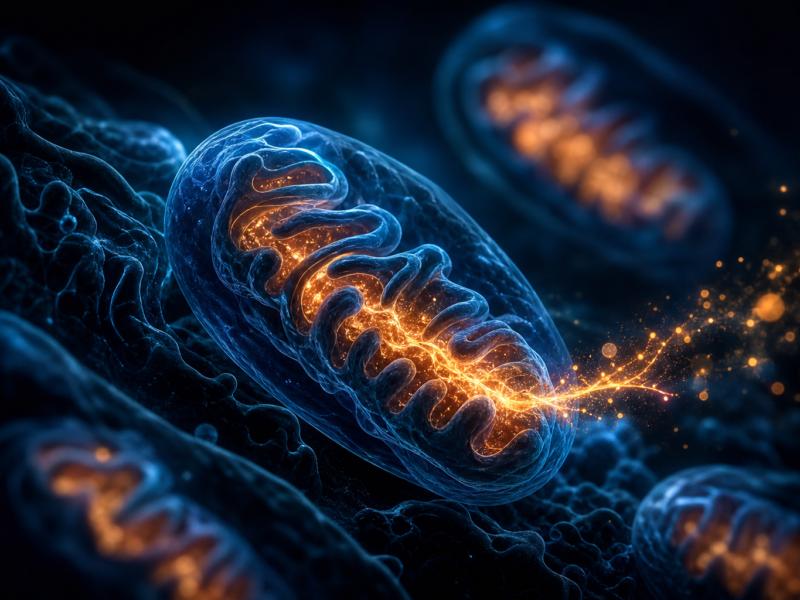
NAD+ is essential for the Krebs cycle and oxidative phosphorylation — the cellular processes that produce ATP (adenosine triphosphate), your cells’ primary energy currency. Without NAD+, mitochondria cannot generate energy efficiently. This is directly relevant to why NAD+ decline is associated with fatigue, reduced physical performance, and metabolic slowdown in ageing.
2. Sirtuin Activation
Sirtuins are a family of proteins (SIRT1–SIRT7) often called longevity genes — they regulate gene expression, DNA repair, inflammation control, and metabolic health. Critically, sirtuins require NAD+ to function. Without adequate NAD+, sirtuins are inactive regardless of how healthy your diet or lifestyle is. When David Sinclair and others talk about activating sirtuins through caloric restriction, exercise, or resveratrol — all of these effects require sufficient NAD+ to work.
3. DNA Repair
PARP enzymes (poly ADP-ribose polymerases) detect and repair DNA damage — the daily accumulation of breaks and mutations in your DNA from oxidative stress, UV radiation, and metabolic byproducts. PARPs are voracious consumers of NAD+; when DNA damage is high (as in ageing, illness, or UV exposure), PARP activity can deplete NAD+ rapidly, creating a vicious cycle where low NAD+ means poor DNA repair, which means more DNA damage, which depletes more NAD+.
4. Immune Function and Inflammation
CD38 — an enzyme on immune cells — is also a major consumer of NAD+. During infection or chronic inflammation, CD38 activity increases dramatically, consuming NAD+ and contributing to the NAD+ decline associated with chronic inflammatory conditions. This is one reason chronic inflammation and ageing compound each other so effectively.
Why NAD+ Declines With Age
NAD+ levels decline by approximately 50% between ages 40 and 60 in most tissues. This is driven by:
- Increased PARP activity (more DNA damage to repair)
- Increased CD38 activity (chronic low-grade inflammation of ageing — “inflammageing”)
- Reduced NAD+ biosynthesis (the salvage pathway becomes less efficient)
- Reduced dietary precursor intake (most diets are poor in tryptophan-rich foods that feed the de novo synthesis pathway)
This decline is not trivial. Lower NAD+ means less efficient energy production, impaired DNA repair, reduced sirtuin activity, and compromised cellular stress response — all hallmarks of biological ageing.
How to Boost NAD+ Levels
| Method | Evidence | Notes |
|---|---|---|
| NMN (nicotinamide mononucleotide) | Strong — human trials confirm NAD+ raising | 500–1000mg daily; converts directly to NAD+ |
| NR (nicotinamide riboside) | Strong — multiple human trials | 500–1000mg daily; slightly different pathway |
| Exercise | Very strong | Increases NAMPT enzyme which raises NAD+ biosynthesis |
| Fasting / time-restricted eating | Strong | Reduces PARP consumption; activates SIRT1 |
| Heat exposure (sauna) | Moderate | Heat shock proteins support NAD+ metabolism |
| Niacinamide (vitamin B3) | Moderate | Cheaper NAD+ precursor; less direct than NMN/NR |
| CD38 inhibitors (apigenin, quercetin) | Emerging | Block the enzyme that consumes NAD+ |
Frequently Asked Questions
NAD+ (nicotinamide adenine dinucleotide) is a coenzyme in every cell involved in energy production, DNA repair, sirtuin activation, and immune function. It declines by approximately 50% between ages 40 and 60. This decline is directly associated with reduced energy, impaired DNA repair, decreased cellular stress resistance, and many hallmarks of biological ageing. Restoring NAD+ is one of the most mechanistically compelling longevity interventions currently known.
Human trials of NAD+ precursors (NMN and NR) have shown: improved insulin sensitivity and metabolic health, better cardiovascular fitness in older adults, improved muscle function, reduced arterial stiffness, and enhanced cellular energy metabolism. Animal studies show dramatic lifespan extension. Human longevity data requires longer trials to generate, but the mechanistic evidence is compelling.
NAD+ is the active molecule inside cells. NMN (nicotinamide mononucleotide) and NR (nicotinamide riboside) are precursors that the body converts into NAD+. You cannot take NAD+ directly as a supplement effectively — it doesn’t cross cell membranes well. NMN and NR are taken as supplements and converted inside cells to raise NAD+ levels. Both are well-absorbed orally and confirmed to raise blood NAD+ in human trials.
Foods rich in NAD+ precursors include: niacin (vitamin B3) in meat, fish, peanuts, and whole grains; tryptophan (converts to NAD+ via the de novo pathway) in turkey, eggs, cheese, and seeds; and NR in trace amounts in cow’s milk. Diet alone is insufficient to compensate for age-related NAD+ decline — supplemental NMN or NR is required for meaningful restoration in older adults.
This article is for informational purposes only. Consult a healthcare provider before starting NAD+ precursor supplementation.
Related Articles
- Longevity Supplements: Which Ones Actually Have Evidence
- How to Increase Autophagy: The Complete Guide
- Caloric Restriction and Longevity: What the Science Actually Shows
- Berberine vs Metformin: What’s the Difference?
Related reading: NAD+ and Longevity, Longevity Supplements, What Is Spermidine?, Autophagy and Aging.

 Sarah Mitchell
 Elena Voss

 Daniel Brooks

 Rachel Summers