 Emma Thornton
Why Exercise Is the Most Powerful Anti-Aging Tool
Of all the lifestyle interventions studied for healthy aging, regular physical activity has the most consistent, broad-spectrum evidence for benefit across nearly every system in the body. Exercise simultaneously preserves muscle mass, maintains bone density, supports cardiovascular health, improves metabolic function, enhances brain health, reduces systemic inflammation, supports immune function, and improves mood, sleep, and cognitive performance. People who exercise regularly throughout midlife and beyond have biological ages measurably younger than sedentary peers — by 10–20 years in some studies. For the full picture of healthy aging, see our complete healthy aging guide.
How Aging Affects Physical Function
Muscle mass naturally declines at 3–8% per decade from the 30s onward, accelerating significantly from the 50s and 60s. Bone density peaks in the late 20s and declines from there — particularly rapidly in women after menopause. Balance and proprioception decline, increasing fall risk. Cardiovascular efficiency reduces, with maximum heart rate and cardiac output declining. Flexibility and joint mobility decrease. Importantly, the rate at which all of these changes occur is profoundly influenced by how active you are — sedentary aging accelerates these declines dramatically, while active aging can preserve function to a remarkable degree well into older age.
The Best Exercise Types for Healthy Aging
Strength Training
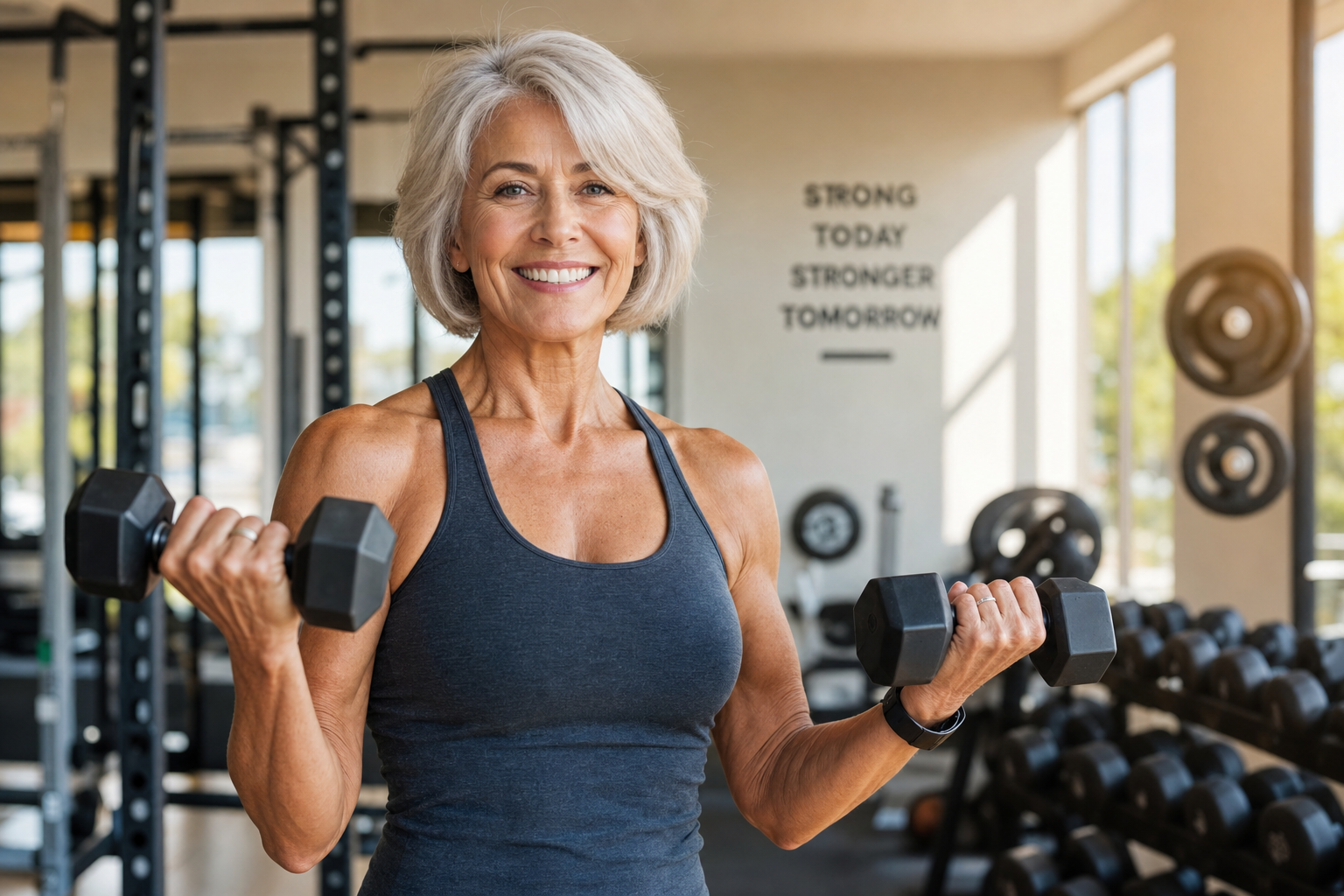
Resistance training is arguably the most important exercise modality for healthy aging. It directly counters sarcopenia (age-related muscle loss), preserves bone density, improves metabolic health (muscle is metabolically active tissue that improves insulin sensitivity), reduces injury risk, supports joint health, and even improves brain health through the release of myokines — muscle-derived signalling molecules that have neurotropic effects. Two to three sessions per week of progressive resistance training are recommended from midlife onward. See our detailed guide to muscle loss and sarcopenia for a resistance training framework specifically targeting this.
Aerobic Exercise
Aerobic exercise — walking, cycling, swimming, running, dancing — supports cardiovascular health, improves metabolic function, reduces blood pressure, and has the most direct evidence for brain health benefits through the stimulation of BDNF (brain-derived neurotrophic factor) — a protein that promotes neurogenesis and neural plasticity. Regular aerobic exercise is associated with slower cognitive aging, reduced dementia risk, lower cardiovascular disease risk, and improved mood and energy. The WHO recommends at least 150–300 minutes of moderate-intensity aerobic activity per week for adults, or 75–150 minutes of vigorous activity. See our guide to heart health and aging for cardiovascular exercise specifics.
Balance and Flexibility
Falls are among the most serious threats to independence and quality of life in older age — they are the leading cause of injury-related death in adults over 65. Balance training, proprioceptive work (standing on one leg, unstable surfaces), tai chi, and yoga all improve balance and dramatically reduce fall risk. Flexibility training maintains range of motion and reduces injury risk during other activities. These modalities are often overlooked in fitness routines but become increasingly important from the 50s onward.
Walking
If there is a single exercise habit most accessible and most supported by evidence across all populations, it is daily walking. Walking reduces cardiovascular disease risk, improves metabolic health, supports joint health, has been associated with reduced dementia risk, and dramatically improves mood and stress resilience. 7,000–10,000 steps per day is associated with the most consistent health benefits in large population studies. Even 5,000 steps per day is significantly better than sedentary for most outcomes.
Exercise by Age
In Your 40s
The 40s are when the rates of muscle and bone loss begin to accelerate meaningfully. This is the critical decade to establish resistance training habits if you haven’t already. Emphasis should be on building strength and muscle mass (which will provide a buffer against age-related losses in subsequent decades), cardiovascular fitness, and beginning to incorporate balance work. Recovery time between hard sessions begins to lengthen in the 40s — programming should account for this.
In Your 50s and 60s
In the 50s and 60s, maintaining muscle mass, bone density, and cardiovascular function are the primary goals. Resistance training becomes non-negotiable. Balance training takes on greater importance. High-impact activities may need modification for some joints, but remain appropriate for many people. Protein intake around workouts becomes particularly important as anabolic sensitivity declines. See our guide to bone health and aging for weight-bearing exercise recommendations.
In Your 70s and Beyond
Exercise remains beneficial and achievable at any age. Studies consistently show that even people who begin exercising in their 70s and 80s gain meaningful strength, function, and quality of life. Resistance training in particular has documented benefits for preserving independence, reducing fall risk, and maintaining cognitive function in older adults. Adapted exercise programmes supervised by a physiotherapist or fitness professional with older adult expertise are the safest starting point for those who are deconditioned.
How to Start Safely
If you’ve been sedentary, start with walking and bodyweight exercises. Increase duration and intensity gradually over weeks and months. If you have existing health conditions or haven’t exercised in years, a check-up with your doctor before beginning is sensible. A session or two with a qualified exercise professional at the outset to learn proper form for resistance exercises reduces injury risk significantly. The most important principle: something is always better than nothing, and the best exercise programme is one you’ll actually do consistently.
FAQ
What is the best exercise for aging?
A combination of resistance training (2–3x per week) and aerobic exercise (150+ minutes per week) with balance and flexibility work provides the most comprehensive anti-aging benefit.
Is it too late to start exercising at 60, 70, or 80?
Absolutely not. Clinical trials consistently show significant gains in strength, function, and quality of life from exercise programmes started in the 60s, 70s, and even 80s.
How much exercise is needed for healthy aging?
At minimum: 150 minutes of moderate aerobic activity plus 2 strength sessions per week. More produces additional benefits, particularly for cognitive and metabolic health.
Does strength training slow aging?
Yes — resistance training preserves muscle mass (preventing sarcopenia), maintains bone density, improves metabolic health, releases anti-inflammatory myokines, and has been associated with slower biological aging.
Can exercise reduce dementia risk?
Yes — regular aerobic exercise is one of the most consistently protective factors against dementia identified in prospective research, likely through BDNF stimulation, cardiovascular benefits, and reduced inflammation.
Related: Hydration and Longevity: How Water Intake Shapes Energy, Skin, and Aging


 Emma Thornton
 Sarah Mitchell

 Daniel Brooks