 Ashley
How Hormones Change With Age
Hormones are the body’s chemical messengers — regulating metabolism, energy, mood, body composition, libido, sleep, cognitive function, and immunity. The hormonal landscape changes profoundly from midlife onward, and these changes are among the most significant drivers of the subjective experience of aging. Understanding which hormones are declining, why they matter, and how lifestyle influences them provides the foundation for a targeted healthy aging approach. For the full healthy aging framework, see our complete healthy aging guide.
Key Hormones That Decline With Age
Testosterone
Testosterone declines in men at approximately 1–2% per year from the 30s onward. By the 50s and 60s, many men experience symptoms of low testosterone: reduced energy and motivation, decreased muscle mass and strength, increased body fat (particularly abdominal), reduced libido, poorer sleep quality, and lower mood. In women, testosterone also plays important roles in energy, libido, and muscle maintenance — and declines earlier and more steeply. Lifestyle factors that support testosterone production include resistance training (the most potent lifestyle stimulus for testosterone), adequate sleep (testosterone is primarily produced during sleep), healthy body weight (obesity significantly reduces testosterone), zinc and vitamin D adequacy, and stress management (chronic cortisol suppresses testosterone).
Oestrogen and Progesterone (Women)
The most dramatic hormonal change in aging women is the decline and eventual cessation of oestrogen and progesterone production at menopause (average age 51 in Western countries). This hormonal shift drives hot flushes, sleep disruption, mood changes, vaginal dryness, accelerated bone loss, and increased cardiovascular disease risk. The years surrounding menopause (perimenopause) can begin a decade earlier with gradual hormonal fluctuation. Beyond menopause, persistently low oestrogen accelerates collagen loss in skin and bone, worsens cardiovascular risk, and changes body fat distribution toward visceral adiposity. Lifestyle support for the menopausal transition includes regular exercise, adequate calcium and vitamin D, a Mediterranean-style diet, stress management, and if appropriate, discussion of hormone replacement therapy (HRT) with a doctor.
Growth Hormone and IGF-1
Growth hormone (GH) secretion declines progressively from the 20s onward — falling by approximately 14% per decade in adults. GH drives the production of IGF-1 (insulin-like growth factor 1) and together they regulate muscle protein synthesis, fat metabolism, bone maintenance, tissue repair, and recovery from exercise. The age-related decline in GH and IGF-1 contributes significantly to sarcopenia, increased body fat, reduced recovery capacity, and impaired tissue repair. Deep sleep is the primary stimulus for GH release — with the majority of daily GH secretion occurring in the first sleep cycle. Regular resistance exercise also stimulates GH release. See our guides to sleep and aging and muscle loss and sarcopenia.
Cortisol
Cortisol — the primary stress hormone — doesn’t simply decline with age; its diurnal rhythm often becomes blunted. Young healthy adults show a sharp morning cortisol peak (the cortisol awakening response) that provides energy for the day, followed by a low trough at night. With chronic stress and aging, this rhythm flattens — cortisol remains somewhat elevated throughout the night (disrupting sleep) and the morning spike is diminished (reducing daytime energy and alertness). Chronic cortisol elevation accelerates muscle breakdown, promotes visceral fat, impairs immune function, and worsens insulin resistance. See our guide to stress and aging.
Thyroid Hormones
Subclinical hypothyroidism — mildly underactive thyroid function — becomes more common with age, affecting up to 20% of older adults. Symptoms include fatigue, weight gain, cold intolerance, dry skin, brain fog, constipation, and elevated LDL cholesterol. Blood testing (TSH and free T4) should be considered for anyone over 60 with these symptoms, or for those with unexplained fatigue or metabolic changes. Overt hypothyroidism is straightforwardly treatable with synthetic thyroid hormone replacement.
Lifestyle Factors That Affect Hormonal Balance
Sleep
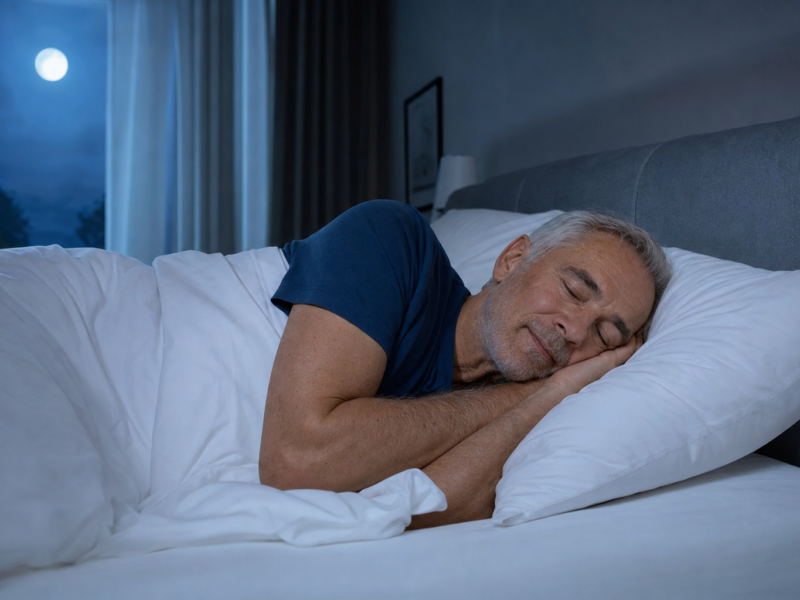
Sleep is the most critical single lifestyle factor for hormonal health. Testosterone, growth hormone, cortisol rhythm, insulin sensitivity, leptin, and thyroid hormone production are all regulated during sleep. Consistently sleeping 7–9 hours in quality sleep preserves the hormonal environment of healthy aging more effectively than almost any other intervention.
Exercise
Resistance training is the most potent lifestyle stimulus for testosterone and growth hormone. Aerobic exercise improves insulin sensitivity and reduces cortisol burden. Regular physical activity helps maintain healthy body weight, which in turn supports better hormonal balance — obesity creates a hormonal environment that accelerates aging in men and women alike.
Nutrition
Adequate zinc (essential for testosterone production), vitamin D (hormone itself — regulates testosterone and immune function), omega-3s (anti-inflammatory effects that indirectly support hormonal balance), and sufficient dietary fat (all steroid hormones are synthesised from cholesterol) are the most relevant nutritional considerations for hormonal health. Very low-fat diets are associated with reduced testosterone in men. See our anti-aging diet guide.
When to Ask for Medical Advice
Many hormonal changes of aging are within the range of normal physiological variation and do not require medical treatment. However, if symptoms are significantly impacting quality of life — particularly fatigue, mood, libido, sleep, or physical function — blood testing is appropriate. Low testosterone in men (hypogonadism), thyroid dysfunction, and menopausal symptoms in women are all conditions with effective medical treatment options that should be discussed with a GP or endocrinologist.
FAQ
What hormones decline most with age?
Testosterone (in both sexes), oestrogen and progesterone (in women at menopause), growth hormone, IGF-1, and DHEA all decline progressively. Cortisol rhythm becomes dysregulated.
Can you increase testosterone naturally?
Resistance training, adequate sleep, healthy body weight, stress management, and zinc and vitamin D adequacy all support testosterone production. These effects are real but modest compared to medical hormone replacement.
What causes hormonal imbalance in older adults?
Natural age-related hormonal decline, combined with the amplifying effects of chronic stress, poor sleep, inactivity, obesity, and nutritional insufficiencies.
Should I consider hormone replacement therapy?
This is a medical decision to be made with your doctor based on your specific symptom profile, health history, and risk factors. HRT for menopause is well-evidenced for symptom relief; testosterone replacement for men with documented hypogonadism is also established practice.
Does exercise really affect hormones?
Yes — meaningfully. Resistance training stimulates testosterone and GH, aerobic exercise improves insulin sensitivity and cortisol management, and physical activity overall supports the hormonal environment of healthy aging.
What 2025–2026 Research Shows About Hormones and Aging
The key 2025–2026 shift in this field is moving from measuring static hormone levels to understanding hormone rhythms and tissue sensitivity. The Endocrine Society confirms that circadian patterns of hormone secretion — not just total amounts — are critical to healthspan. Older adults show altered cortisol rhythms and disrupted growth hormone pulsatility even when total levels appear normal.
DHEA and DHEAS show the most consistent age-related decline — falling approximately 80% between ages 25 and 75. A 2025 Walsh Medical Media review confirmed DHEAS decline as one of the most reliable biomarkers of endocrine aging. A 2026 Britannica medical update states explicitly: “there is no scientific evidence that hormone administration mitigates or reverses biological aging.” What is well-evidenced is treating genuine deficiencies — HRT for menopause, TRT for hypogonadism — which significantly improves quality of life and specific health outcomes.
Hormone Changes With Age: Full Summary
| Hormone | Change With Age | Health Impact | Modifiable By |
|---|---|---|---|
| Oestrogen | Sharp drop at menopause | Bone loss, cardiovascular risk | HRT, exercise |
| Testosterone (men) | Gradual decline from ~35 | Muscle loss, libido, energy | Resistance training, sleep, zinc |
| DHEA/DHEAS | 80% decline by age 75 | Reduced sex hormone production | Supplementation (modest) |
| Cortisol | Rhythm disruption | Sleep disruption, metabolic shifts | Stress management, adaptogens |
| Growth hormone | Pulsatile secretion decreases | Reduced muscle maintenance | Sleep, HIIT, fasting |
| Thyroid | Usually subtle changes | Minor in healthy aging | Selenium, iodine |
The most consistent age-related declines are DHEAS (falls ~80% between ages 25–75), oestrogen in women at menopause, testosterone in men (gradual from ~35), and growth hormone pulsatile secretion. Cortisol total levels often remain stable but its daily rhythm becomes disrupted. Thyroid hormones usually remain near normal range in healthy aging.
No major scientific body supports hormone therapy as reversing biological aging. Treating genuine deficiencies (HRT for menopause, TRT for hypogonadism) significantly improves symptoms and specific health outcomes. Lifestyle interventions — resistance training, quality sleep, stress management, optimal nutrition — are the most evidence-backed ways to preserve hormonal function naturally.
Hormone declines drive many aging changes: oestrogen and testosterone loss causes sarcopenia and osteoporosis; disrupted cortisol rhythms impair sleep and metabolic health; growth hormone decline slows tissue repair; reduced insulin sensitivity drives metabolic syndrome. Maintaining hormonal health through lifestyle and, where indicated, medical intervention is central to healthy aging.
2025-2026 Hormone Research Update
The key 2025-2026 shift is from measuring static hormone levels to understanding hormone rhythms and tissue sensitivity. The Endocrine Society confirms circadian patterns of hormone secretion — not just total amounts — are critical to healthspan. Older adults show altered cortisol rhythms even when total levels appear normal. DHEA and DHEAS show the most consistent age-related decline — falling approximately 80% between ages 25 and 75, confirmed by a 2025 Walsh Medical Media review as the most reliable biomarker of endocrine aging. A 2026 Britannica medical update states explicitly there is no scientific evidence that hormone administration mitigates or reverses biological aging. A 2025 Exploration in Medicine review and the Endocrine Society confirm hormone replacement treats deficiency symptoms effectively but does not reverse aging biology itself.
The most consistent declines are DHEAS (falls 80% between ages 25-75), oestrogen at menopause, testosterone in men from age 35, and growth hormone pulsatile secretion. Cortisol total levels often remain stable but daily rhythm becomes disrupted. Thyroid hormones usually stay near normal range in healthy aging.
Lifestyle interventions are the most evidence-backed approach: resistance training (most effective for testosterone and growth hormone), quality sleep (70-80% of GH secreted during slow-wave sleep), stress management (reduces cortisol dysregulation), zinc and magnesium (required for testosterone synthesis), and vitamin D optimisation. Adaptogens like ashwagandha have RCT evidence for testosterone support in men with deficiency.
Hormone declines drive many aging changes: oestrogen and testosterone loss causes sarcopenia and osteoporosis; disrupted cortisol rhythms impair sleep and metabolic health; growth hormone decline slows tissue repair; reduced insulin sensitivity drives metabolic syndrome. Maintaining hormonal health through lifestyle interventions is central to healthy aging strategy.
Related: Hydration and Longevity: How Water Intake Shapes Energy, Skin, and Aging

 Daniel Brooks
 Emma Thornton
 Sarah Mitchell
 James Hargreaves