 James Hargreaves
How Bone Health Changes With Age
Bone is living tissue — constantly being broken down by osteoclasts and rebuilt by osteoblasts in a process called bone remodelling. Peak bone density is achieved in the late 20s, after which the balance gradually shifts toward more breakdown than formation. The rate of bone loss accelerates significantly in women at menopause (due to oestrogen’s bone-protective effects being lost), and in men from around the 70s. Osteoporosis — a condition of severely reduced bone density and increased fracture risk — affects approximately 200 million people globally, yet it is largely preventable through lifestyle choices made throughout life. For the full healthy aging context, see our complete healthy aging guide.
Risk Factors for Bone Loss
Non-modifiable risk factors include female sex, small body frame, family history of osteoporosis, and advancing age. Highly modifiable risk factors include: calcium and vitamin D deficiency, physical inactivity (particularly absence of weight-bearing exercise), smoking (which directly impairs osteoblast function), excess alcohol (suppresses osteoblasts and impairs calcium absorption), low body weight, certain medications (particularly long-term corticosteroids, proton pump inhibitors, and some anticonvulsants), and very low protein intake. Early identification of modifiable risk factors allows for preventive intervention before significant bone loss has occurred.
The Three Pillars of Bone Health
Calcium
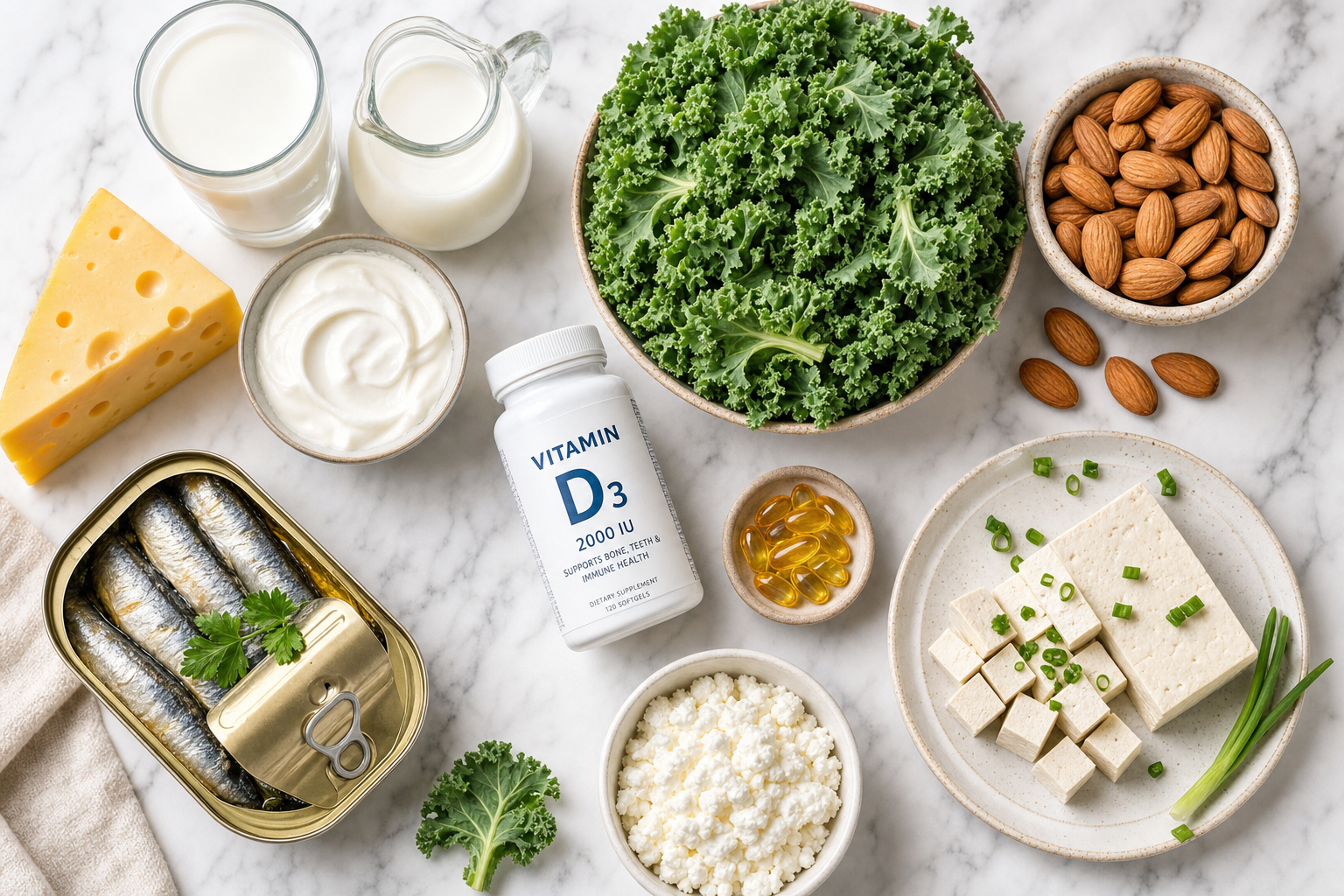
Calcium is the primary mineral component of bone — approximately 99% of the body’s calcium is stored in the skeleton. The recommended daily intake is 1,000mg for adults and 1,200mg for women over 50 and men over 70. Prioritising dietary calcium from food sources (dairy products, fortified plant milks, canned fish with bones, leafy greens like kale and pak choi, tofu made with calcium) is preferable to supplements — large doses of supplemental calcium (above 500mg at once) have been associated with cardiovascular concerns in some research, while food-based calcium has not. If dietary intake is consistently below target, supplemental calcium citrate (better absorbed than carbonate) taken in divided doses with food is appropriate.
Vitamin D
Vitamin D is the gatekeeper of calcium absorption — without adequate vitamin D, only 10–15% of dietary calcium is absorbed. Vitamin D deficiency is extremely common in older adults and is a major driver of preventable bone loss and fracture risk. Supplementation with 1,000–2,000 IU of vitamin D3 daily is recommended for most adults in northern latitudes, year-round. Annual blood testing (25-OH vitamin D) is the most reliable way to confirm adequacy and adjust supplementation accordingly. See our guide to anti-aging nutrition for vitamin D in the broader nutritional context.
Protein
Protein is a frequently overlooked component of bone health — approximately 50% of bone volume is protein (primarily collagen), which provides the framework onto which mineral crystals are deposited. Low protein intake is associated with accelerated bone loss and higher fracture risk. Higher protein intake (at or above the 1.2–1.6g/kg recommended for older adults) actually supports bone health in the context of adequate calcium intake — contrary to older concerns about protein “leaching” calcium, which have not been supported by modern evidence.
Exercise for Bone Strength
Weight-Bearing Exercise
Bones respond to mechanical loading — when you bear weight through your skeleton, mechanical stress stimulates osteoblasts to lay down new bone tissue. Weight-bearing exercise includes walking, running, dancing, tennis, hiking, and resistance training. Swimming and cycling, while excellent for cardiovascular health, are not weight-bearing and do not provide the mechanical stimulus for bone formation. A combination of aerobic weight-bearing exercise and resistance training provides the broadest bone stimulus.
Resistance Training
Resistance training creates particularly strong mechanical loading on bones — particularly at the points where muscles attach. Studies consistently show that resistance training improves bone density at the hip and spine — the sites of highest clinical consequence for osteoporotic fracture. Two to three resistance training sessions per week are recommended for bone health maintenance from midlife onward. See our guide to exercise for healthy aging for how to structure a resistance training programme.
Balance and Fall Prevention
Fracture prevention is as much about preventing falls as it is about maximising bone density. Balance training, proprioceptive exercises, and fall-proofing the home environment are critically important from the 60s onward. Tai chi has the strongest evidence base for fall reduction in older adults — multiple clinical trials show 20–40% reduction in fall risk with regular practice.
Screening and Monitoring
DEXA scanning (dual-energy X-ray absorptiometry) is the gold-standard method for measuring bone mineral density and is recommended for women over 65 and men over 70, or earlier for those with significant risk factors. Results are reported as T-scores: above -1.0 is normal; -1.0 to -2.5 is osteopenia (low bone mass); below -2.5 is osteoporosis. Knowing your bone density status allows for targeted intervention — dietary, exercise, and if indicated, medication (bisphosphonates are the most commonly used and well-evidenced pharmaceutical option).
FAQ
How can I keep my bones strong as I age?
Adequate calcium (1,000–1,200mg daily from food first), sufficient vitamin D (supplementation usually needed), adequate protein, regular weight-bearing and resistance exercise, not smoking, and limiting alcohol.
At what age does bone density decrease?
Bone density begins declining gradually from the late 20s and early 30s. The rate of loss accelerates significantly in women at menopause and in men from around the 70s.
Is walking enough for bone health?
Walking provides useful weight-bearing stimulus but is less effective than resistance training for maintaining bone density, particularly at the hip and spine. The combination of walking and resistance training is most effective.
Does calcium alone prevent osteoporosis?
No. Calcium works in concert with vitamin D (for absorption), protein, and exercise. Without adequate vitamin D, calcium supplementation has minimal bone benefit. A whole-system approach is needed.
When should I get a bone density scan?
Women over 65 and men over 70 are routinely recommended to have a DEXA scan. Earlier scans are appropriate for those with significant risk factors including early menopause, long-term corticosteroid use, or a history of fractures.
Related: Hydration and Longevity: How Water Intake Shapes Energy, Skin, and Aging

 Sarah Mitchell
 James Hargreaves
 Rachel Summers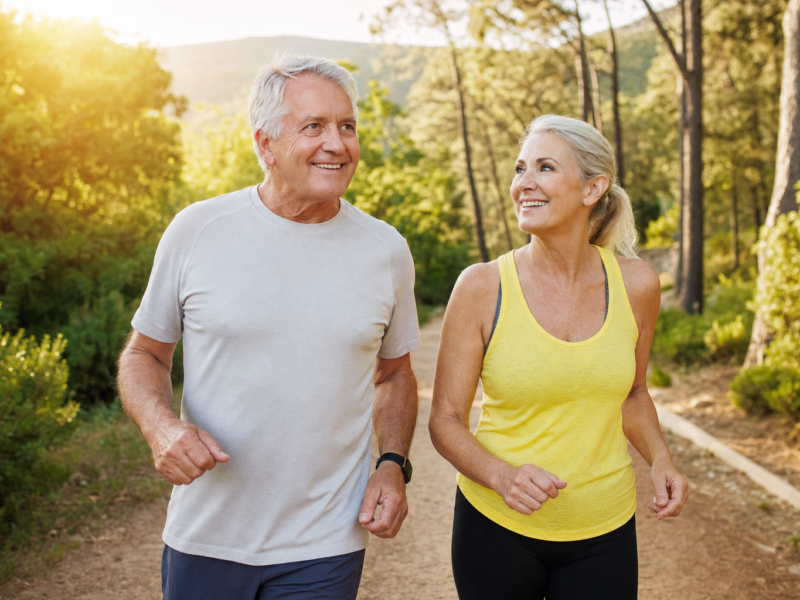
 Emma Thornton