 Sarah Mitchell
Why Your Daily Fiber Target Matters
Most adults are significantly under-consuming fiber — getting roughly 15–17 grams per day against a recommended intake of 25–38 grams. This gap between intake and target is one of the most consistent and consequential nutritional shortfalls in the modern diet, contributing to poor gut health, metabolic dysfunction, elevated cardiovascular risk, and weight gain. Understanding your personal daily fiber target — and how to reach it — is a foundational step in improving health. For a complete overview of what fiber is and how it works, see our complete dietary fiber guide.
Official Daily Fiber Recommendations
Current guidelines from major health organisations are broadly consistent: women need 25 grams per day, men need 38 grams per day, and children need 19–31 grams depending on age. These recommendations are based on caloric intake (approximately 14g per 1,000 calories consumed) and reflect the minimum amount associated with reduced chronic disease risk. For optimal gut health and microbiome diversity, research increasingly suggests that 30+ grams per day — ideally from 30 or more different plant food sources per week — provides greater benefit than the minimum recommended intake.
Older adults often need slightly less due to reduced caloric intake, but the health benefits of higher fiber intake persist throughout life. Pregnant women are advised to maintain or increase fiber intake, particularly soluble fiber, to support digestive health during pregnancy.
How to Track Your Fiber Intake
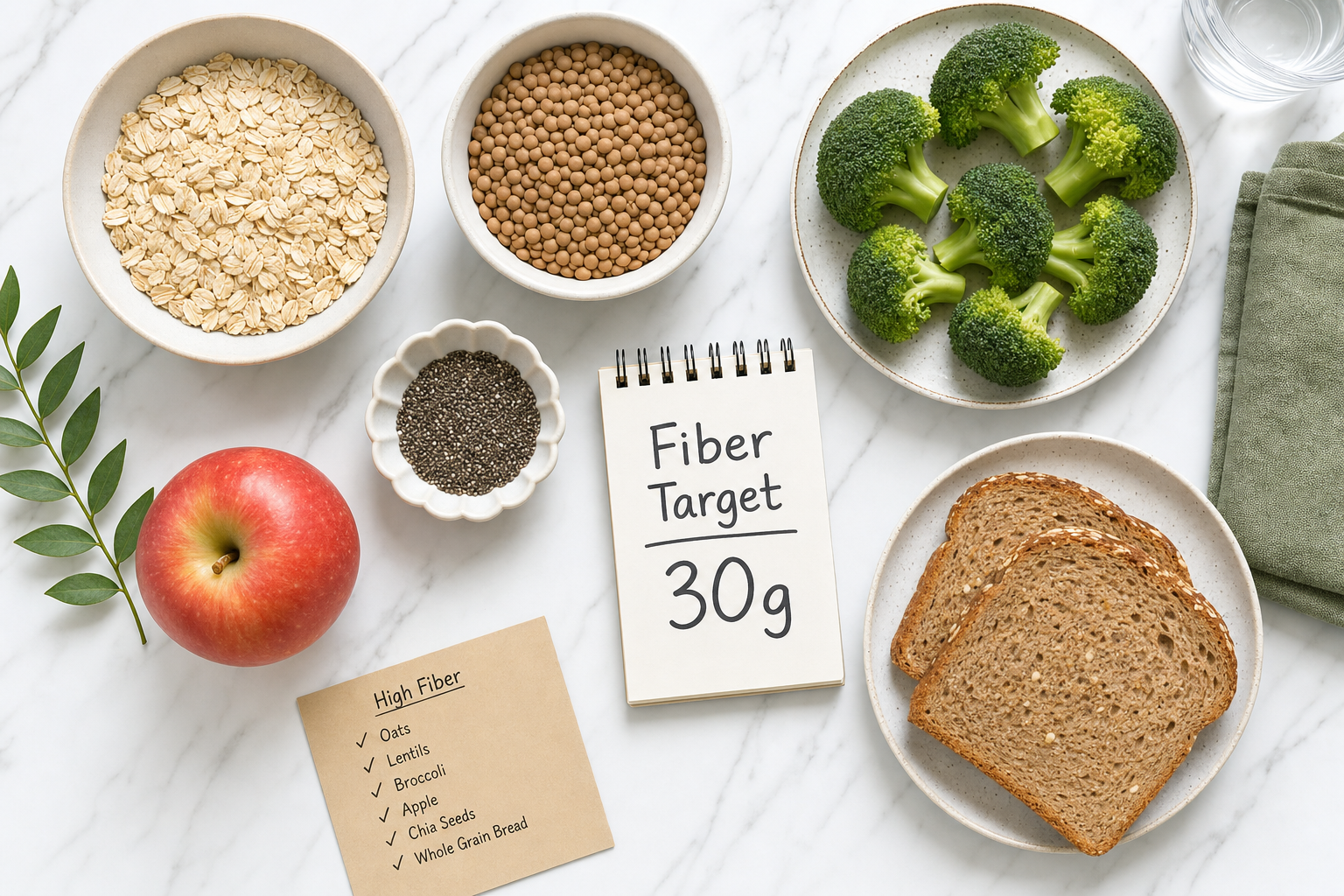
Most people dramatically overestimate how much fiber they consume. Tracking actual intake for even 3–5 days using a food diary or nutrition app (Cronometer is particularly accurate for micronutrients including fiber) typically reveals that intake is far below target. Common fiber contents to know: 1 cup cooked lentils = 15g, 1 cup oats = 4g, 1 medium apple with skin = 4.5g, 1 cup broccoli = 5g, 1 tablespoon chia seeds = 4g, 1 slice whole grain bread = 2g, 1 cup chickpeas = 12g.
How to Increase Fiber Gradually and Safely
The most important rule when increasing fiber intake is to do it gradually — adding no more than 5 grams per week — and to increase water intake alongside it. Sudden large increases in fiber (particularly insoluble fiber) can cause bloating, gas, and discomfort as gut bacteria rapidly multiply to ferment the additional substrate. Spreading fiber intake across all meals rather than concentrating it in one sitting also reduces digestive discomfort. Most people find that after 3–4 weeks of gradual increase, the gut fully adapts and higher fiber intake actually improves digestive comfort rather than disrupting it.
Start week 1 by adding one additional serving of vegetables to dinner. Week 2, swap refined grains for whole grains at one meal daily. Week 3, add legumes to lunch three times per week. Week 4, add chia or flaxseeds to breakfast daily. This four-week progression typically adds 10–15g daily without digestive disruption. See our best high fiber foods guide for specific food sources and serving sizes.
Fiber Needs for Specific Health Goals
While the general recommendation is 25–38g daily, specific health goals may call for targeted increases. For gut microbiome diversity, aim for 30g+ from 30+ different plant foods per week — emphasising variety as much as quantity. For blood sugar management, emphasise soluble fiber at every carbohydrate-containing meal. For cholesterol reduction, prioritise 10g+ of soluble fiber daily. For IBS management, the picture is more nuanced — see our guide to fiber for IBS. For weight management, any increase in fiber from whole foods is beneficial — the satiety effect is dose-dependent. See our signs you need more fiber guide for signals that your current intake is too low.
FAQ
How much fiber per day do I need?
25g for women and 38g for men are the standard recommendations. For optimal gut health and microbiome diversity, 30+ grams from varied plant foods is the better target.
Can you eat too much fiber?
Very high fiber intake (70g+) can cause digestive discomfort and may reduce absorption of some minerals. For most people, reaching even 40g per day through whole foods is challenging — excessive intake from supplements is the more realistic concern.
How do I know if I’m eating enough fiber?
Regular comfortable bowel movements (1–2 per day), consistent energy, and absence of chronic bloating or constipation are good signs. See our guide to the signs you need more fiber for specific indicators.
Is it better to get fiber from food or supplements?
Whole foods are always preferable — they provide fiber alongside vitamins, minerals, and phytonutrients that supplements lack. Supplements are useful for bridging gaps but should not replace dietary fiber.
Does cooking reduce fiber content?
Cooking doesn’t significantly reduce fiber, though it changes its structure — cooked vegetables and legumes are excellent fiber sources. Some cooking methods (like removing skins) do reduce fiber content.
What happens if I don’t get enough fiber?
Constipation, poor gut microbiome health, elevated cholesterol and blood sugar, increased inflammation, and higher long-term risk of metabolic and cardiovascular disease are all associated with chronically low fiber intake.


 Sarah Mitchell
 Emma Thornton
 James Hargreaves

 Ashley