 Sarah Mitchell
What Expert Nutritionists Actually Eat
There is often a significant gap between what nutrition scientists publish in journals and what they actually put on their own plates. Understanding what experts who study food and health for a living eat — and why — cuts through the noise of fad diets and conflicting headlines to reveal the practical dietary wisdom that emerges from a career of studying the evidence. The patterns are more consistent than many people expect. For the foundational science behind these choices, see our guide to the anti-aging diet and complete supplement guide.
Common Patterns in Expert Nutritionists’ Diets
Abundant Vegetables — Every Day
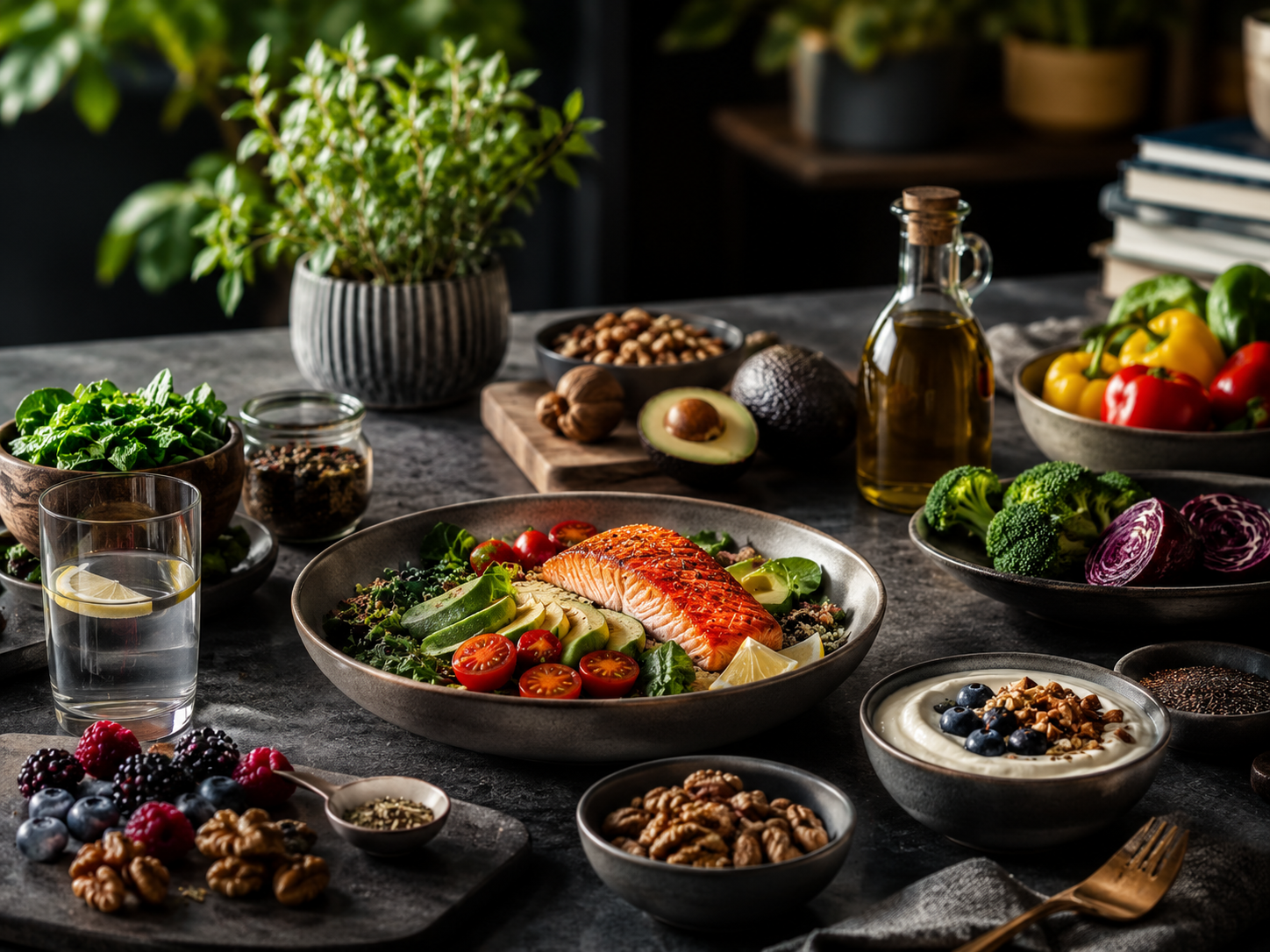
Virtually every nutrition scientist interviewed about their personal diet mentions vegetables as the centrepiece of their meals — not as a side dish but as the primary component. The target is typically 5–10 servings per day, with emphasis on variety and colour. Leafy greens feature prominently: kale, spinach, rocket, Swiss chard, and broccoli appear frequently. The reasoning is straightforward — vegetables provide the most nutritional value per calorie of any food group, including fiber, vitamins, minerals, antioxidants, and polyphenols, while being associated with lower risk of virtually every major chronic disease.
Legumes Regularly
Lentils, chickpeas, black beans, and other legumes appear in the diets of most nutrition experts consistently — not occasionally. Legumes are unique in providing both substantial protein and substantial fiber, alongside resistant starch (which feeds beneficial gut bacteria), B vitamins, iron, zinc, and magnesium. They are the dietary centrepiece of every long-lived Blue Zone population. Expert nutritionists typically eat legumes 4–7 times per week.
Whole Grains Over Refined
Most nutrition experts have long since replaced white bread, white rice, and refined pasta with whole grain alternatives — oats, barley, quinoa, brown or wild rice, whole wheat bread, and whole grain pasta. The fiber, vitamins, minerals, and phytonutrients in the whole grain — concentrated in the bran and germ layers removed in refining — are sufficient reason for the switch. Whole grain consumption is consistently associated with lower cardiovascular disease risk, better metabolic health, and reduced all-cause mortality.
Fish — Particularly Oily Fish
Salmon, mackerel, sardines, and anchovies appear in the diets of most nutrition scientists at least twice a week. The EPA and DHA omega-3 fatty acids they provide are among the most evidence-backed nutritional components for cardiovascular health, brain function, and anti-inflammatory effect. Those who don’t eat fish typically supplement with algae-based omega-3s to achieve comparable EPA and DHA intake.
Minimal Ultra-Processed Food
Perhaps the most consistent pattern across expert nutritionists’ diets is the near-absence of ultra-processed food — packaged snacks, fast food, sugary drinks, processed meats, and reconstituted food products. This is not a reflection of food snobbery but of the evidence: ultra-processed food is now one of the most consistently documented dietary risk factors for metabolic disease, cardiovascular disease, cognitive decline, and cancer.
What Experts Say About Supplements
Most nutrition scientists take a small number of targeted supplements — typically vitamin D3 (given the near-impossibility of achieving adequate levels through diet and sunlight in many latitudes), omega-3s if not eating sufficient oily fish, and potentially magnesium (given widespread dietary insufficiency) and vitamin B12 (particularly for those over 50 or following plant-based diets). They are notably sceptical of broad-spectrum supplementation, high-dose antioxidant supplements, and the vast majority of marketed wellness products. See our guide to best supplements for health for the evidence-based shortlist.
The Importance of Enjoyment
Expert nutritionists consistently emphasise that sustainable healthy eating requires that food be enjoyable. They cook with olive oil, use generous quantities of herbs and spices for flavour, eat meals with others, and allow themselves flexibility and pleasure in food choices — particularly in social settings. The chronic dietary anxiety that characterises many people’s relationship with food is absent from how nutrition experts approach eating. Shared meals, cultural food traditions, and the pleasure of eating are recognised as important components of dietary quality — not separate from it.
FAQ
What do nutrition experts actually eat?
Abundant vegetables, legumes regularly, whole grains, oily fish, olive oil, nuts, and minimal ultra-processed food — a pattern closely resembling the Mediterranean diet.
Do nutrition scientists take supplements?
Most take vitamin D3, and often omega-3s if not eating sufficient oily fish. Few take broad-spectrum supplements or high-dose antioxidants. Targeted supplementation for specific gaps is the common approach.
Is there one diet that experts agree on?
No single named diet, but the Mediterranean dietary pattern’s emphasis on whole plant foods, fish, olive oil, and minimal processed food has the most consistent expert endorsement across the field.
Do nutrition experts ever eat unhealthy food?
Yes — and they don’t consider it a problem. Sustainable healthy eating includes flexibility, enjoyment, and social sharing. The overall pattern matters far more than any individual meal.
What single change do nutrition experts most recommend?
Increasing vegetable variety and quantity is the most common single recommendation — followed closely by reducing ultra-processed food consumption.


 Sarah Mitchell

 Emma Thornton
 Daniel Brooks
 James Hargreaves