 Dr. Maya Chen
Elderberry syrup has been used as a folk remedy for colds and flu for centuries — and unlike many traditional remedies, it has actually held up to modern scientific scrutiny reasonably well. Making it at home is straightforward, cost-effective, and lets you control the quality of ingredients. Here’s the complete guide.
Does Elderberry Syrup Actually Work?
The evidence is modest but genuine. A 2016 RCT in air travellers found elderberry supplementation reduced cold duration by 2 days and reduced cold severity compared to placebo. A 2019 meta-analysis of 14 randomised trials found elderberry supplementation substantially reduced upper respiratory symptoms. The active compounds — anthocyanins, quercetin, and other flavonoids — have demonstrated antiviral activity in vitro against influenza and other respiratory viruses, inhibiting viral surface proteins that allow viruses to attach to and enter cells.
The verdict: not a cure, but a reasonable evidence-based support for immune function and symptom reduction during respiratory illness.
Important Safety Note: Raw Elderberries Are Toxic
This is critical: raw elderberries contain sambunigrin (a cyanogenic glycoside) that can cause nausea, vomiting, and diarrhoea. They must be cooked before consumption. Seeds should not be consumed in large quantities. The berries used must be black elderberries (Sambucus nigra) — red elderberries (Sambucus racemosa) are more toxic and should not be used for food preparation.
Ingredients
- 1 cup (120g) dried black elderberries (or 2 cups fresh/frozen)
- 3 cups (720ml) filtered water
- 1 cinnamon stick
- 5–6 whole cloves
- 1 teaspoon fresh grated ginger (or ½ tsp ground)
- Optional: 1 teaspoon turmeric powder
- 1 cup (320g) raw honey (added after cooking, not during)
How to Make Elderberry Syrup
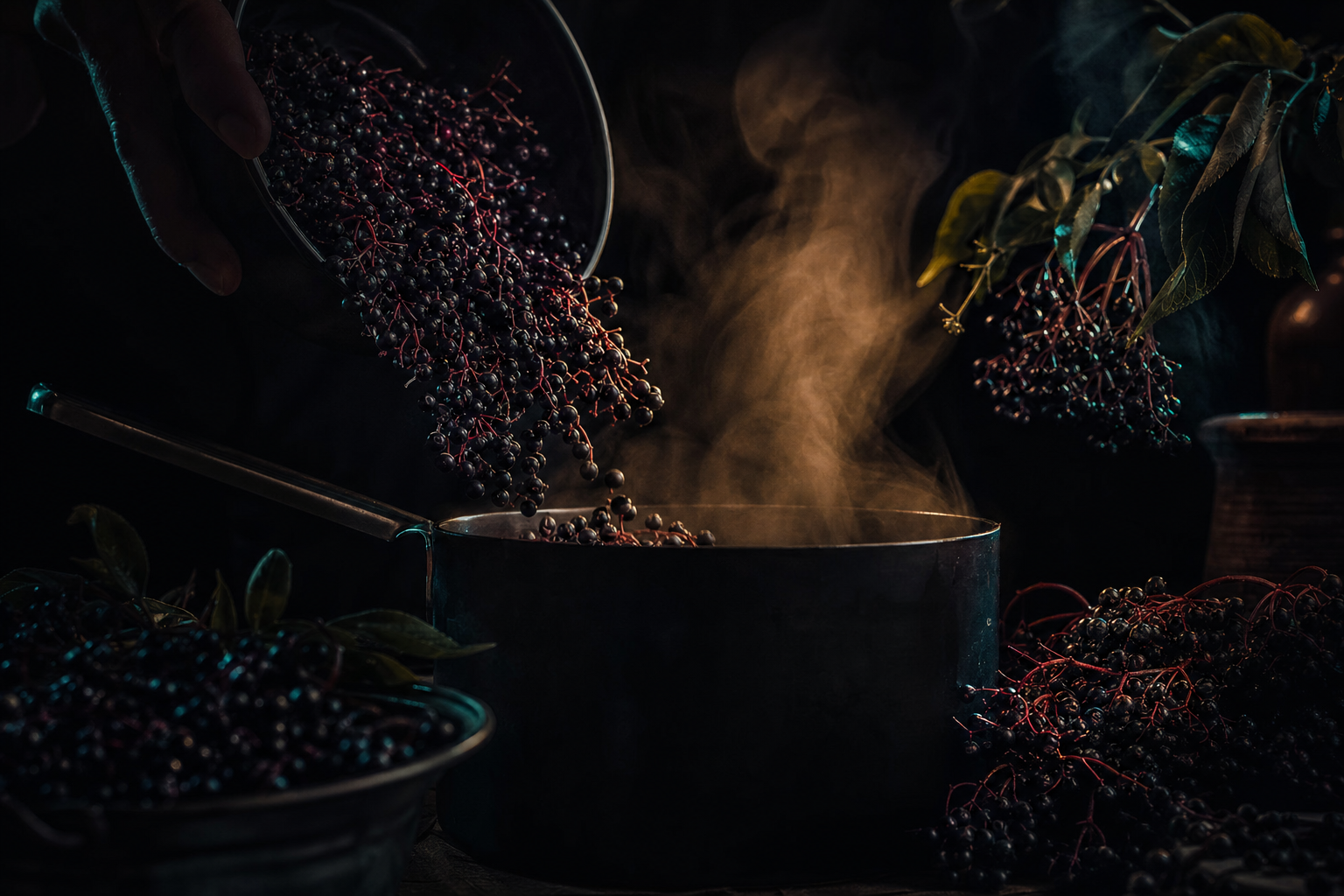
- Combine elderberries, water, cinnamon, cloves, and ginger in a medium saucepan
- Bring to a boil, then reduce to a simmer
- Simmer uncovered for 45–60 minutes until the liquid is reduced by approximately half
- Remove from heat and allow to cool for 20–30 minutes until warm but not hot
- Mash the berries in the pot with a potato masher or the back of a spoon
- Strain through a fine mesh sieve or cheesecloth into a clean jar, pressing the berries to extract all liquid
- When the liquid is below 40°C/104°F (warm but not hot) — stir in the raw honey until fully dissolved
- Transfer to a clean glass jar with a lid and store in the refrigerator
Why add honey after cooling? Raw honey’s antimicrobial enzymes (particularly glucose oxidase and catalase) are destroyed by heat above 40°C. If you add honey to hot liquid, you’re paying for raw honey but getting the properties of processed honey.
Shelf Life and Dosage
- Shelf life: 2–3 months refrigerated (the honey acts as a natural preservative)
- Preventive dose: 1 tablespoon daily for adults; 1 teaspoon daily for children over 1 year
- During illness: 1 tablespoon every 3–4 hours for adults; 1 teaspoon every 3–4 hours for children
- Not suitable for infants under 12 months due to honey (botulism risk)
Frequently Asked Questions
Simmer 1 cup dried black elderberries in 3 cups water with a cinnamon stick, cloves, and ginger for 45–60 minutes until liquid is reduced by half. Cool, mash berries, strain, and stir in 1 cup raw honey when liquid is below 40°C. Store refrigerated for up to 3 months. Never consume raw elderberries — they must be cooked to neutralise toxic compounds.
The evidence is modest but genuine. A 2019 meta-analysis of 14 randomised trials found elderberry substantially reduced upper respiratory symptoms. A 2016 RCT found it reduced cold duration by 2 days. The anthocyanins and flavonoids in elderberries have demonstrated antiviral activity in laboratory studies. It’s a reasonable, evidence-based immune support rather than a proven cure.
No — raw elderberries contain sambunigrin, a cyanogenic glycoside that causes nausea, vomiting, and diarrhoea. They must be cooked before consumption. Only use black elderberries (Sambucus nigra) — red elderberries are more toxic and unsuitable for culinary use.
Homemade elderberry syrup lasts 2–3 months refrigerated. The high honey content acts as a natural preservative. Signs it’s gone bad: off smell, mould, fermentation bubbles, or separation that doesn’t mix with stirring. For longer storage, freeze in ice cube trays and store frozen portions for up to 1 year.
This article is for informational purposes only. Elderberry syrup is not suitable for infants under 12 months (honey risk), and those with autoimmune conditions should consult a healthcare provider before use as elderberry’s immune-stimulating properties may be contraindicated.
Related: Adaptogens List and Longevity Supplements.
 Rachel Summers
 Elena Voss
 Dr. Maya Chen
 James Holloway