 James Holloway
Soursop (Annona muricata) — also known as graviola — is a tropical fruit native to the Caribbean, Central America, and northern South America. It has become one of the most controversial supplement topics in natural health, driven by dramatic claims about cancer treatment. The 2025 science is clear: soursop has genuinely interesting biology, but it is not a cancer treatment, and claims that it is have caused real harm by leading people to delay evidence-based care.
What Is Soursop?
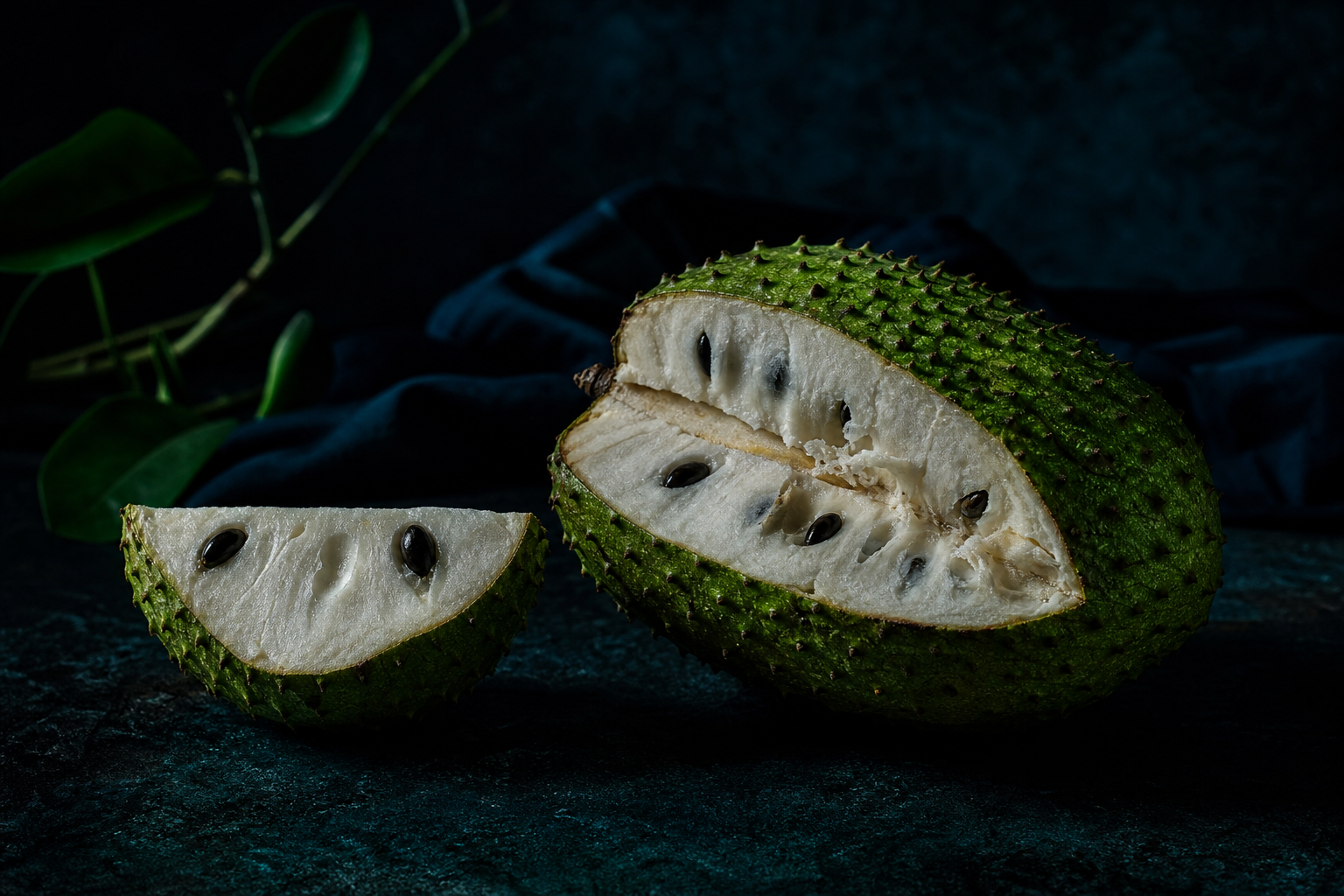
The soursop fruit has a creamy white flesh with a flavour described as a combination of strawberry, pineapple, and citrus. The leaves, bark, seeds, and roots are used in traditional medicine across its native range for a wide variety of conditions. The compounds of greatest scientific interest are annonaceous acetogenins — a class of bioactive compounds found in the Annonaceae plant family — alongside alkaloids, flavonoids, phenolics, and various phytochemicals.
Soursop Benefits: What the Evidence Shows
1. Anticancer Activity — Promising in the Lab, Unproven in Humans
This is where soursop research is most active and most often misrepresented. A 2025 PMC review (PMC12661354) confirmed that soursop extracts and compounds reduce cancer-cell proliferation and trigger apoptosis (programmed cell death) in laboratory models of breast, lung, colorectal, and haematologic cancers. The mechanisms studied include caspase activation, Bax/Bcl-2 balance modulation, NF-κB signalling inhibition, cell-cycle arrest, and mitochondrial membrane disruption — all known anticancer pathways. This is scientifically interesting and represents genuine biological activity.
However — and this cannot be overstated — laboratory activity in cancer cells does not mean soursop treats cancer in humans. Memorial Sloan Kettering Cancer Centre states there is “no proof graviola benefits cancer patients” and that human studies are lacking. MD Anderson Cancer Centre notes experts specifically warn against using soursop as a cancer treatment. No completed human clinical trials have validated soursop’s efficacy as a cancer therapy. Cancer Treatment Centres of America states the same. Using soursop to self-treat cancer while delaying conventional treatment is genuinely dangerous.
2. Antioxidant and Anti-Inflammatory Effects
Soursop’s flavonoids, phenolics, and other phytochemicals have documented antioxidant activity. Multiple reviews confirm soursop extracts reduce oxidative stress markers and exhibit anti-inflammatory properties through NF-κB inhibition and cytokine modulation. These are real biological effects with plausible health implications, though clinical outcomes in humans have not been formally studied for these endpoints specifically.
3. Blood Sugar Regulation
Animal studies consistently show soursop leaf extracts lower blood glucose and improve insulin sensitivity. The proposed mechanisms include alpha-glucosidase inhibition (slowing carbohydrate digestion) and improved pancreatic beta-cell function. Human clinical evidence is very limited — one small human study found soursop leaf tea reduced fasting blood glucose in type 2 diabetes patients over 2 weeks. Interesting but far from proven as a diabetes management strategy.
4. Antimicrobial Properties
Soursop extracts show antimicrobial activity against several bacteria and fungi in laboratory conditions, including Staphylococcus aureus, E. coli, and various Candida species. These in vitro findings are consistent across multiple studies. Whether this translates to meaningful clinical antimicrobial effects in humans has not been established through trials.
5. Soursop as Food — The Safest Recommendation
Eating soursop as a fruit is safe and nutritious — it provides vitamin C, B vitamins, potassium, magnesium, and dietary fibre alongside its phytochemicals. MD Anderson notes that eating the fruit as part of a balanced diet is reasonable. The caution applies to concentrated extracts, particularly from leaves, seeds, and bark — which contain higher concentrations of acetogenins and have associated with neurological concerns (annonacin in acetogenins has been linked to atypical Parkinson’s in populations consuming large amounts of soursop-family plants over decades).
Important Safety Warning
Annonacin — an acetogenin compound in soursop — has been identified as a potential neurotoxin associated with atypical Parkinsonism in populations with very high, long-term consumption of soursop-family plants. The dose in normal food consumption is likely too low to be concerning, but concentrated leaf and seed extracts taken in supplement doses raise legitimate safety questions. People with Parkinson’s disease or neurodegenerative conditions should avoid soursop supplements. Do not use soursop supplements as a substitute for cancer treatment.
Frequently Asked Questions
Soursop contains bioactive compounds — particularly annonaceous acetogenins, alkaloids, and flavonoids — with documented antioxidant, anti-inflammatory, and anticancer activity in laboratory research. It may modestly support blood sugar regulation (limited human evidence) and has antimicrobial properties in lab studies. As a fruit it is nutritious and safe. Concentrated extracts for cancer treatment are not supported by human clinical evidence and carry potential neurological risks with long-term high-dose use.
No — soursop does not cure cancer. While soursop extracts show anticancer activity against cancer cells in the laboratory, no human clinical trials have confirmed these effects translate to cancer treatment in people. Memorial Sloan Kettering, MD Anderson, and cancer treatment centres specifically state there is no proof soursop benefits cancer patients. Using it to delay conventional cancer treatment is dangerous. The in vitro evidence is interesting for future research but does not support current therapeutic use.
Eating soursop fruit in normal amounts as food is safe for most people. The safety concerns apply primarily to high-dose concentrated extracts from leaves, seeds, and bark — which contain higher concentrations of annonacin, an acetogenin that has been linked to atypical Parkinsonism in populations with very high long-term consumption. People with Parkinson’s or neurodegenerative conditions should avoid soursop supplements. Pregnant women should avoid medicinal doses of soursop leaf extract.
This article is for informational purposes only. Soursop is not a cancer treatment. Never use herbal supplements to delay or replace evidence-based cancer care. Consult your oncologist before taking any supplement if you have cancer.

 James Holloway
 Elena Voss



 Rachel Summers