 Dr. Maya Chen
Turmeric is one of the most popular health supplements in the world — but the dose question is more nuanced than most sources acknowledge. The right amount depends on your form of turmeric, your health goal, and critically, whether you’re accounting for bioavailability. Here’s the complete, evidence-based guide.
Why Dose and Form Are Inseparable
Turmeric root contains approximately 2–8% curcumin by weight. Curcumin is the primary active compound responsible for turmeric’s health benefits. The problem: plain curcumin has approximately 1% bioavailability when taken without absorption enhancers. This means most of what you take passes through unabsorbed.
This makes dosing advice that ignores form largely meaningless. “1 teaspoon of turmeric per day” is very different from “500mg of a phospholipid-bound curcumin extract.”
Recommended Doses by Form
| Form | Daily Dose | Curcumin Delivered | Notes |
|---|---|---|---|
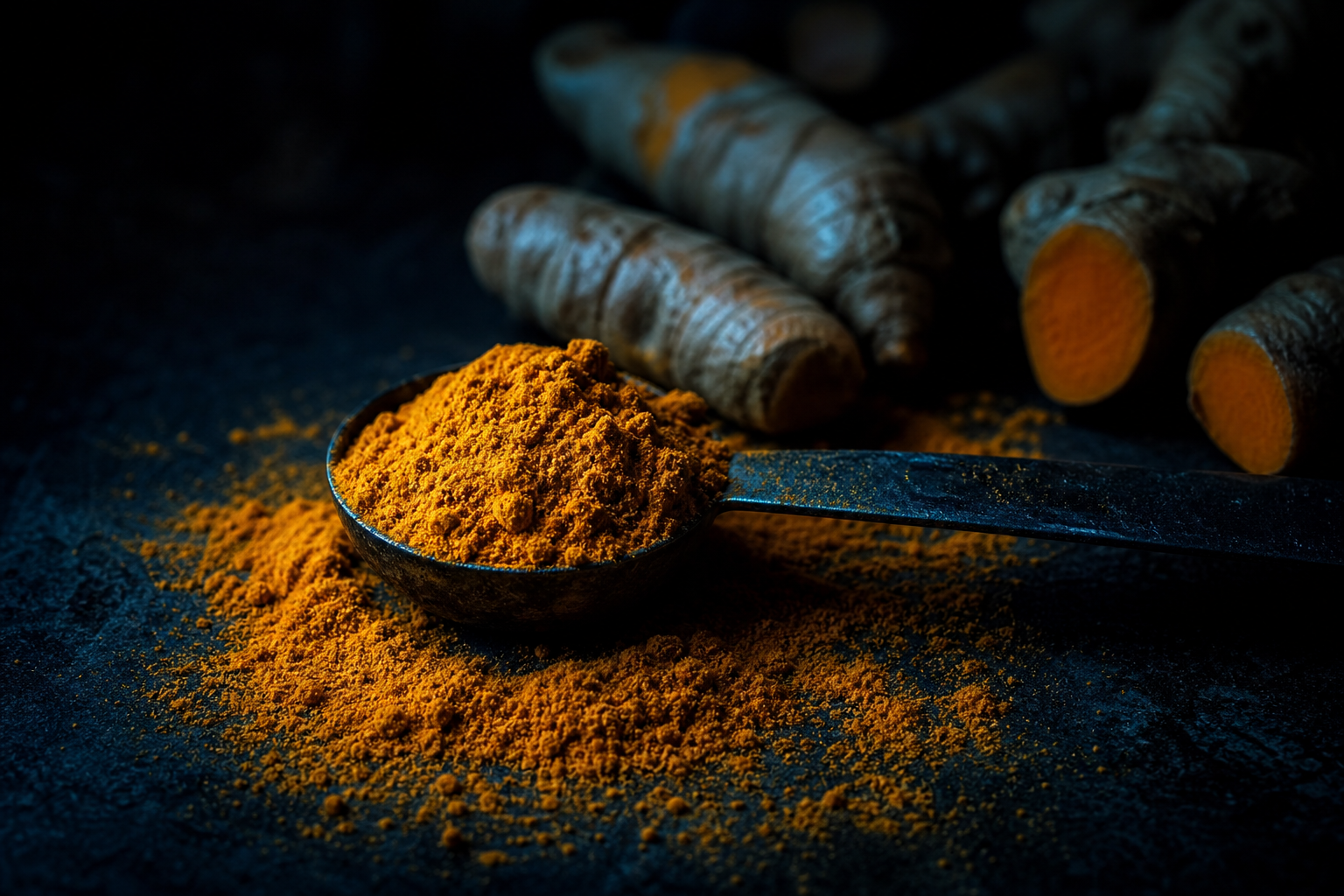
| Turmeric powder (cooking) | 1–3 tsp (3–9g) | 60–720mg curcumin (poorly absorbed) | Always add black pepper + fat |
| Curcumin + piperine (95% extract) | 500–1,500mg | Much higher absorption than plain | Most common supplement form |
| Phospholipid curcumin (Meriva, BCM-95) | 500–1,000mg | 29x more bioavailable than standard | Best for joint/anti-inflammatory use |
| Turmeric golden milk | 1–2 cups/day | Variable — modest | Add black pepper to improve absorption |
Doses Used in Clinical Research
- Osteoarthritis: 500–2,000mg curcumin daily (with piperine or high-bioavailability form) for 8–12 weeks — multiple RCTs show significant pain reduction
- Depression: 500–1,000mg curcumin daily — 6-week RCT showed comparable efficacy to fluoxetine
- Metabolic syndrome / blood sugar: 1,000–1,500mg curcumin daily for 8–12 weeks
- General anti-inflammatory: 500–1,000mg daily with piperine
- Prediabetes prevention: 1,500mg curcumin daily (as used in the landmark 9-month RCT)
The Piperine Rule
If you’re taking standard curcumin powder or turmeric capsules without piperine, you’re largely wasting your money. Piperine — the active compound in black pepper — inhibits the enzymes that rapidly metabolise curcumin, increasing its bioavailability by up to 2,000% in the landmark 1998 study by Shoba et al. A 20mg dose of piperine alongside 2,000mg curcumin increased serum curcumin levels 20-fold.
Practically: add a few grinds of black pepper to every turmeric-containing food or drink. If supplementing, choose a product that includes piperine (BioPerine) or use a phospholipid-bound form.
Is There a Maximum Safe Dose?
The WHO has established an acceptable daily intake (ADI) of 0–3mg of curcumin per kg of body weight. For a 70kg adult, this is 210mg/day from a safety classification perspective — though human trials have routinely used much higher doses (up to 8,000mg daily) without significant adverse effects in short-term studies.
At very high doses (above 4,000mg daily), some people experience gastrointestinal disturbances. Curcumin at high doses may also inhibit iron absorption and has mild blood-thinning properties. People on anticoagulants or with gallbladder disease should consult a healthcare provider before supplementing.
The Golden Milk Dose — Is It Enough?
A standard golden milk recipe (1 teaspoon turmeric in warm milk) provides roughly 200–500mg of curcumin — useful for general anti-inflammatory support and antioxidant benefit when prepared with black pepper and a fat source (whole milk, coconut milk). It’s unlikely to produce the significant effects seen in clinical trials using 1,000–2,000mg of high-bioavailability extract, but it’s a consistent daily habit with genuine benefit.
Frequently Asked Questions
As food: 1–3 teaspoons daily with black pepper and fat. As a supplement: 500–1,500mg of a high-bioavailability curcumin extract (with piperine or phospholipid complex) daily. For specific conditions like osteoarthritis or depression, clinical trials typically used 500–2,000mg daily of curcumin with piperine for 8–12 weeks. Plain turmeric powder without piperine provides very little systemic benefit.
Yes — daily turmeric consumption is safe for most people and is the approach used in clinical trials showing health benefits. At food doses (1–3 tsp/day), long-term daily use has an excellent safety profile. At higher supplement doses (above 2,000mg/day), long-term safety data is more limited; most clinical trials run 8–12 weeks. Avoid very high doses if you take blood thinners or have gallbladder disease.
One teaspoon of turmeric powder (approximately 3g) contains roughly 60–240mg of curcumin. With black pepper and fat, this provides genuine anti-inflammatory and antioxidant benefit — particularly with consistent daily use. However, the doses used in clinical trials for specific conditions (arthritis, depression, blood sugar) typically use concentrated high-bioavailability supplements providing 500–2,000mg of curcumin, which food amounts alone are unlikely to match.
With daily turmeric or curcumin supplementation over weeks and months: reduced systemic inflammation markers (CRP, IL-6), improved joint pain and mobility, reduced oxidative stress, potential mood and cognitive improvements, and improved metabolic markers. Benefits are cumulative and typically measurable at 4–8 weeks. Side effects at food doses are very rare; at high supplement doses, some people experience mild GI discomfort.
This article is for informational purposes only. High-dose curcumin supplements may interact with blood thinners and other medications. Consult a healthcare provider before use.
Related reading: Benefits of Turmeric, Does Turmeric Help With Inflammation?, Can Dogs Have Turmeric?.

 Dr. Rachel Stone
 James Holloway
 Dr. Maya Chen