 James Holloway
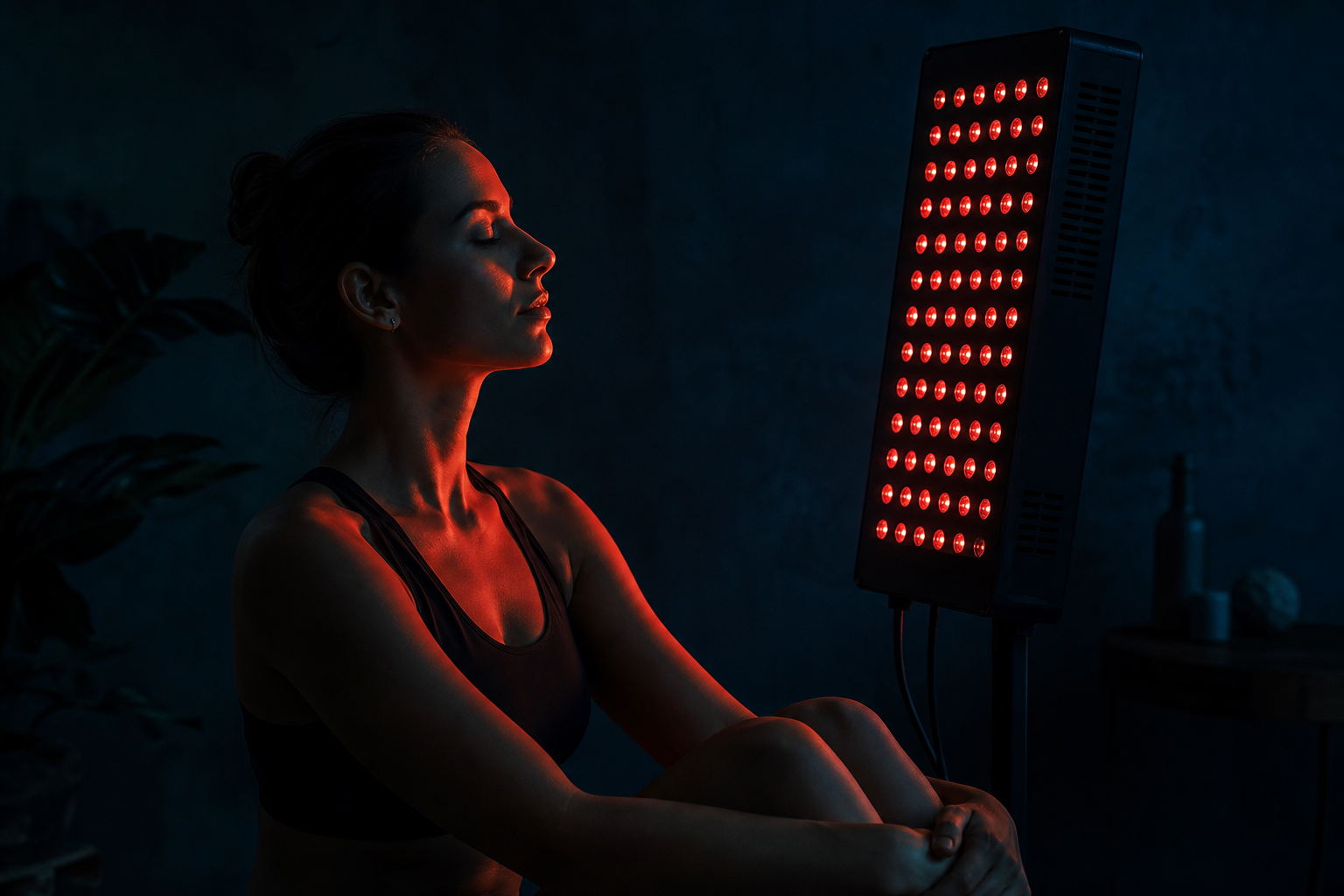
Red light therapy (RLT) — also called photobiomodulation or low-level laser therapy (LLLT) — uses red and near-infrared light wavelengths to stimulate cellular processes. Once confined to clinical settings, it’s now widely available in home devices. But how much of the benefit is backed by evidence? Here’s an honest breakdown.
How Red Light Therapy Works
Red light (630–700nm) and near-infrared light (700–1100nm) penetrate skin and underlying tissue at different depths — red light primarily affects skin and superficial tissue, while near-infrared penetrates deeper into muscle, bone, and brain. The primary mechanism: photons are absorbed by cytochrome c oxidase (Complex IV) in the mitochondrial electron transport chain, which stimulates ATP production, reduces oxidative stress, and activates cellular repair pathways.
This mitochondrial stimulation triggers a cascade of downstream effects including increased nitric oxide production, reduced inflammation, enhanced collagen synthesis, and improved cellular metabolism — the mechanisms underlying most of RLT’s documented benefits.
1. Skin Health and Anti-Ageing
This is the most thoroughly researched clinical application of RLT. Multiple RCTs have found red light therapy:
- Significantly increases collagen and elastin production through fibroblast stimulation
- Reduces fine lines, wrinkles, and skin roughness — a 2014 RCT found measurable improvements in wrinkle depth and skin tone at 9 weeks
- Improves acne — a 2010 meta-analysis found blue + red light combination significantly reduced inflammatory and non-inflammatory acne lesions
- Accelerates wound healing through increased collagen synthesis and angiogenesis
- Reduces hyperpigmentation and improves skin texture
2. Muscle Recovery and Performance
This is one of the strongest evidence areas for RLT. A 2016 meta-analysis of 46 studies found photobiomodulation significantly reduced muscle fatigue, improved muscle performance, and accelerated recovery when applied before or after exercise. The mechanism: enhanced mitochondrial function in muscle cells, reduced exercise-induced oxidative damage, and faster clearance of lactic acid.
Pre-exercise RLT is particularly well-studied — applying it to muscles before exercise enhances performance and delays fatigue onset. Post-exercise application accelerates recovery and reduces DOMS (delayed onset muscle soreness). Professional sports teams and elite athletes have adopted it broadly.
3. Joint Pain and Inflammation
Multiple clinical trials support RLT for musculoskeletal pain conditions. A 2009 Cochrane review found low-level laser therapy significantly reduced pain and morning stiffness in rheumatoid arthritis patients. Studies in osteoarthritis, tendinopathy, and non-specific neck and back pain have consistently found beneficial effects on pain and function, though effect sizes vary considerably.
Near-infrared light penetrates deeper to reach joint structures and muscle tissue, making panel devices that include NIR wavelengths preferable for musculoskeletal applications.
4. Hair Growth
RLT has documented evidence for androgenetic alopecia (pattern hair loss). It stimulates hair follicle stem cells, increases blood flow to the scalp, and prolongs the anagen (growth) phase of the hair cycle. A 2013 RCT found low-level laser therapy significantly increased hair density in men and women with pattern hair loss. FDA-cleared laser hair growth devices (HairMax) are available for home use.
5. Cognitive Function and Brain Health
Transcranial photobiomodulation — applying near-infrared light to the scalp and skull — is an emerging area with compelling early evidence. A 2017 case series found transcranial NIR significantly improved cognitive function in traumatic brain injury patients. Animal studies show transcranial NIR reduces amyloid beta plaques, reduces neuroinflammation, and improves cognitive performance. Human trials for Alzheimer’s and cognitive decline are underway.
6. Sleep Quality
A notable 2012 RCT in Chinese female basketball players found whole-body red light therapy (30 minutes before sleep, 14 nights) significantly improved sleep quality, melatonin levels, and next-day endurance performance compared to placebo. Proposed mechanism: red light stimulates melatonin production through mitochondrial effects in the pineal gland pathway.
What Doesn’t Have Strong Evidence
- Weight loss — virtually no credible evidence for fat loss from RLT despite many claims
- Detoxification — not a documented effect
- Systemic immune enhancement — limited evidence for whole-body immune effects from localised light
Frequently Asked Questions
Red light therapy stimulates cytochrome c oxidase in mitochondria, increasing ATP production, reducing oxidative stress, and activating cellular repair. Documented benefits include: improved skin health and collagen production, reduced fine lines and acne, significantly improved muscle recovery and performance, joint pain reduction, hair growth stimulation, early evidence for cognitive benefits, and improved sleep quality. Effects are localised — the tissue exposed to light benefits most.
Most clinical protocols use red light therapy 3–5 times per week for skin and recovery applications. Session duration varies from 5–20 minutes depending on the device power (irradiance) and target area. Daily use is generally safe. The Goldilocks principle applies — both under-dosing (too little light) and over-dosing (excessive daily exposure) can reduce effectiveness. Start with 3x/week sessions of 10–15 minutes.
For some applications, yes — the evidence is genuinely strong. Skin health (collagen, wrinkles, acne), muscle recovery, and joint pain are the best-evidenced applications with multiple RCTs. Hair growth has good evidence. Cognitive benefits are emerging but not yet definitive. Many claims (weight loss, detox, systemic immunity) are not well-supported. The evidence quality varies significantly by application.
Red light therapy has an excellent safety profile at therapeutic doses. It does not contain UV radiation and does not cause DNA damage or sunburn. The main precautions: avoid direct eye exposure (use protective eyewear); people with photosensitive conditions or taking photosensitising medications should consult a healthcare provider; the appropriate power density and exposure time matter — excessive irradiance can paradoxically inhibit cellular effects.
This article is for informational purposes only. Red light therapy should not replace medical treatment. Consult a healthcare provider for specific health conditions.
Related reading: Grounding Benefits, Benefits of Cold Plunge, Sauna Benefits for Heart Health.
Related: Collagen for Skin | Red Light Therapy Benefits | Beef Tallow for Skin: What Evidence Shows


 James Holloway

 Dr. Maya Chen

 Elena Voss