 Emma Thornton
What Is Biological Age?
Chronological age — the number of years since your birth — is fixed and unstoppable. Biological age — how old your cells, tissues, and organs are functionally — is a different matter entirely. Two people of the same chronological age can have biological ages that differ by a decade or more, depending on their lifestyle, environment, genetics, and health history. Biological age is a more accurate predictor of health outcomes, functional capacity, and remaining lifespan than chronological age. And crucially, it is modifiable — studies consistently show that lifestyle interventions measurably reduce biological age markers, offering a genuine mechanism for extending healthy life. For the complete longevity framework, see our complete longevity guide.
How Biological Age Is Measured
Telomere Length
Telomeres are the protective caps on the ends of chromosomes — they shorten with each cell division and with oxidative stress and inflammation. Telomere length is one of the most studied markers of biological aging, and shorter telomeres are associated with higher rates of age-related disease and earlier mortality. Chronic psychological stress, smoking, obesity, physical inactivity, and poor sleep all accelerate telomere shortening. Regular exercise, stress management, adequate sleep, and a diet rich in antioxidants slow and in some studies partially reverse telomere shortening.
Epigenetic Clocks
Epigenetic clocks — particularly the Horvath clock and the GrimAge clock — measure biological age through DNA methylation patterns across hundreds of sites in the genome. These methylation patterns change predictably with age and lifestyle, and the resulting “epigenetic age” is a more accurate predictor of all-cause mortality than chronological age. Epigenetic age can be measured through commercial blood tests. Studies show that diet, exercise, sleep, and stress management measurably alter epigenetic age — providing perhaps the most direct scientific validation that lifestyle genuinely slows biological aging.
Functional Markers
Practical functional markers of biological age include: grip strength (one of the strongest predictors of mortality in large population studies), walking speed, VO2 max (cardiorespiratory fitness), cognitive function scores, hearing and vision capacity, and the results of standard blood tests including inflammatory markers (hsCRP, IL-6), metabolic markers (fasting insulin, HbA1c), and hormonal markers (testosterone, IGF-1, DHEAS). These functional measures reflect the real-world consequences of biological aging and respond meaningfully to lifestyle interventions.
What Ages You Faster
The primary biological accelerators of aging are: chronic psychological stress (via HPA axis dysregulation and telomere shortening), chronic inflammation (inflammaging, driven by diet, stress, sleep deprivation, inactivity, and dysbiosis), smoking (the most powerful lifestyle accelerant of biological aging — adding approximately 7 years of biological age), obesity (particularly visceral adiposity, which is highly inflammatory), physical inactivity (sedentary behaviour independently accelerates biological aging beyond its effects on weight), chronic sleep deprivation, and chronic high blood glucose (via glycation and oxidative stress). See our guide to stress and aging for the inflammation connection.
What Slows Biological Aging
Exercise
Regular exercise is the most robustly evidenced lifestyle intervention for reducing biological age. Highly fit individuals show telomere lengths, mitochondrial function, and epigenetic profiles equivalent to people 10–20 years younger chronologically. Even starting exercise in midlife or later produces measurable improvements in biological age markers. See our guide to exercise for healthy aging.
Diet
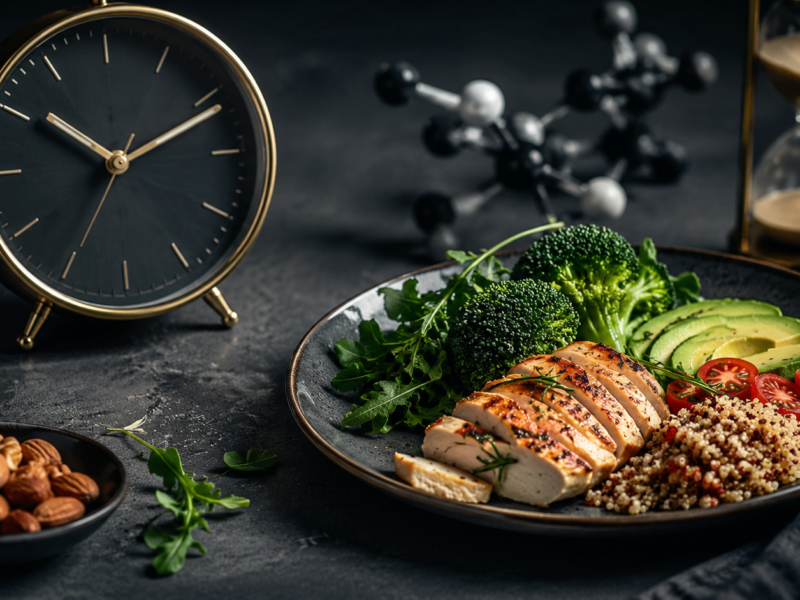
Mediterranean and MIND dietary patterns are consistently associated with younger biological age — lower inflammatory markers, longer telomeres, and more youthful epigenetic profiles. Specific components with the most evidence: omega-3 fatty acids (anti-inflammatory, telomere protective), polyphenols (activate sirtuins — proteins that regulate aging pathways), adequate protein (muscle preservation), and caloric moderation (avoiding chronic excess). See our anti-aging diet guide.
Sleep
Chronic short sleep is associated with accelerated biological aging across multiple markers — shorter telomeres, worse epigenetic age, and higher inflammatory markers. Consistently sleeping 7–9 hours per night is one of the most impactful biological age management strategies available. See our sleep and aging guide.
FAQ
What is biological age vs chronological age?
Chronological age is how long you’ve been alive; biological age is how old your cells and organs are functionally. They can differ by a decade or more depending on lifestyle.
Can you reverse biological age?
You can measurably improve biological age markers — telomere length, epigenetic age, inflammatory markers — through consistent exercise, healthy diet, adequate sleep, and stress management. This represents genuine biological rejuvenation at the cellular level.
What is an epigenetic clock?
A measure of biological age based on DNA methylation patterns that change predictably with age. It is a more accurate predictor of mortality and disease than chronological age.
What accelerates biological aging most?
Smoking, chronic psychological stress, sedentary behaviour, obesity, chronic sleep deprivation, chronic inflammation, and poor diet are the strongest accelerators of biological aging.
How can I measure my biological age?
Commercial epigenetic age tests (measuring DNA methylation) are available. Functional proxies include grip strength, VO2 max, walking speed, blood metabolic and inflammatory markers, and cognitive assessments.
Related reading: Telomeres and Longevity, Longevity Supplements, What Is Spermidine?, Autophagy and Aging.
Related: Circadian Rhythm and Longevity, Longevity Breakthroughs 2025, and Immune Aging.


 Daniel Brooks
 Emma Thornton
 James Hargreaves
 Rachel Summers
 Sarah Mitchell