 Dr. Rachel Stone
Anti-ageing skin creams, supplements, and procedures are a multi-billion dollar industry. But dermatologists and longevity researchers increasingly agree: what you eat has as much — or more — impact on how your skin ages as what you put on it. Here are the anti-ageing foods with the strongest evidence.
How Food Affects How You Age
Ageing at the cellular level is driven primarily by oxidative stress, chronic inflammation, glycation (sugar cross-linking proteins), and telomere shortening. Diet influences all four of these mechanisms directly. A dietary pattern that reduces oxidative damage, dampens systemic inflammation, limits glycation, and supports telomere maintenance is, by definition, an anti-ageing diet.
The Best Anti-Ageing Foods
1. Berries
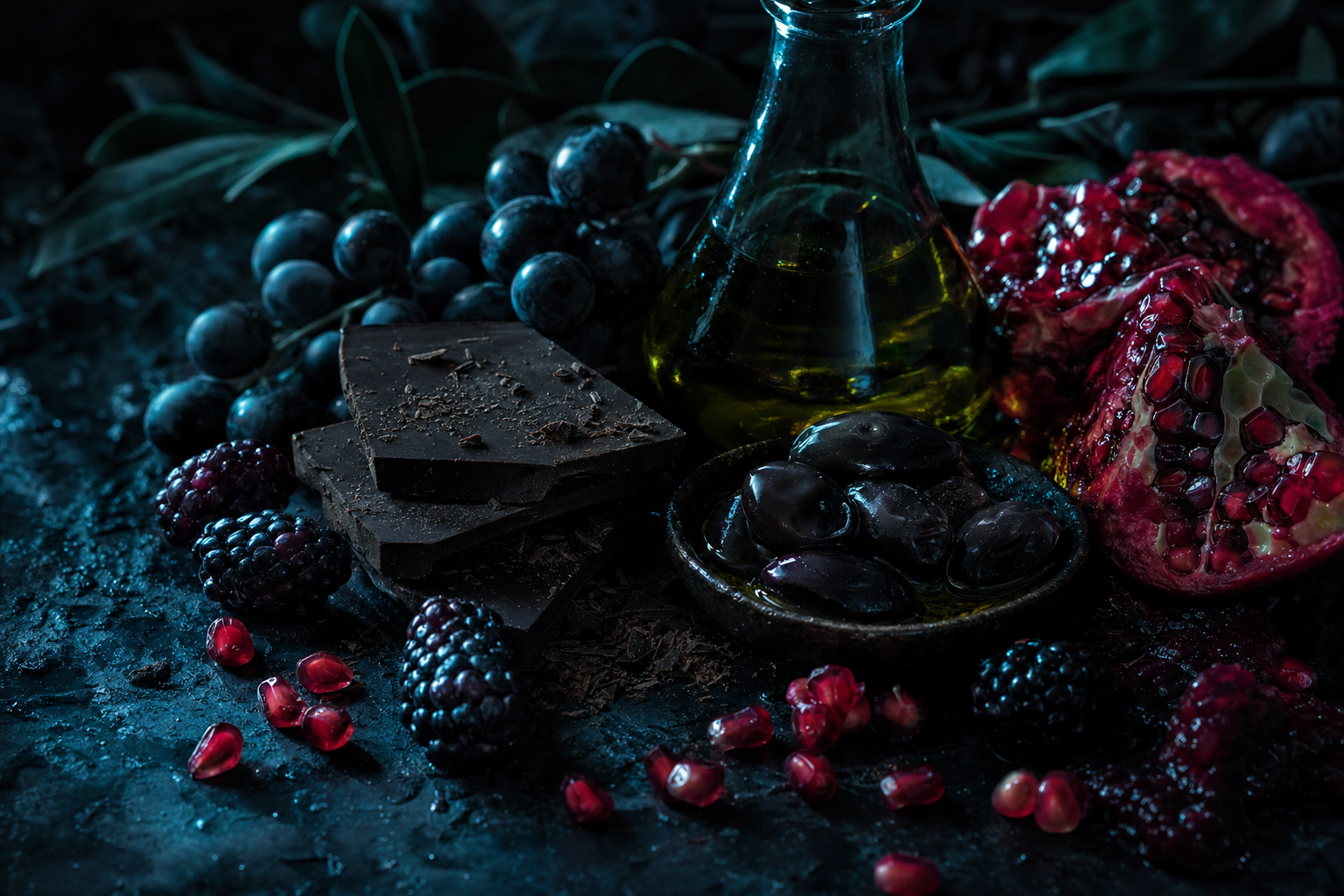
Blueberries, strawberries, raspberries, blackberries, and acai are among the most antioxidant-dense foods on earth. Their anthocyanins — the polyphenols responsible for the deep blue-red pigment — have been shown to reduce oxidative stress markers, improve endothelial function, support cognitive health, and reduce inflammatory cytokines. A 2022 study found daily blueberry consumption significantly improved cognitive function and blood pressure in older adults over 12 weeks.
2. Extra Virgin Olive Oil
The most studied longevity food in the dietary literature. Oleocanthal — a polyphenol unique to EVOO — has potent anti-inflammatory effects comparable to ibuprofen at therapeutic concentrations. The PREDIMED trial (7,447 participants over 5 years) found Mediterranean diet supplemented with EVOO reduced major cardiovascular events by 30% and significantly slowed cognitive decline. Use as a primary cooking and dressing fat — 3–4 tablespoons daily is associated with the strongest benefits.
3. Fatty Fish (Salmon, Sardines, Mackerel)
Omega-3 fatty acids — particularly EPA and DHA from marine sources — are the best-studied anti-inflammatory nutrients in the world. They reduce prostaglandin synthesis, lower triglycerides, improve endothelial function, support brain structure and function, and are associated with longer telomeres. A meta-analysis of 25 studies found higher omega-3 intake associated with significantly reduced all-cause mortality.
4. Leafy Greens
Dark leafy greens (spinach, kale, rocket, Swiss chard, dandelion greens) are rich in folate, vitamins K1 and K2, lutein, zeaxanthin, sulforaphane (in cruciferous varieties), and magnesium — all associated with reduced age-related disease. A Chicago Memory and Aging Project study found one serving of leafy greens daily was associated with cognitive function equivalent to being 11 years younger in older adults.
5. Green Tea
Green tea is exceptionally rich in EGCG (epigallocatechin gallate) — a catechin with documented effects on cancer cell death, AMPK activation, reduction of oxidative stress, and cardiovascular protection. Japanese populations with high green tea consumption show significantly lower rates of cardiovascular disease and certain cancers. Three to five cups daily appears to be the beneficial range in epidemiological studies.
6. Pomegranate
Pomegranates contain ellagitannins, which gut bacteria convert to urolithins — compounds that activate mitophagy (the selective recycling of damaged mitochondria) and have shown significant anti-ageing effects in animal studies and early human trials. A 2022 clinical trial found urolithin A supplementation improved mitochondrial health and muscle function in older adults, in what researchers called the first evidence of mitophagy enhancement in humans.
7. Turmeric
Curcumin — turmeric’s active compound — has over 5,000 published studies demonstrating anti-inflammatory, antioxidant, and neuroprotective effects. It inhibits NF-κB (a master inflammatory switch), reduces amyloid beta accumulation in the brain, and supports telomere maintenance. Bioavailability is low from food alone; combine with black pepper (piperine increases absorption by 2,000%) or use a phospholipid-bound supplement form.
8. Cruciferous Vegetables
Broccoli, cauliflower, Brussels sprouts, and cabbage contain glucosinolates that convert to sulforaphane — one of the most potent Nrf2 activators found in food. Nrf2 is a transcription factor that activates the body’s antioxidant response pathway, upregulating enzymes that protect cells from oxidative damage. Lightly steaming or chopping and leaving for 40 minutes before cooking (to allow myrosinase activation) maximises sulforaphane content.
Foods That Accelerate Ageing
- Ultra-processed foods — the most consistent dietary predictor of accelerated biological ageing and increased all-cause mortality
- Added sugar — drives glycation (AGE formation), inflammation, and obesity-related ageing
- Refined seed oils (in excess) — high omega-6 content promotes inflammatory arachidonic acid cascade
- Excess alcohol — increases oxidative stress, depletes antioxidant systems, and damages mitochondrial DNA
Frequently Asked Questions
The foods with the strongest evidence for slowing biological ageing are: berries (anthocyanins reduce oxidative stress and inflammation), extra virgin olive oil (oleocanthal is anti-inflammatory; PREDIMED trial data is compelling), fatty fish (omega-3s reduce inflammation and support telomere length), leafy greens, green tea (EGCG activates AMPK and reduces oxidative stress), pomegranate/urolithins (mitophagy activation), turmeric/curcumin, and cruciferous vegetables (sulforaphane activates Nrf2).
Significantly — dietary antioxidants protect skin collagen from oxidative damage, omega-3s support skin barrier function and reduce inflammatory skin conditions, vitamin C is essential for collagen synthesis, and sugar intake drives glycation that stiffens and yellows collagen. Research shows Mediterranean-style diets are consistently associated with less UV-related skin damage and better skin appearance.
Extra virgin olive oil has arguably the strongest overall evidence base — it’s the centrepiece of the Mediterranean diet, the most studied dietary pattern for longevity. Its polyphenols (oleocanthal, hydroxytyrosol, oleuropein) have anti-inflammatory, cardioprotective, neuroprotective, and potentially anti-cancer effects. The PREDIMED trial (7,447 participants, 5 years) demonstrated dramatic risk reductions for cardiovascular disease and cognitive decline.
This article is for informational purposes only and does not constitute medical or dietary advice.
Related Articles

 Elena Voss