 James Holloway
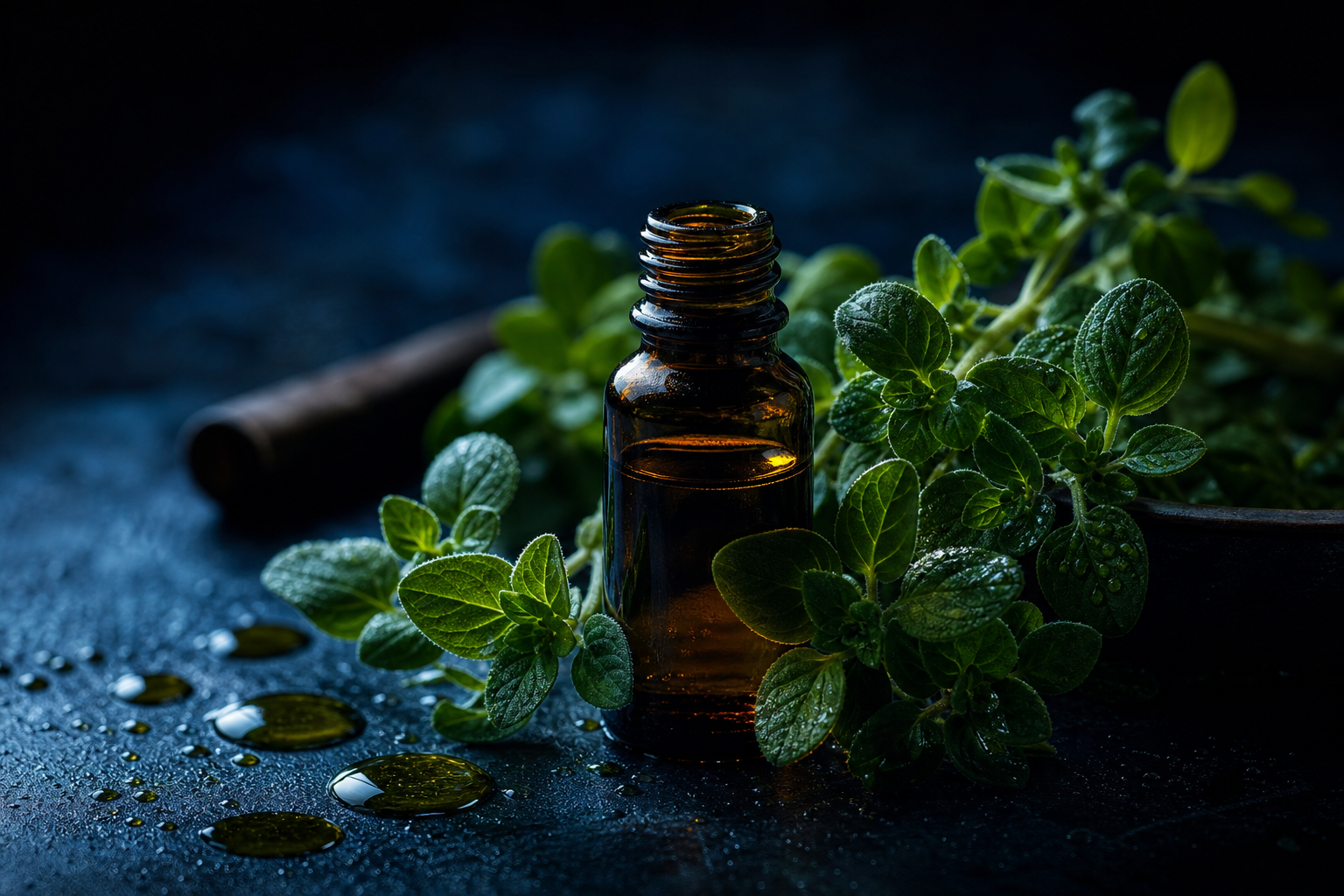
Oregano oil is one of the most potent natural antimicrobials studied in modern research. Its active compounds — carvacrol and thymol — have demonstrated broad-spectrum antimicrobial activity against bacteria, fungi, and parasites in laboratory research. Understanding what oregano oil genuinely does, and where the evidence stops, helps you use it effectively without falling for overclaiming.
What Makes Oregano Oil Medicinally Active?
Oil of oregano is an essential oil extracted from Origanum vulgare — specifically the high-carvacrol varieties grown in Mediterranean climates. The two primary bioactive compounds are carvacrol (typically 60–85% of the oil) and thymol (typically 5–10%). These phenolic compounds work by disrupting microbial cell membranes — they penetrate and disorganise the lipid bilayer of bacterial and fungal cells, causing leakage of cellular contents and cell death. This mechanism is well-established in the 2025 literature (Frontiers in Pharmacology 2025, PMC9314563). Quality oregano oil supplements should be standardised to at least 70% carvacrol content.
Oregano Oil Benefits
1. Antimicrobial Activity — Strongest Evidence
This is oregano oil’s most consistently demonstrated property across thousands of studies. Carvacrol and thymol have shown activity against a broad range of organisms in laboratory research including Staphylococcus aureus (including MRSA), E. coli, Salmonella, Listeria, Candida albicans, and multiple other pathogens. A 2025 Frontiers in Pharmacology review confirmed broad antimicrobial activity across Gram-positive and Gram-negative bacteria and fungi. Importantly, the antimicrobial activity is well-established in vitro — meaning in laboratory conditions — and the translation to human clinical outcomes is less certain and more context-dependent.
2. Gut Health and Microbiome Support
Animal studies consistently show oregano oil shifts gut microbiota composition — reducing pathogenic bacteria while preserving or increasing beneficial species. It may also support gut barrier function and reduce gut inflammation. A 2025 Nature Scientific Reports study confirmed oregano oil’s positive effects on gut microbiota composition in animal models. A 2026 review published in a functional health context found preliminary evidence for gut microbiome modulation. Human clinical data remains sparse — no large RCTs have confirmed gut microbiome benefits in people. However, its antimicrobial properties make it a rational botanical for situations of gut dysbiosis or suspected gut pathogen overgrowth, particularly as an adjunct to conventional treatment.
3. Anti-Inflammatory Effects
Carvacrol has demonstrated anti-inflammatory activity through multiple pathways — inhibiting NF-κB activation, reducing TNF-α and IL-6 production, and modulating COX enzyme activity. Multiple in vitro studies confirm these mechanisms. Animal studies show reduced inflammatory markers with oregano oil administration. The 2025 Frontiers in Microbiology review confirmed anti-inflammatory properties alongside antimicrobial activity. Human evidence is limited but the mechanistic basis is solid.
4. Antifungal Properties (Candida)
Oregano oil’s activity against Candida albicans — the most common cause of yeast infections and oral thrush — is one of its most studied applications. Multiple studies confirm carvacrol disrupts Candida cell membranes and inhibits biofilm formation. Some practitioners use oregano oil as part of Candida overgrowth protocols, typically alongside dietary changes. While human clinical trial evidence for Candida treatment is limited, the antifungal activity is mechanistically well-supported.
5. Antioxidant Activity
Oregano has one of the highest antioxidant capacities of any herb — its ORAC score exceeds most fruits and vegetables. The phenolic compounds in oregano oil directly neutralise free radicals and may upregulate the body’s own antioxidant enzymes. While antioxidant activity from a supplement doesn’t automatically translate to health outcomes, oregano oil’s antioxidant capacity complements its antimicrobial and anti-inflammatory properties.
How to Use Oil of Oregano
- Supplement form: Capsules (easier on the stomach and oesophagus); look for standardised to 70%+ carvacrol
- Liquid drops: Highly concentrated — dilute in water or olive oil; never apply undiluted to skin or mucous membranes
- Typical dose: 200–600mg oregano oil extract daily (standardised to carvacrol content)
- Duration: Short-term use (2–4 weeks) for acute antimicrobial purposes; longer use is generally considered safe but consult a practitioner for extended protocols
- Important: Take with food; oregano oil can irritate the oesophagus and stomach lining if taken on an empty stomach
Frequently Asked Questions
Oil of oregano has the strongest evidence for broad-spectrum antimicrobial activity against bacteria, fungi (including Candida), and parasites in laboratory research. It also shows anti-inflammatory effects through NF-κB inhibition, potential gut microbiome support (mainly from animal studies), and powerful antioxidant activity. It’s used as a natural antimicrobial botanical for gut dysbiosis, Candida overgrowth, and general immune support — though human clinical trial evidence is limited compared to its extensive lab research.
Oregano oil has genuine antimicrobial activity against many bacteria including some antibiotic-resistant strains like MRSA — in laboratory conditions. Calling it a “natural antibiotic” oversimplifies the situation: lab activity doesn’t automatically mean clinical effectiveness in the human body, where the oil must reach the infection site at sufficient concentration. It’s better described as a broad-spectrum antimicrobial botanical that can complement (not replace) conventional antibiotic treatment for serious infections.
Short-term daily use (2–4 weeks) is generally considered safe. Longer-term use is less studied. Because oregano oil is a potent antimicrobial, extended daily use could potentially disrupt the gut microbiome — particularly beneficial bacteria. A practical approach is to use it in cycles (2–4 weeks on, then a break) and supplement with probiotics when using oregano oil. Always take with food to avoid GI irritation.
This article is for informational purposes only. Oregano oil can interact with blood thinners and diabetes medications. Do not use as a replacement for prescribed antibiotics for serious infections. Consult a healthcare provider before use during pregnancy.
Further reading: Intermittent Fasting and Longevity | Hormones and Aging
Further reading: Intermittent Fasting and Longevity | Hormones and Aging


 Rachel Summers
 Dr. Maya Chen
 James Holloway
 Elena Voss