 Elena Voss
Dandelion (Taraxacum officinale) has been used as a medicinal herb across European, Chinese, and Native American traditions for centuries — primarily for liver complaints, digestive issues, and as a natural diuretic. Modern research has confirmed some of these traditional uses while being more cautious about others. Here’s an honest breakdown of what the 2025 evidence actually supports.
What Is Dandelion Root?
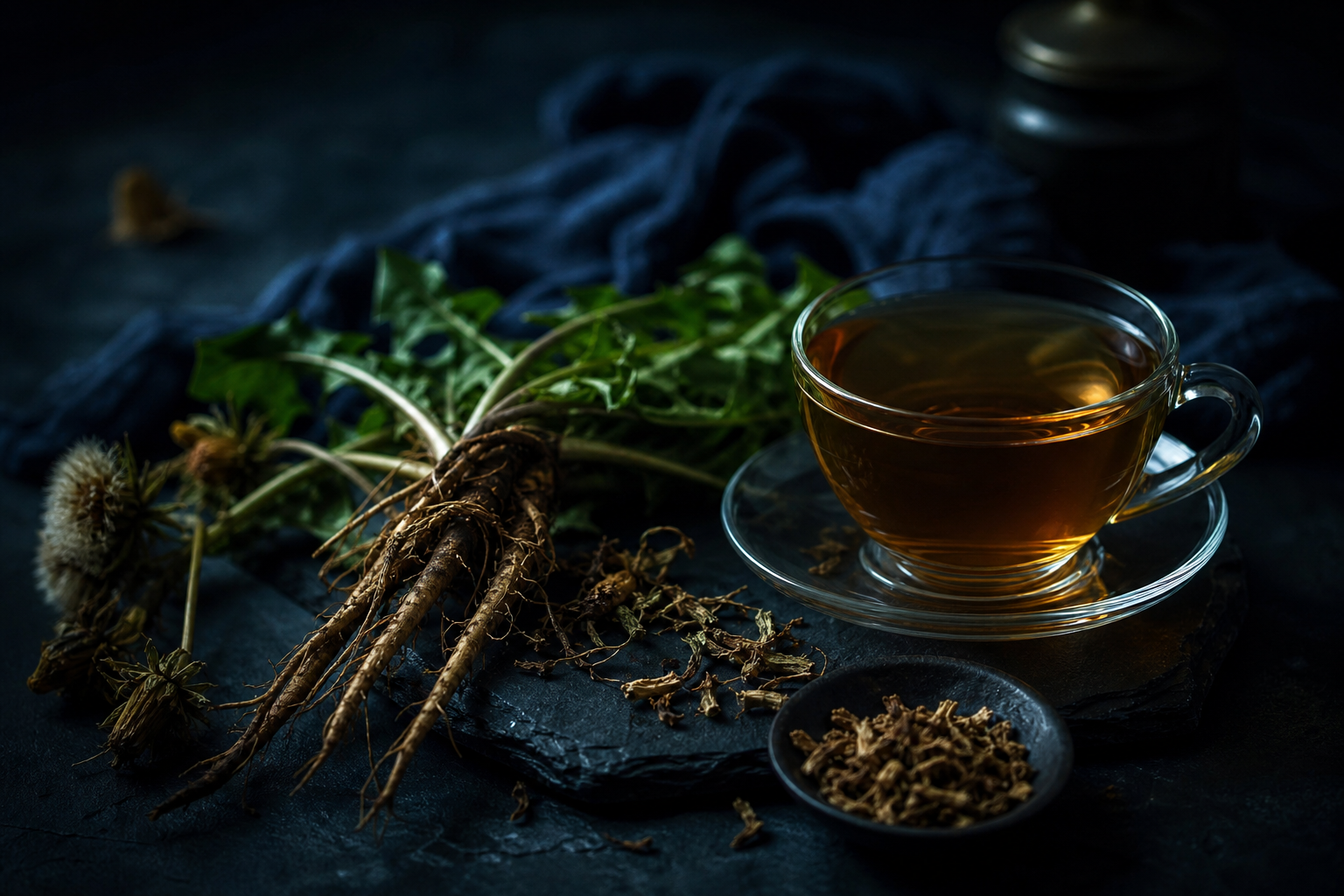
Dandelion root comes from the common dandelion plant — the same “weed” found in lawns worldwide. The root contains inulin (a prebiotic fibre), sesquiterpene lactones (bitter compounds that stimulate bile and digestive enzymes), taraxasterol and other triterpenes (anti-inflammatory compounds), phenolic acids, and flavonoids. The leaves are higher in potassium, vitamins A, C, and K; the root is richer in inulin and bitter compounds with more pronounced digestive and liver effects. Both are used medicinally but have different primary applications.
Dandelion Root Benefits
1. Mild Diuretic Effect — Best Supported
This is dandelion’s most consistently evidenced human benefit. A small but meaningful human study found dandelion leaf extract significantly increased urinary frequency and volume in the hours following consumption — confirming the traditional use as a “water pill” alternative. The diuretic effect is attributed to the high potassium content of the leaves (which replaces the potassium lost through increased urination — unlike pharmaceutical diuretics which deplete potassium) and to direct effects on kidney filtration. The 2025 PMC review (PMC12299503) confirmed antioxidant, anti-inflammatory, and diuretic mechanisms are the most consistently supported in the literature.
2. Liver Support — Promising but Unproven in Humans
Dandelion root’s hepatoprotective properties are among its most studied but least proven in humans. Preclinical studies show dandelion root protects liver cells from oxidative damage and toxin-induced injury — the sesquiterpene lactones and flavonoids have demonstrated liver-protective effects in animal models. A 2025 PMC review confirmed hepatoprotection in preclinical research. However, no large, well-designed clinical trials have confirmed these effects translate meaningfully to humans with liver disease. The traditional “liver detox” framing is significantly ahead of the human evidence — dandelion root cannot be claimed to treat fatty liver disease or liver conditions based on current evidence.
3. Digestive Stimulation
Dandelion root’s bitter sesquiterpene lactones stimulate bile production and flow from the gallbladder — a mechanism known as choleretic activity. This supports fat digestion and may relieve sluggish digestion, mild constipation, and post-meal heaviness. The inulin content (a prebiotic fibre) feeds beneficial gut bacteria, particularly Bifidobacterium and Lactobacillus — a genuine microbiome-supporting benefit. Traditional herbal medicine has used dandelion root as a digestive bitter for centuries, and while clinical trial evidence is limited, the mechanisms are well-understood.
4. Anti-Inflammatory and Antioxidant Activity
Multiple in vitro and animal studies confirm dandelion root’s anti-inflammatory properties — it reduces NF-κB activation and inflammatory cytokine production through its taraxasterol and flavonoid content. Its antioxidant capacity is well-documented, with high DPPH radical scavenging activity. A 2025 review in PMC confirmed antioxidant and anti-inflammatory properties are among the most consistently documented effects. Human clinical translation of these properties remains limited but the underlying pharmacology is sound.
5. Blood Sugar Regulation
Animal studies show dandelion root improves insulin sensitivity and reduces blood glucose, attributed to its inulin content (which slows glucose absorption) and chicoric acid (which has insulin-sensitising properties). Human evidence is minimal but the prebiotic fibre content provides a rational mechanism for modest blood sugar benefits through improved gut microbiome composition and slowed carbohydrate digestion.
How to Use Dandelion Root
- Dandelion root tea: 1–2 teaspoons dried root in 240ml hot water, steep 10 minutes — most traditional and accessible form
- Dandelion root tincture: 2–8ml three times daily — more concentrated; standardised extracts preferred
- Capsules: 500–2000mg dried root extract daily
- Dandelion coffee: Roasted dandelion root ground and brewed like coffee — popular caffeine-free alternative with similar bitter digestive benefits
Frequently Asked Questions
Dandelion root’s most evidence-supported benefits are: mild diuretic effect (confirmed in human studies), digestive stimulation through bile production and prebiotic inulin content, antioxidant and anti-inflammatory activity (well-documented in lab and animal studies), and potential liver support (strong preclinical evidence, limited human data). It’s best viewed as a gentle digestive and liver tonic rather than a treatment for specific medical conditions.
Dandelion root shows promising liver-protective effects in animal and cell studies — it protects liver cells from oxidative damage and toxin injury. However, no large human clinical trials have confirmed these effects translate to treating liver disease in people. It’s not a proven treatment for fatty liver disease or other liver conditions. As a supporting dietary herb alongside a healthy diet, it may provide some liver-supporting antioxidant benefit, but “liver detox” marketing significantly overstates the evidence.
Yes — this is dandelion’s best-evidenced human benefit. A human study confirmed dandelion leaf and root extract significantly increases urine production (diuresis). Unlike pharmaceutical diuretics, dandelion is naturally high in potassium, which replaces the potassium lost through increased urination. It’s a mild natural diuretic suitable for occasional water retention rather than a replacement for medical treatment of conditions causing fluid retention.
This article is for informational purposes only. Dandelion can interact with diuretics, antibiotics (particularly quinolones), and diabetes medications. Avoid if you have gallbladder obstruction or ragweed allergy. Consult a healthcare provider before use.

 James Holloway

 Rachel Summers
 Elena Voss
 Dr. Maya Chen