 Dr. Maya Chen
Sea moss is nutritious, but more isn’t always better — particularly because of its iodine content, which can become excessive at high doses. Here’s a clear guide to how much sea moss to take per day, what form to use, and how to adjust based on your goals.
How Much Sea Moss Per Day?
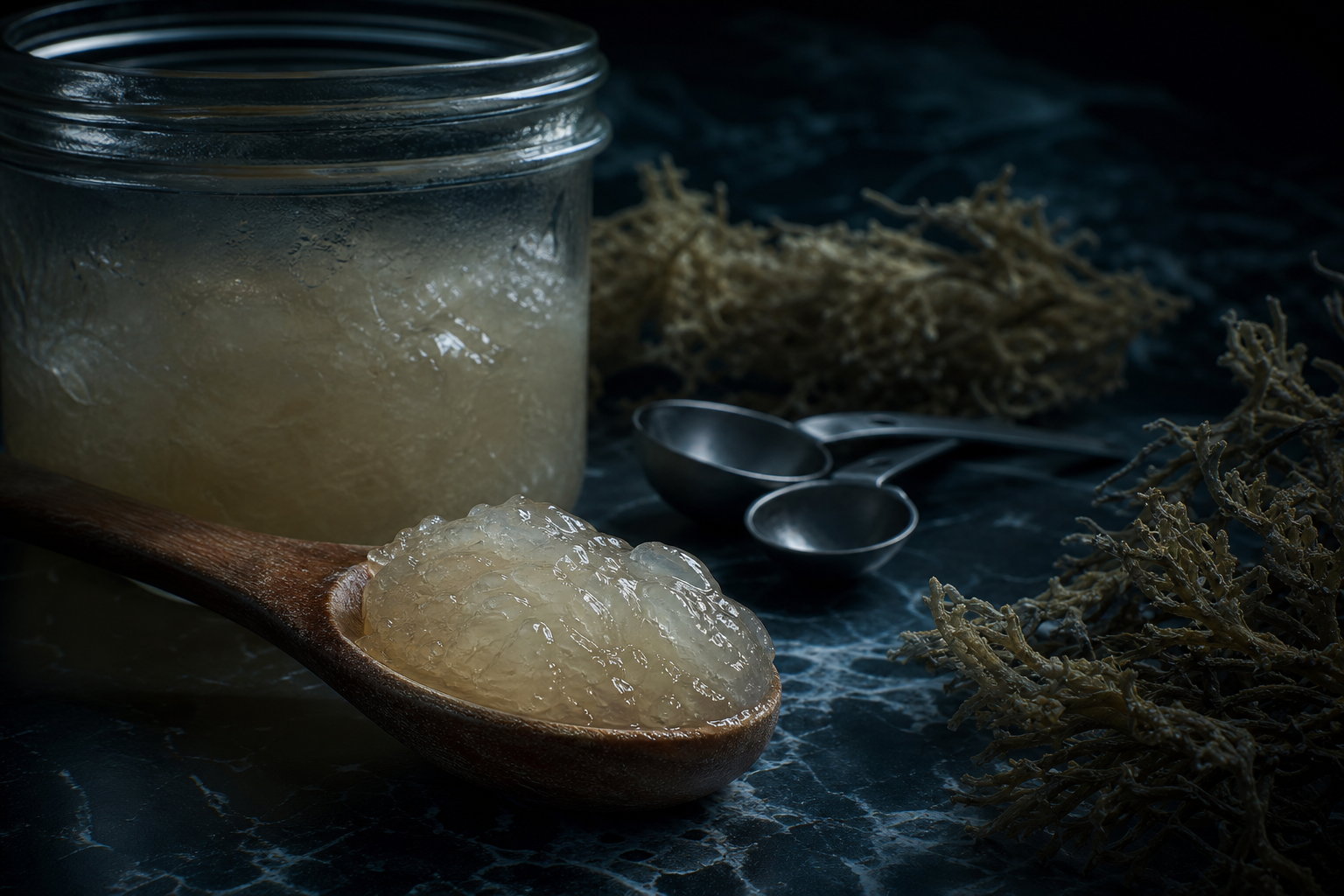
The general recommended range is 1–2 tablespoons of sea moss gel per day, or 1–2 grams of powder or dried sea moss. This range provides meaningful nutritional benefits while staying within safe iodine limits for most healthy adults.
There is no official established dietary reference intake for sea moss, as it’s a whole food supplement rather than an isolated nutrient. The recommended amounts above are based on iodine safety thresholds and the doses used in research showing benefits.
Why the Iodine Limit Matters
The tolerable upper intake level (UL) for iodine is 1,100 micrograms per day for adults. Sea moss iodine content varies enormously — from as low as 16 mcg per gram to as high as 2,984 mcg per gram depending on species, growing location, and season. This variability is the most important safety consideration with sea moss supplementation.
Two tablespoons of sea moss gel (approximately 10g of rehydrated sea moss) from a high-iodine batch could theoretically provide close to or exceed the daily UL. While occasional excess iodine is generally well-tolerated by healthy adults, chronic excess can paradoxically suppress thyroid function — the same effect as deficiency.
The practical solution: choose products from reputable brands that test and disclose iodine content per serving, and start with 1 tablespoon daily before considering increasing.
Sea Moss Dosage by Form
| Form | Typical Daily Amount | Notes |
|---|---|---|
| Sea moss gel (homemade or store-bought) | 1–2 tablespoons (15–30g) | Most popular form; easy to add to smoothies, soups, sauces |
| Dried whole sea moss | 4–8 grams | Soaked and blended to make gel, or simmered in teas |
| Sea moss powder | 1–2 grams | Concentrated; easier to dose precisely; check iodine per serving |
| Sea moss capsules | Follow label (typically 500–1000mg) | Most standardised option; easiest to control dose |
Adjusting Dose for Specific Goals
- Thyroid support: Start with 1 tablespoon daily; iodine content from this amount should be sufficient if you’re already getting some iodine from diet
- Gut health and prebiotic effect: 1–2 tablespoons daily provides meaningful beta-glucan and carrageenan prebiotic content
- Weight management (satiety): Take 1–2 tablespoons 15–20 minutes before meals for maximum satiety effect from soluble fibre
- Skin and mineral nutrition: 1 tablespoon daily consistently is sufficient for general mineral supplementation
Who Should Be More Cautious
- People with thyroid conditions (hyper- or hypothyroidism) — iodine sensitivity is high; consult a doctor before use
- Pregnant or breastfeeding women — iodine needs are higher, but excessive iodine can harm fetal thyroid development; get guidance on appropriate amounts
- People on blood thinners — sea moss’s vitamin K content can interact with anticoagulants
- Those with kidney disease — high potassium content may need to be factored into overall dietary potassium management
Frequently Asked Questions
1–2 tablespoons of sea moss gel daily, or 1–2 grams of powder, is the generally recommended range for most healthy adults. This provides meaningful nutritional benefits while staying within safe iodine limits. Always check the iodine content per serving on the product label, as sea moss iodine varies enormously between products.
Yes — daily sea moss consumption at moderate amounts is appropriate for most healthy adults. The main constraint is cumulative iodine intake. If you eat iodised salt, dairy, seafood, or other iodine-rich foods regularly, factor this into your total iodine intake when deciding how much sea moss to consume daily.
Consuming too much sea moss over time can lead to iodine excess, which paradoxically suppresses thyroid function (a phenomenon called the Wolff-Chaikoff effect). Symptoms of iodine excess include fatigue, weight gain, cold intolerance, constipation, and goitre — similar to iodine deficiency symptoms. Staying within 1–2 tablespoons daily and choosing tested products minimises this risk.
For most healthy adults, 2 tablespoons daily is within a reasonable range if you’re not also consuming large amounts of other iodine-rich foods. If you’re eating significant amounts of seafood, seaweed snacks, or iodised salt daily, 1 tablespoon is more appropriate. Product iodine content varies significantly — checking the label is more important than the tablespoon amount itself.
This article is for informational purposes only. Consult a healthcare professional before daily sea moss supplementation if you have thyroid disease, kidney disease, or take medications.
Related reading: Benefits of Sea Moss, Does Sea Moss Help With Weight Loss?, What Does Sea Moss Taste Like?.

 Elena Voss

 Dr. Rachel Stone
 James Holloway

 Dr. Maya Chen