 Sarah Mitchell
What Actually Happens to Skin as You Age
Skin aging has two components: intrinsic aging (driven by genetics and cellular processes that happen regardless of lifestyle) and extrinsic aging (driven by UV exposure, smoking, pollution, and diet — all modifiable). Roughly 80% of visible facial aging is attributable to UV exposure alone, which makes sun protection by far the most impactful anti-aging intervention available.
The key structural changes are collagen loss (skin loses about 1% of its collagen per year after age 20, accelerating significantly after menopause), reduced elastin production, thinning of the dermis, decreased hyaluronic acid, and slowing cell turnover. These changes produce the familiar signs of aging: fine lines, deeper wrinkles, loss of firmness, dryness, and uneven tone.
Understanding which of these processes is actually targeted by various treatments — and which have genuine evidence — is the difference between an effective approach and spending money on things that don’t work.
What Has the Best Evidence
Sunscreen: The Most Important Anti-Aging Tool
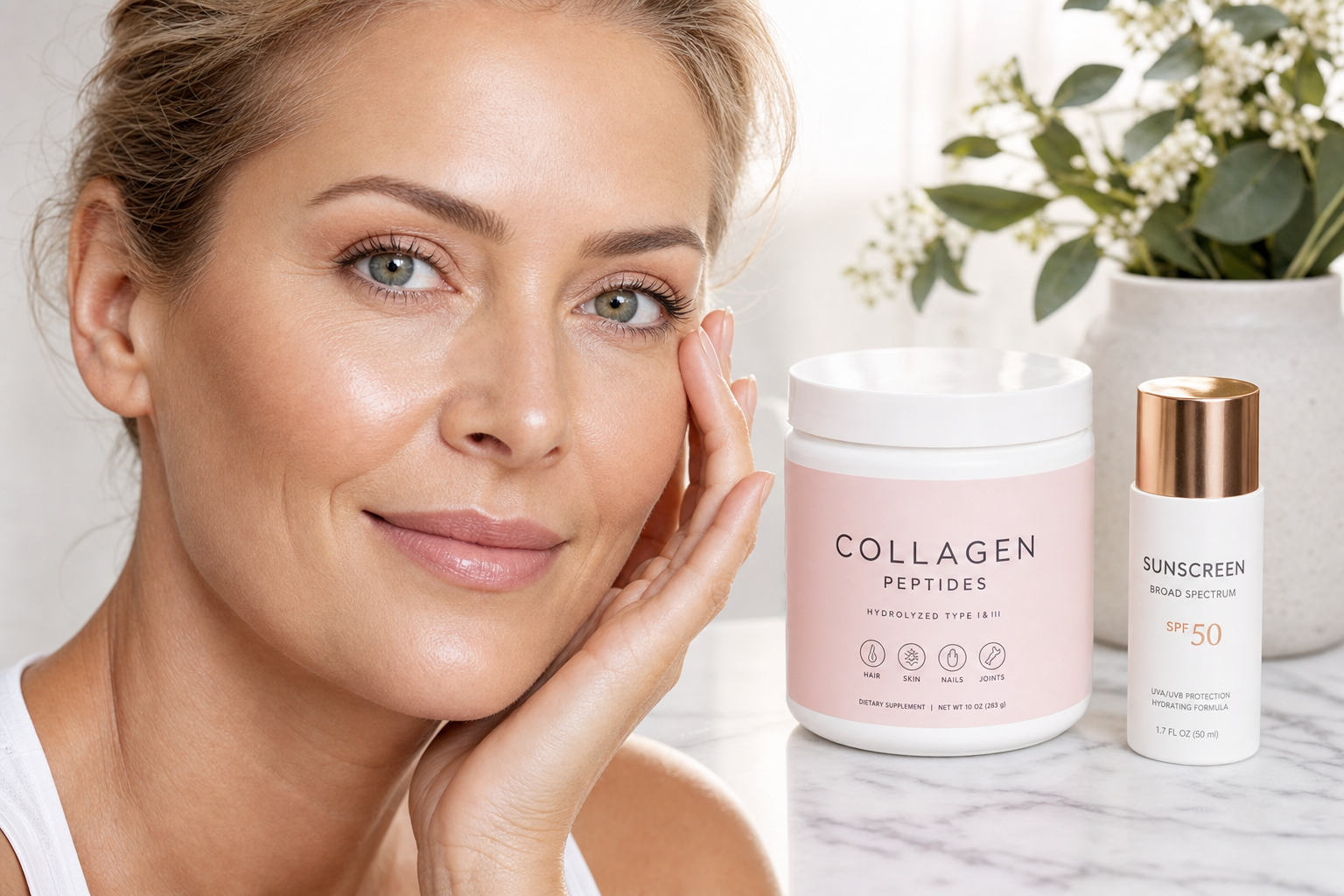
Daily broad-spectrum sunscreen is the single intervention with the most robust evidence for preventing skin aging. UV radiation is the primary driver of photoaging — wrinkles, pigmentation, loss of elasticity, and rough texture. A landmark Australian study following 900 adults over four years found that people who used sunscreen daily had noticeably younger-looking skin than those who used it only occasionally.
SPF 30 blocks roughly 97% of UVB rays; SPF 50 blocks about 98%. More important than high SPF is daily consistent application, including on overcast days and in winter. UVA — the aging rays — penetrate glass, so indoor exposure matters too. Look for “broad spectrum” on the label, which means both UVA and UVB are covered.
Retinoids: The Gold Standard for Reversal
Retinoids (vitamin A derivatives) are the most clinically validated anti-aging topical ingredient. Tretinoin (prescription-strength) and over-the-counter retinol both work by binding to retinoic acid receptors in skin cells, accelerating cell turnover, stimulating collagen production, and reducing the breakdown of existing collagen by matrix metalloproteinases.
Multiple randomised controlled trials demonstrate that retinoids reduce the appearance of fine lines, improve skin texture, even skin tone, and increase collagen density. These effects are real and well-replicated — retinoids are one of the few skincare ingredients where “it works” is supported by the same standard of evidence as pharmaceutical drugs.
Retinol (OTC) is less potent than tretinoin but produces the same effects at a slower pace with less irritation. Starting with a low-concentration retinol 2–3 nights per week and building up over months is the most tolerable approach. Prescription tretinoin produces faster results but causes more initial irritation (the “retinoid purge” — temporary dryness, peeling, and redness that resolves over 4–8 weeks).
Vitamin C: Protection and Brightening
Topical vitamin C (L-ascorbic acid at 10–20% concentration) has good evidence as an antioxidant that neutralises UV-induced free radicals before they damage collagen. It also inhibits melanin production (reducing hyperpigmentation) and has some evidence for stimulating collagen synthesis itself.
The limitation is stability — vitamin C oxidises quickly on exposure to light and air, turning products yellow/orange and reducing efficacy. Formulations in opaque or pump packaging with added vitamin E and ferulic acid (which stabilise the molecule) are significantly more effective. Apply in the morning before sunscreen.
Niacinamide (Vitamin B3)
Niacinamide has a strong and growing evidence base. It reduces pore appearance, improves skin barrier function, reduces transepidermal water loss (dryness), inhibits melanin transfer (reducing dark spots), and has some evidence for reducing fine lines. It’s also well-tolerated — works at concentrations of 4–10%, without the irritation profile of retinoids. It pairs well with most other actives and is useful for most skin types, including sensitive skin.
Moisturiser with Humectants
Hyaluronic acid, glycerin, and ceramides don’t reverse aging but significantly improve the appearance of skin by plumping it with hydration. Hyaluronic acid applied to well-hydrated skin (or in a humid environment) holds water in the superficial layers and visibly reduces fine line appearance temporarily. Ceramides strengthen the skin barrier, reducing transepidermal water loss. These aren’t transformative — but consistent moisturisation keeps skin in better condition and makes active ingredients work better.
Collagen Supplements: Mixed Evidence
Collagen peptide supplements have become one of the fastest-growing categories in the supplement market, largely on the basis that taking collagen supports skin collagen. The reality is more complicated.
Some meta-analyses and systematic reviews show modest improvements in skin hydration, elasticity, and wrinkle appearance with hydrolysed collagen supplements over 8–12 weeks. However, a 2025 review published in the American Journal of Medicine — which specifically looked at higher-quality, non-industry-funded studies — concluded there is currently no robust clinical evidence to recommend collagen supplements for preventing or treating skin aging.
The mechanism is biologically plausible (collagen peptides are absorbed and may signal fibroblasts to produce more collagen), but the evidence quality is generally low, study funding is often industry-linked, and effect sizes are small. If you want to try collagen supplements, the evidence doesn’t strongly support or refute them — treat them as an optional add-on rather than a core strategy.
What Doesn’t Have Good Evidence
Anti-aging creams with “collagen” in them — collagen molecules are too large to penetrate skin. Applied collagen sits on the surface and is washed away. It may provide temporary surface moisturisation but does nothing to skin collagen.
Most “anti-aging serums” with proprietary blends — if an ingredient isn’t retinoid, vitamin C, niacinamide, or a proven humectant/barrier ingredient, it likely hasn’t been tested in controlled trials on human skin. Marketing for skincare is not regulated the way pharmaceutical marketing is.
Face exercises, facial yoga, and facial massage — no controlled trial evidence for meaningfully reducing wrinkles or increasing skin collagen. Massage may temporarily improve circulation but doesn’t alter skin structure.
A Simple Evidence-Based Routine
Morning: Cleanser → vitamin C serum → moisturiser → broad-spectrum SPF 30+ (this is the most important step)
Evening: Cleanser → retinol or tretinoin (2–3 nights per week to start, working up) → niacinamide → moisturiser
The rest is optional extras. Most people’s skin responds better to doing fewer things consistently than to constantly changing products or adding new actives.
Frequently Asked Questions
What actually helps with skin aging?
Daily sunscreen, retinoids (retinol or tretinoin), and vitamin C have the strongest evidence. Niacinamide and a good moisturiser round out an effective routine. Collagen supplements have mixed evidence. Most other products have little or no trial evidence.
Do collagen supplements work for skin?
The evidence is mixed and the highest-quality studies are less impressive than industry-funded ones. There may be a modest benefit for skin hydration and elasticity, but the effect is smaller than marketing suggests and no robust clinical evidence currently supports recommending them specifically for skin aging.
What is the most important anti-aging skincare step?
Daily sunscreen — not because it reverses existing damage but because it prevents new damage, which is far more efficient. UV exposure is responsible for around 80% of visible facial aging.
At what age should you start using retinol?
Most dermatologists suggest starting retinol in your mid-to-late twenties or early thirties, when early collagen decline is beginning. Earlier use is fine but rarely makes a visible difference. Later use (40s, 50s) still produces real improvements — it’s never too late.
How long does it take to see results from retinol?
Fine line improvement and improved texture typically become noticeable after 3–6 months of consistent use. The initial 4–8 weeks may involve dryness and peeling (retinoid reaction) that resolves as skin adapts. Long-term use produces more significant changes — many studies show continued improvement at 12 months and beyond.
The Bottom Line
The anti-aging skincare evidence strongly supports sunscreen, retinoids, and vitamin C — and is largely indifferent to most other products. Collagen supplements may have modest benefits but the evidence is mixed. Most of the rest of the anti-aging industry is selling hope, not science. A simple, consistent routine with the right actives beats an expensive, complicated one with trendy but unproven ingredients every time.
Related reading: Collagen for Skin and Joints, Marine vs Bovine Collagen, Best Collagen for Women Over 50.
Related: Hydration and Longevity: How Water Intake Shapes Energy, Skin, and Aging


 Daniel Brooks
 Rachel Summers

 James Hargreaves
 Emma Thornton