 Rachel Summers
Why a High-Fiber Meal Plan Changes Everything
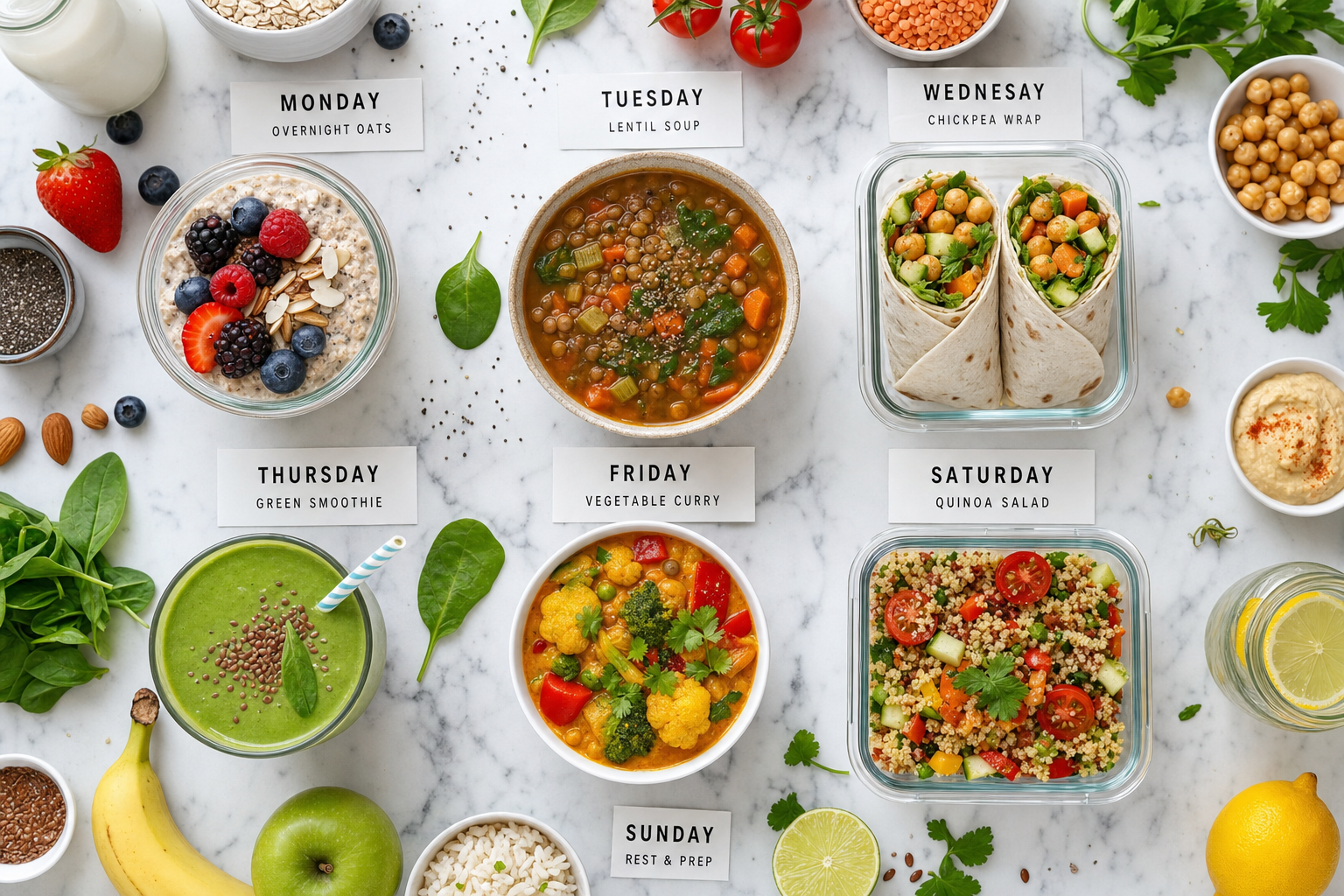
Knowing you should eat more fiber and actually doing it consistently are two very different things. A structured 7-day meal plan removes the guesswork — showing you exactly what to eat to hit 30+ grams of fiber daily from delicious, satisfying whole foods. This plan is built around the principles in our complete dietary fiber guide and incorporates the best high fiber foods at every meal. Each day delivers approximately 35–40 grams of fiber from a variety of plant food sources — supporting gut microbiome diversity, digestive health, blood sugar stability, and weight management simultaneously.
7-Day High-Fiber Meal Plan
Day 1 — Legume Focus
Breakfast: Overnight oats — ½ cup rolled oats soaked in unsweetened almond milk overnight, topped with chia seeds (1 tbsp), raspberries (½ cup), and a drizzle of almond butter. Fiber: ~12g.
Lunch: Lentil and vegetable soup — red lentils, diced tomatoes, spinach, garlic, onion, and cumin in vegetable broth, served with one slice of whole grain bread. Fiber: ~14g.
Dinner: Baked salmon with roasted broccoli (1 cup) and quinoa (¾ cup cooked). Fiber: ~8g.
Snack: Apple with skin + 12 almonds. Fiber: ~6g.
Day total: ~40g fiber.
Day 2 — Whole Grain Focus
Breakfast: Steel-cut oats (½ cup dry) cooked with cinnamon, topped with sliced pear with skin and flaxseeds (1 tbsp). Fiber: ~10g.
Lunch: Chickpea and roasted vegetable wrap in a whole wheat tortilla — chickpeas, roasted red pepper, cucumber, spinach, hummus. Fiber: ~13g.
Dinner: Turkey and black bean chilli with diced tomatoes, onion, garlic, and spices, served over brown rice (½ cup cooked). Fiber: ~15g.
Snack: Carrot sticks with hummus (3 tbsp). Fiber: ~5g.
Day total: ~43g fiber.
Day 3 — Vegetable Focus
Breakfast: Scrambled eggs with sautéed spinach and mushrooms on two slices of whole grain toast. Add 1 tbsp chia seeds to a glass of water alongside. Fiber: ~8g.
Lunch: Large salad — mixed greens, cherry tomatoes, cucumber, shredded carrots, edamame (½ cup), avocado (¼), pumpkin seeds, olive oil and lemon dressing. Fiber: ~12g.
Dinner: Lentil shepherd’s pie — green lentils cooked with onion, garlic, carrots, peas, and tomato paste, topped with mashed sweet potato. Fiber: ~16g.
Snack: Handful of raspberries (½ cup) + 1 square dark chocolate. Fiber: ~4g.
Day total: ~40g fiber.
Day 4 — Prebiotic Focus
Breakfast: Banana (slightly underripe) sliced over overnight oats with flaxseeds and cinnamon. Fiber: ~9g.
Lunch: Asparagus, leek, and potato soup — leeks and asparagus sautéed with garlic in olive oil, blended with vegetable stock and diced potato. Served with whole grain bread. Fiber: ~11g.
Dinner: Garlic and onion-heavy chicken stir-fry with broccoli, snap peas, and brown rice noodles. Fiber: ~10g.
Snack: Greek yogurt with a tablespoon of inulin powder or chicory-based coffee and an oat biscuit. Fiber: ~7g.
Day total: ~37g fiber.
Day 5 — Bean and Legume Focus
Breakfast: Smoothie — spinach (large handful), frozen berries (½ cup), chia seeds (1 tbsp), flaxseeds (1 tbsp), half a banana, unsweetened almond milk. Fiber: ~10g.
Lunch: Black bean tacos — corn tortillas (2), black beans, avocado, shredded cabbage, salsa, lime. Fiber: ~14g.
Dinner: Split pea soup with ham hock or smoked paprika (vegetarian), served with two slices of rye bread. Fiber: ~18g.
Snack: Pear with skin. Fiber: ~5.5g.
Day total: ~47g fiber.
Day 6 — Seeds and Nuts Focus
Breakfast: Chia pudding — 3 tbsp chia seeds soaked overnight in coconut milk, topped with mango and toasted coconut. Fiber: ~12g.
Lunch: Quinoa grain bowl — quinoa, roasted sweet potato, kale (massaged with olive oil), chickpeas, tahini dressing. Fiber: ~13g.
Dinner: Baked cod with Jerusalem artichoke and carrot mash, steamed green beans. Fiber: ~11g.
Snack: Trail mix — almonds, walnuts, pumpkin seeds, dried apricots (small portion). Fiber: ~4g.
Day total: ~40g fiber.
Day 7 — Variety and Reset
Breakfast: Whole grain pancakes made with oat flour, topped with blueberries and a tablespoon of almond butter. Fiber: ~8g.
Lunch: Minestrone soup — mixed vegetables, kidney beans, whole wheat pasta, diced tomatoes, garlic, onion, and fresh herbs. Fiber: ~14g.
Dinner: Vegetable curry — chickpeas, cauliflower, spinach, tomatoes, onion, garlic, and ginger in a spiced coconut milk sauce, served with brown rice. Fiber: ~16g.
Snack: Sliced apple with 1 tbsp peanut butter. Fiber: ~5g.
Day total: ~43g fiber.
Tips for Following This Plan Successfully
If you are currently eating a low-fiber diet (below 20g daily), don’t jump straight to Day 1 — your gut needs time to adapt. Spend the first week making just one or two swaps (add chia seeds to breakfast, swap white bread for whole grain) and build from there. Always increase water intake alongside fiber increases. Batch-cook legumes at the weekend — cook a large pot of lentils or chickpeas and use them across multiple meals throughout the week to save time. See our guide to fiber and weight loss for how this plan supports fat loss, and fiber and blood sugar for its metabolic benefits.
FAQ
How much fiber does this meal plan provide?
Each day provides approximately 37–47 grams of fiber — comfortably above the recommended 25–38g and in the optimal range for gut microbiome diversity.
Is this meal plan suitable for weight loss?
Yes — the high fiber content naturally reduces hunger and calorie intake without portion counting or deliberate restriction.
Can I follow this plan if I have IBS?
Some modifications are needed — see our guide to fiber for IBS for adjustments that make a high-fiber diet IBS-compatible.
Do I need to buy special foods?
No — all foods in this plan are widely available at standard supermarkets. The most important items to stock are: rolled oats, lentils, chickpeas, chia seeds, flaxseeds, and a wide variety of fresh vegetables.
Can I repeat this plan?
Absolutely — rotating this 7-day plan provides excellent microbiome-supporting variety. Feel free to swap individual meals between days to suit your preferences.
How do I know if the plan is working?
Within 1–2 weeks most people notice more regular bowel movements, reduced bloating (after the initial adaptation), better energy, and fewer mid-afternoon energy crashes.
Sample High Fiber Diet: Frequently Asked Questions
What is a sample high fiber diet for a day?
A simple high-fiber day: Breakfast — oats with chia seeds, berries and nuts (12-15g fiber). Lunch — lentil soup with wholegrain bread and side salad (15-18g). Snack — apple with almond butter (5g). Dinner — chickpea curry with brown rice and roasted vegetables (15-18g). Total: 47-56g — exceeding the recommended 25-38g per day.
How much fiber should I eat per day?
Current guidelines: 25g per day for women, 38g per day for men (or 14g per 1,000 calories). Most adults in Western countries eat only 15-17g per day — about half the recommended amount. Increase gradually over 2-3 weeks to avoid bloating and gas as your gut bacteria adjust.
What are the best high fiber foods to add to my diet?
The most fiber-dense whole foods: lentils (15g per cup cooked), black beans (15g), chickpeas (12g), split peas (16g), chia seeds (10g per 2 tbsp), flaxseeds (8g per 2 tbsp), avocado (10g per whole), oats (4g per half cup dry), and most vegetables and fruits. Legumes are the single most impactful addition for most people.
Does a high fiber diet help with weight loss?
Yes — through multiple mechanisms. Soluble fiber slows gastric emptying, keeping you fuller longer. Fiber displaces more calorie-dense foods. Short-chain fatty acids produced by fiber fermentation support healthy metabolic signalling. Studies consistently show higher fiber intake is associated with lower body weight and reduced risk of weight gain over time.
Can eating too much fiber cause problems?
Yes — increasing fiber too quickly causes bloating, gas, cramping and loose stools as gut bacteria adjust. The fix is to increase slowly (add 5g per week) and drink plenty of water with fiber-rich foods. People with IBS may need to be selective about fiber types — soluble fiber (oats, psyllium) is generally better tolerated than insoluble fiber (wheat bran) for IBS.

 Emma Thornton
 Sarah Mitchell
 Daniel Brooks