 Elena Voss
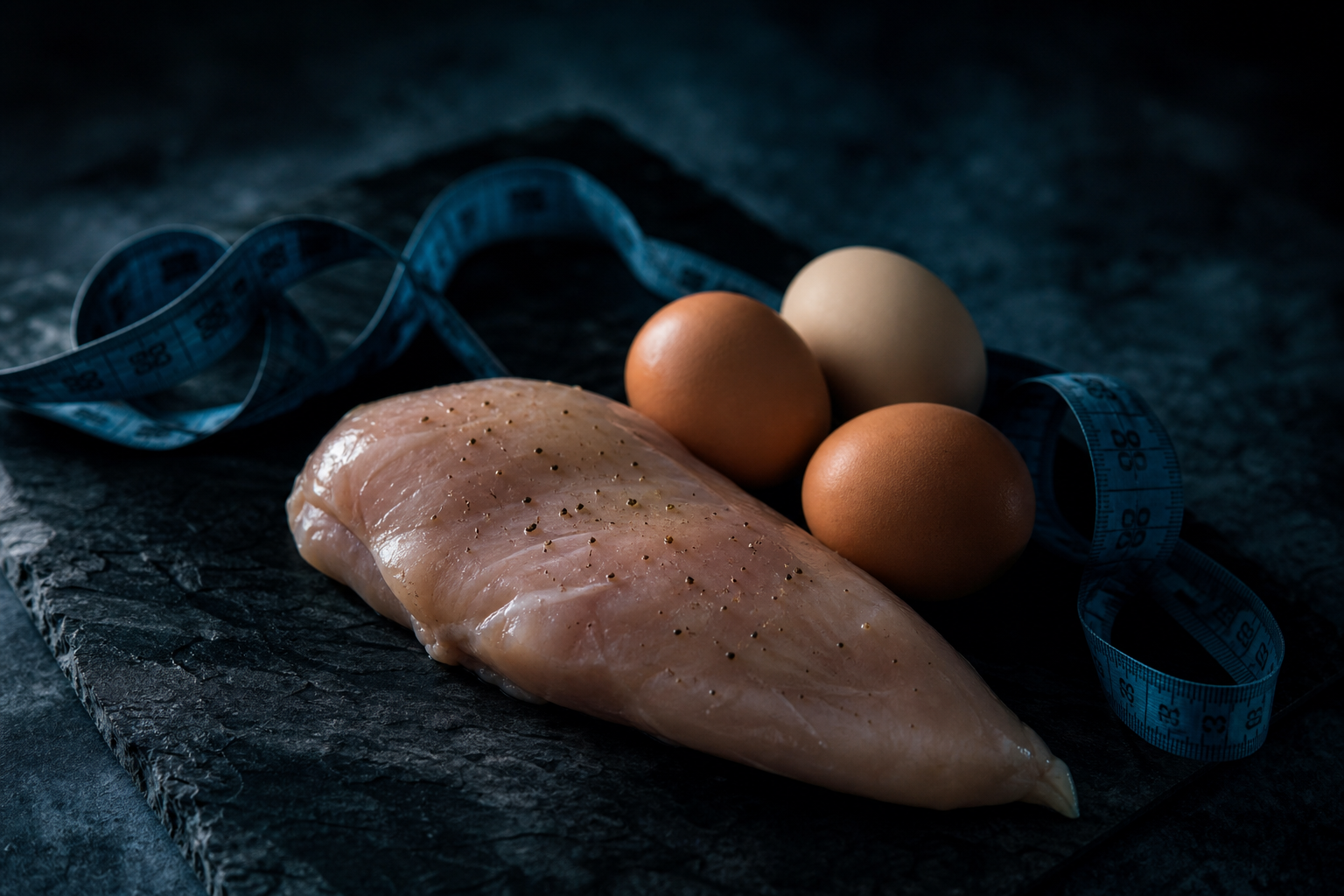
The idea that eating protein makes you fat is one of the most persistent myths in nutrition. The truth is the opposite — protein is the macronutrient least likely to cause fat gain, and the most powerful one for fat loss. Here’s what the evidence actually shows.
Does Eating More Protein Make You Fat?
No — and the evidence is clear. Multiple long-term studies and meta-analyses show that higher protein intakes are associated with lower body fat, not higher. This holds true across a range of protein intakes, including intakes well above current recommendations.
A landmark overfeeding study by Bray et al. (2012, JAMA) directly tested this. Participants were overfed by 1,000 calories per day for 8 weeks on either low protein (5%), normal protein (15%), or high protein (25%) diets. The low-protein group gained significantly more body fat than the normal and high protein groups — despite consuming the same excess calories. The high-protein group stored almost all excess energy as muscle rather than fat.
Why Protein Is Different from Other Macronutrients
1. Highest Thermic Effect of Food
The thermic effect of food (TEF) is the energy your body uses to digest, absorb, and metabolise nutrients. Protein has a TEF of 20–30% — meaning you burn 20–30 calories for every 100 calories of protein consumed. Carbohydrates have a TEF of 5–10%, and fat just 0–3%. This means that at equal caloric intake, a high-protein diet burns significantly more calories through digestion alone.
2. Most Satiating Macronutrient
Protein is the most satiating macronutrient — it produces the greatest reduction in hunger per calorie. It does this through multiple mechanisms: it stimulates satiety hormones (GLP-1, PYY, CCK), suppresses ghrelin (the hunger hormone), and provides sustained satiety through slower digestion. Studies consistently show that increasing dietary protein reduces total caloric intake spontaneously — people eat less overall without consciously restricting.
3. Preserves Muscle During Weight Loss
When losing weight, the body breaks down both fat and muscle for energy. Higher protein intakes strongly preserve lean mass during caloric restriction. Since muscle burns more calories at rest than fat (higher resting metabolic rate), preserving muscle during fat loss maintains your metabolism — preventing the “metabolic adaptation” that makes regained weight so common after low-protein diets.
 Dr. Rachel Stone
 Dr. Maya Chen
 Sarah Mitchell

 Rachel Summers