 Dr. Rachel Stone
Not all food causes inflammation equally. While chronic inflammation is driven by complex interactions of diet, lifestyle, and genetics, certain foods consistently and reliably increase inflammatory markers across populations. Understanding which foods drive inflammation — and why — gives you the knowledge to make choices that protect your long-term health.
1. Refined Sugar and High-Fructose Corn Syrup
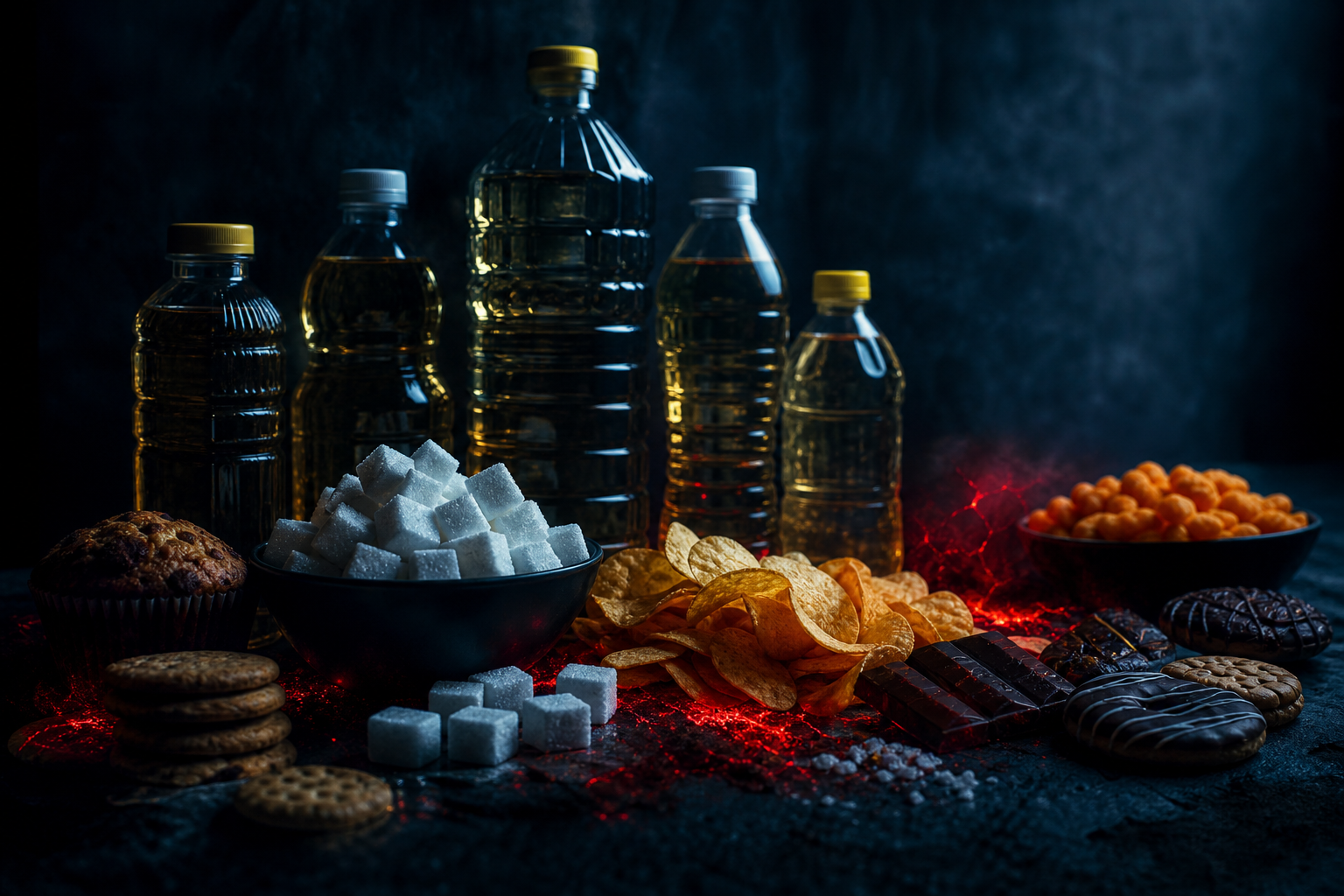
Sugar is the most pro-inflammatory component of the modern diet. Excess fructose (particularly from HFCS) is metabolised exclusively in the liver, driving de novo lipogenesis, triglyceride production, and non-alcoholic fatty liver disease. Glucose spikes activate NF-κB — the master regulator of inflammatory gene expression — within minutes of consumption. High sugar diets consistently raise CRP, IL-6, and TNF-α in clinical studies. Advanced glycation end products (AGEs) — formed when sugars react with proteins — are potent drivers of vascular inflammation and accelerated ageing.
2. Industrial Seed Oils (Vegetable Oils)
Soybean oil, corn oil, sunflower oil, safflower oil, and cottonseed oil are extremely high in omega-6 polyunsaturated fatty acids (linoleic acid). While some omega-6 is essential, the modern diet provides an omega-6 to omega-3 ratio of approximately 15–20:1 — the optimal ratio is closer to 4:1. Excess omega-6 is converted to arachidonic acid, the precursor to pro-inflammatory eicosanoids (prostaglandins, leukotrienes). Seed oils also oxidise easily during high-heat cooking, producing aldehydes and other toxic oxidation products that drive inflammation.
3. Ultra-Processed Foods
Ultra-processed foods (UPFs) — defined by the NOVA classification as industrially manufactured products with 5+ ingredients including additives not found in home cooking — drive inflammation through multiple mechanisms. Emulsifiers (carrageenan, polysorbate 80, carboxymethylcellulose) directly disrupt the gut mucus layer and alter gut bacteria composition. Artificial sweeteners impair gut microbiome diversity. Refined flour causes rapid blood sugar spikes. A 2019 cohort study in 100,000+ participants found each 10% increase in UPF consumption raised cancer risk by 12%.
4. Trans Fats
Partially hydrogenated oils (industrial trans fats) are among the most inflammatory substances in food. They raise LDL cholesterol, lower HDL, and directly activate inflammatory pathways. Trans fats were largely banned in the US in 2018, but remain in some processed foods at “0g” labelling (which can legally mean up to 0.5g per serving). Check labels for “partially hydrogenated oil.”
5. Refined Carbohydrates
White bread, white rice, pastries, crackers, and most breakfast cereals have had their fibre removed, causing rapid blood sugar spikes. These glucose surges activate inflammatory pathways and glycation. They also feed pathogenic gut bacteria preferentially over beneficial species, promoting dysbiosis. Replacing refined carbs with whole grain equivalents consistently reduces CRP and metabolic inflammatory markers in RCTs.
6. Excess Alcohol
Alcohol directly increases intestinal permeability within hours — allowing bacterial LPS (lipopolysaccharide) to enter the bloodstream and trigger systemic inflammation. Chronic heavy drinking drives liver inflammation (alcoholic hepatitis), increases CRP, and impairs immune regulation. Even moderate drinking raises inflammatory markers in some populations, particularly in people with gut dysbiosis or liver dysfunction.
7. Processed Meat
Bacon, sausages, hot dogs, deli meats, and salami contain high levels of sodium, saturated fat, nitrates, and advanced glycation end products formed during high-heat processing. The WHO classifies processed meat as a Group 1 carcinogen. Studies consistently show processed meat consumption raises CRP and is associated with higher rates of colorectal cancer, heart disease, and type 2 diabetes.
8. Artificial Additives and Emulsifiers
Carrageenan, polysorbate 80, carboxymethylcellulose (CMC), and other emulsifiers are used in processed foods to improve texture and shelf life. Animal and human studies show these compounds penetrate the gut mucus layer, alter microbiome composition, and increase intestinal permeability. A 2022 RCT (the first prospective human study) found dietary emulsifiers significantly disrupted gut microbiome and increased inflammation markers compared to whole foods.
Frequently Asked Questions
The most pro-inflammatory foods are: refined sugar and high-fructose corn syrup, industrial seed oils (soybean, corn, sunflower), ultra-processed foods with emulsifiers and additives, trans fats, refined carbohydrates, excess alcohol, and processed meats. These consistently raise inflammatory biomarkers (CRP, IL-6, TNF-α) in clinical studies and are associated with higher rates of chronic inflammatory disease.
Yes — strongly. Refined sugar and HFCS activate NF-κB (the master inflammation switch), drive glycation (AGE formation), promote dysbiosis in the gut microbiome, and raise CRP, IL-6, and TNF-α in clinical studies. The dose-response is clear: the more sugar consumed, the higher the inflammatory burden. Replacing added sugar is one of the single most impactful dietary changes for reducing systemic inflammation.
Industrial seed oils (soybean, corn, sunflower, safflower) are highly inflammatory due to their extremely high omega-6 linoleic acid content, which drives the omega-6/omega-3 imbalance underlying much of modern inflammatory disease. They also oxidise during high-heat cooking, producing toxic aldehydes. Replace with extra virgin olive oil (for low-heat cooking and dressings), avocado oil (for high-heat cooking), and butter or ghee for sautéing.
This article is for informational purposes only and represents general dietary guidance. Consult a healthcare provider or registered dietitian for personalised nutritional advice.
Related reading: Anti-Inflammatory Diet, Inflammation and Longevity, Does Turmeric Help With Inflammation?.
Related: Ultra-Processed Foods in 2025 and How Ultra-Processed Foods Age Your Brain.Related: Soursop Benefits and Cancer Claims | Anti-Inflammatory Diet


 Dr. Rachel Stone
 Elena Voss
 Dr. Maya Chen