 Dr. Rachel Stone
Protein is the most important macronutrient for body composition — it builds muscle, supports metabolism, and keeps you full. But there’s enormous confusion about how much is actually optimal. The research has shifted significantly in the past decade, and most official guidelines still lag behind the evidence.
How Much Protein Per Day Do You Actually Need?
The official RDA for protein is 0.8g per kilogram of body weight per day (0.36g per pound). This is the minimum to prevent deficiency in sedentary adults — not the optimal amount for health, muscle maintenance, or body composition.
Current evidence from sports science and nutrition research suggests significantly higher intakes for most adults:
- Sedentary adults: 1.0–1.2g/kg/day (0.45–0.55g/lb) — adequate for health maintenance
- Active adults / recreational exercise: 1.4–1.6g/kg/day (0.63–0.73g/lb)
- Strength training / muscle building: 1.6–2.2g/kg/day (0.73–1.0g/lb)
- Endurance athletes: 1.4–1.7g/kg/day (0.63–0.77g/lb)
- Older adults (65+): 1.2–1.6g/kg/day — higher needs due to anabolic resistance
- Weight loss / caloric deficit: 1.8–2.4g/kg/day — higher protein protects muscle during fat loss
The Evidence Behind Higher Protein Intakes
A landmark 2017 meta-analysis by Morton et al. (published in the British Journal of Sports Medicine) analysed 49 studies and 1,863 participants. The findings: protein supplementation significantly increased muscle mass and strength gains from resistance training, with benefits plateauing at approximately 1.62g/kg/day (0.73g/lb/day). Above this threshold, additional protein provided no further muscle-building benefit in trained individuals.
For weight loss specifically, high-protein diets consistently outperform lower-protein diets for preserving muscle mass while losing fat. A meta-analysis of 24 RCTs found protein intakes of 1.8–2.4g/kg/day during caloric restriction preserved significantly more lean mass than lower protein intakes.
How Much Protein Per Meal?
Muscle protein synthesis (MPS) — the process of building new muscle — is maximally stimulated by approximately 20–40g of high-quality protein per meal in most adults. Eating more than this in a single sitting doesn’t increase MPS further in the short term, though the excess protein is still used for energy and other metabolic functions.
Practically, this means distributing protein across 3–4 meals produces more MPS throughout the day than eating the same total in 1–2 large meals. This is why breakfast protein matters — a protein-rich breakfast stimulates a MPS spike that a carb-heavy breakfast misses entirely.
Best Sources of Protein
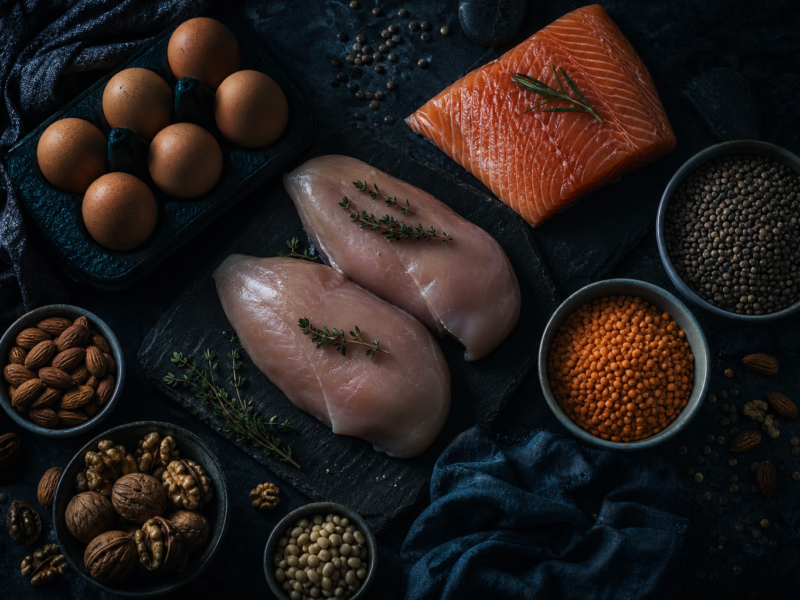
| Food | Protein per 100g | Complete Protein? |
|---|---|---|
| Chicken breast | 31g | Yes |
| Canned tuna | 25g | Yes |
| Salmon | 25g | Yes |
| Eggs | 13g | Yes |
| Greek yoghurt | 10g | Yes |
| Cottage cheese | 11g | Yes |
| Tempeh | 19g | Yes |
| Lentils (cooked) | 9g | No (low methionine) |
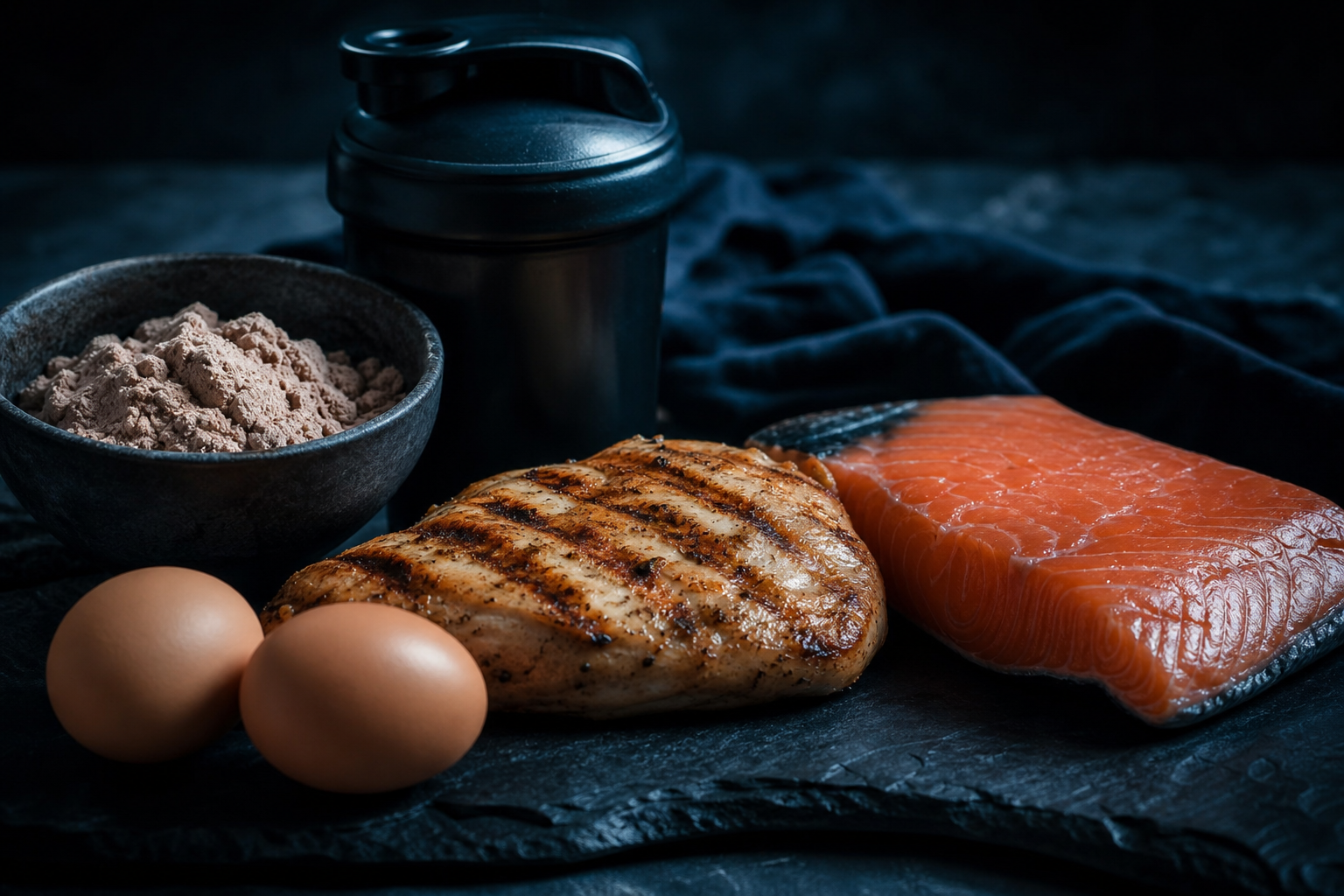
| Whey protein | 80g | Yes |
| Pea protein | 80g | No (low methionine) |
Is It Possible to Eat Too Much Protein?
For healthy people with normal kidney function, high protein intakes (up to 3g/kg/day) are safe in both short and long-term studies. The concern that high protein damages kidneys applies only to people with pre-existing kidney disease — not to healthy individuals. Long-term studies in athletes consuming very high protein intakes show no negative effects on kidney function, bone health, or other markers.
Frequently Asked Questions
For active adults, 1.6–2.2g of protein per kilogram of body weight per day (0.73–1.0g/lb) is the evidence-based target for muscle maintenance and growth. Sedentary adults can function well at 1.0–1.2g/kg. For weight loss, go higher — 1.8–2.4g/kg protects muscle during caloric restriction. The official RDA of 0.8g/kg is the bare minimum to prevent deficiency, not the optimal intake.
Research shows muscle gains plateau at approximately 1.62g/kg/day (0.73g/lb/day) in most trained individuals. Practically, most people targeting muscle growth aim for 1.6–2.2g/kg/day to ensure they’re in the optimal range across varying days. Distributing intake across 3–4 meals with 20–40g protein each maximises muscle protein synthesis throughout the day.
For a 70kg (154lb) active adult, 100g of protein provides approximately 1.43g/kg — adequate for general health and light activity but below optimal for muscle building (which requires ~112–154g for a 70kg person). For a smaller person (50–55kg), 100g is within the muscle-building range. Whether 100g is “enough” depends on your body weight, goals, and activity level.
The body can digest and absorb protein continuously — there’s no hard cap on absorption. However, muscle protein synthesis is maximally stimulated by approximately 20–40g of high-quality protein per meal. Above this, excess protein is used for energy rather than muscle building in the short term. This is why spreading protein across multiple meals produces better muscle-building outcomes than eating the same total in one sitting.
This article is for informational purposes only. People with kidney disease should consult a healthcare provider before increasing protein intake significantly.

 James Hargreaves
 Dr. Maya Chen
 Emma Thornton
 Daniel Brooks