 Rachel Summers
What Is Inflammation and Why Does It Age You?
Inflammation is the immune system’s essential response to infection, injury, and cellular stress. Acute inflammation — the heat, redness, swelling, and pain of a healing wound or fighting infection — is protective and self-limiting. Chronic low-grade inflammation — sometimes called “inflammaging” — is the persistent, smouldering activation of inflammatory pathways in the absence of acute threat that characterises aging and underlies virtually every major age-related disease. Inflammaging drives atherosclerosis, insulin resistance, neurodegeneration, cancer, sarcopenia, and osteoporosis. It is one of the most important modifiable targets for healthy aging. For the full longevity context, see our complete longevity guide.
What Drives Chronic Inflammation
The primary drivers of chronic inflammation include: visceral adiposity (fat cells in the abdomen are metabolically active and highly pro-inflammatory), poor diet (ultra-processed foods, refined carbohydrates, trans fats, and omega-6:omega-3 imbalance all promote inflammatory signalling), gut dysbiosis (age-related shifts in gut microbiome composition increase intestinal permeability and systemic LPS exposure), chronic psychological stress (sustained HPA axis activation elevates pro-inflammatory cytokines), sleep deprivation (inflammatory markers rise acutely with sleep loss and remain chronically elevated with prolonged deprivation), smoking (generates enormous oxidative stress and directly activates inflammatory pathways), physical inactivity (sedentary behaviour is independently pro-inflammatory, while regular exercise has potent anti-inflammatory effects), and cellular senescence (accumulating senescent “zombie” cells secrete a cocktail of inflammatory mediators called the senescence-associated secretory phenotype, SASP).
How to Reduce Chronic Inflammation
Anti-Inflammatory Diet
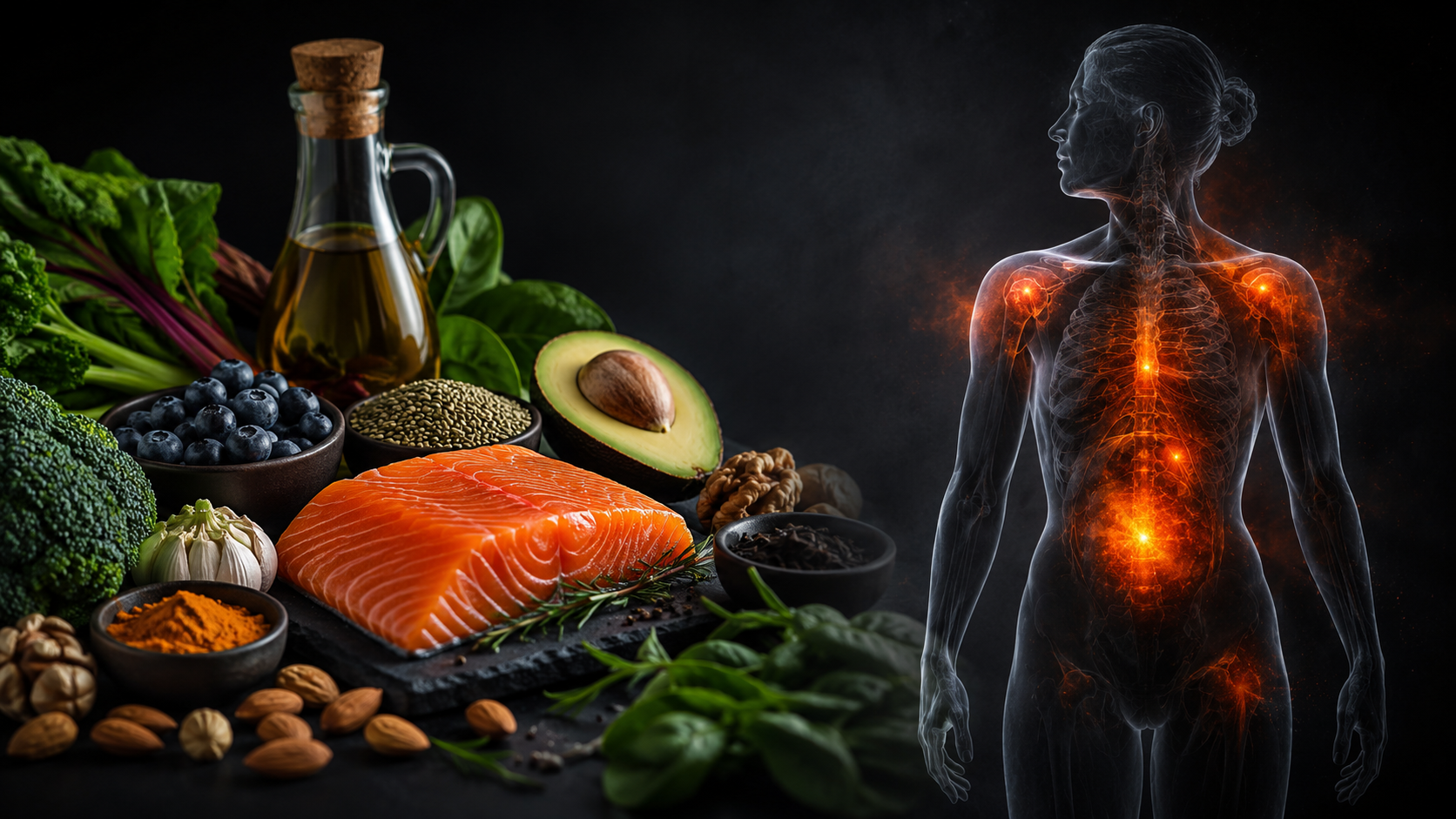
The Mediterranean diet is the most extensively studied anti-inflammatory dietary pattern. Extra virgin olive oil (oleocanthal), fatty fish (EPA and DHA omega-3s), berries and dark fruits (anthocyanins), leafy greens and colourful vegetables (polyphenols and antioxidants), turmeric and ginger (curcumin, gingerol), nuts (vitamin E, polyphenols), and legumes (fiber supporting microbiome anti-inflammatory production) are the most potent individual food components. Conversely, ultra-processed foods, refined carbohydrates, sugar-sweetened beverages, processed meats, and excessive alcohol all activate inflammatory pathways. See our anti-aging diet guide.
Exercise
Regular aerobic exercise has among the most powerful and rapid anti-inflammatory effects of any lifestyle intervention. It reduces inflammatory cytokines (IL-6 in the chronic low-grade form, TNF-alpha, IL-1β), increases anti-inflammatory cytokines (IL-10, IL-1RA), reduces visceral fat (a primary inflammatory source), and improves insulin sensitivity. Even a single session of moderate exercise produces acute anti-inflammatory effects. See our guide to exercise for healthy aging.
Sleep
Consistently sleeping 7–9 hours per night is essential for inflammatory regulation. The nocturnal period is when many anti-inflammatory processes occur — cortisol reaches its lowest point, reducing HPA axis drive of inflammation; tissue repair processes dominate; and immune regulation is restored. Chronic sleep restriction elevates hsCRP, IL-6, and TNF-alpha — the same inflammatory markers that predict cardiovascular disease, diabetes, and dementia. See our sleep and aging guide.
Gut Health
A diverse, fiber-rich diet that supports a healthy gut microbiome reduces systemic inflammation through multiple mechanisms: producing short-chain fatty acids (particularly butyrate) that strengthen the gut barrier, preventing LPS translocation into the bloodstream, increasing regulatory T cells that dampen inflammatory responses, and producing anti-inflammatory compounds. See our guide to gut health and aging.
Measuring Inflammation
High-sensitivity CRP (hsCRP) is the most widely available clinical marker of systemic inflammation. A level below 1 mg/L reflects low cardiovascular risk; 1–3 mg/L moderate risk; above 3 mg/L high risk. IL-6, TNF-alpha, and fibrinogen are additional markers measured in research settings. Tracking hsCRP over time provides useful feedback on the effectiveness of anti-inflammatory lifestyle interventions.
FAQ
What is inflammaging?
Chronic low-grade inflammation that accumulates with aging and drives virtually every major age-related disease, from cardiovascular disease and dementia to cancer and sarcopenia.
What foods reduce inflammation?
Extra virgin olive oil, fatty fish, berries, leafy greens, turmeric, ginger, nuts, and legumes are the most anti-inflammatory foods with the strongest evidence base.
Can exercise reduce chronic inflammation?
Yes — regular aerobic exercise is one of the most powerful anti-inflammatory interventions available, reducing inflammatory cytokines and visceral fat while increasing anti-inflammatory immune regulation.
How is inflammation measured?
High-sensitivity CRP (hsCRP) is the standard clinical marker, available through a GP blood test. Levels below 1 mg/L indicate low inflammatory load.
Does sleep affect inflammation?
Yes — chronic sleep deprivation significantly elevates inflammatory markers. Consistently sleeping 7–9 hours per night is one of the most effective anti-inflammatory lifestyle strategies.
Related reading: Anti-Inflammatory Diet, Foods That Cause Inflammation, Longevity Supplements, Anti-Aging Foods.
Ultra-Processed Foods: The Evidence and Immune Aging are also key drivers of inflammaging.Related: Hydration and Longevity: How Water Intake Shapes Energy, Skin, and Aging


 James Hargreaves

 Daniel Brooks
 Sarah Mitchell