 Daniel Brooks
Why Zinc Matters for Immunity
Zinc is an essential trace mineral involved in over 300 enzymatic reactions and critical for immune function, wound healing, protein synthesis, DNA repair, and cell division. It is second only to iron as the most abundant trace mineral in the body. Despite its importance, zinc deficiency affects an estimated 2 billion people worldwide — primarily in developing countries but also prevalent in developed countries among vegetarians, older adults, and people with malabsorption conditions. For a full supplement overview, see our complete supplement guide.
Zinc Benefits
Zinc’s health benefits span multiple body systems. For immune function: zinc is required for the development and function of neutrophils, natural killer cells, T-lymphocytes, and B-lymphocytes — the key cellular defenders against infection. For wound healing: zinc is essential for collagen synthesis, inflammatory response regulation, and epithelial tissue repair — explaining why zinc deficiency impairs wound healing and why zinc is used therapeutically in chronic wound management. For reproductive health: zinc is concentrated in male reproductive organs and is essential for testosterone production, sperm development, and motility. For skin health: zinc regulates sebum production and has anti-inflammatory properties — topical and oral zinc is used therapeutically for acne. For taste and smell: zinc is required for the proper function of taste and smell receptors — zinc deficiency causes hyposmia and dysgeusia.
Zinc and Immune Function
Zinc has two distinct roles in immune defence: structural (maintaining the integrity of immune cell membranes and their receptor functions) and regulatory (zinc acts as a signalling molecule in immune cell communication). Zinc deficiency impairs both innate immunity (immediate non-specific defence) and adaptive immunity (targeted antibody and T-cell responses). Even mild zinc insufficiency — falling short of optimal without frank deficiency — is associated with increased susceptibility to infections, particularly respiratory tract infections. Zinc lozenges (not capsules or tablets) have the most evidence for reducing cold duration when started within 24 hours of symptom onset.
Signs of Zinc Deficiency
Mild to moderate zinc deficiency may present subtly: frequent infections, slow wound healing, reduced taste or smell, hair loss, skin problems (acne, eczema), poor appetite, and impaired growth in children. Severe deficiency causes immune dysfunction, growth retardation, delayed sexual maturation, eye and skin lesions, and neurological symptoms. Blood zinc tests can identify deficiency, though plasma zinc is an insensitive marker of mild deficiency.
Food Sources of Zinc
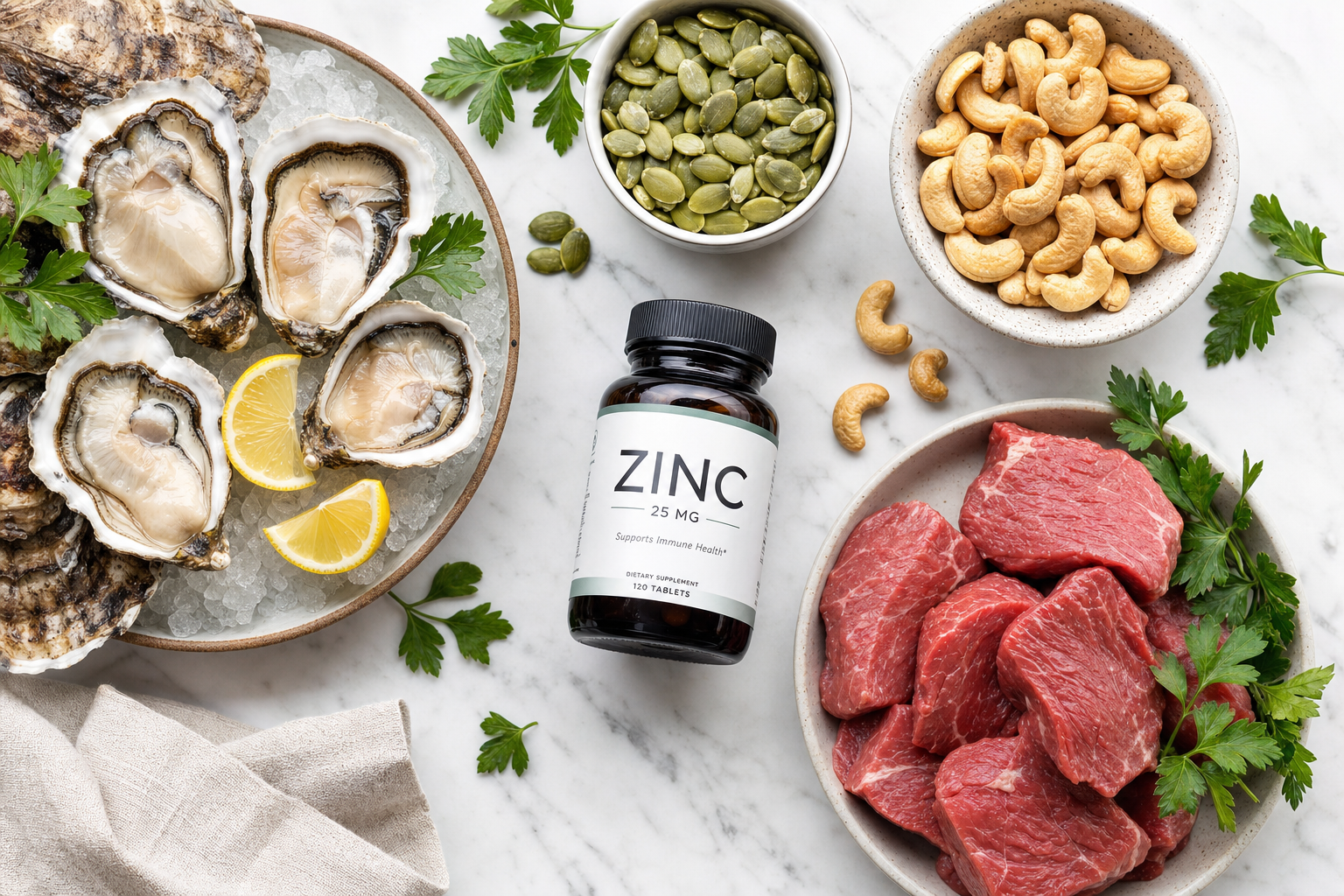
Zinc is most abundant in animal foods: oysters (highest source — approximately 74mg per 100g), red meat (beef, lamb), shellfish, poultry, eggs, and dairy products. Plant sources provide zinc but at lower bioavailability due to phytates (antinutrients found in grains and legumes that bind zinc and reduce absorption). Vegetarians and vegans need approximately 50% more dietary zinc than omnivores to achieve the same absorbed amount. Pumpkin seeds, hemp seeds, cashews, chickpeas, and lentils are the richest plant zinc sources.
Zinc Supplements and Dosage
Zinc Lozenges vs Tablets
For acute cold treatment, zinc acetate or zinc gluconate lozenges that dissolve in the mouth are significantly more effective than swallowed zinc tablets or capsules — the direct contact between zinc ions and oral/nasal mucosa appears to be part of the mechanism. For general supplementation and deficiency correction, capsules or tablets of zinc citrate, gluconate, or picolinate are appropriate.
Zinc Citrate, Gluconate, and Picolinate
Zinc citrate and gluconate are well-absorbed forms suitable for general supplementation. Zinc picolinate is often marketed as superior, but head-to-head evidence is limited. Zinc sulfate is effective but more likely to cause gastrointestinal side effects. Zinc oxide has poor bioavailability. Standard supplementation dose: 15–30mg elemental zinc daily. Take with food to reduce nausea.
Zinc and Copper Balance
High-dose zinc (above 40mg daily) chronically interferes with copper absorption — zinc and copper compete for the same intestinal transporters. Copper deficiency caused by excessive zinc supplementation can cause anaemia, neurological problems, and immune dysfunction. Anyone supplementing zinc long-term at doses above 25mg should also take 1–2mg of copper to maintain balance.
Risks of Too Much Zinc
Acute zinc toxicity from supplements causes nausea, vomiting, and abdominal pain. The UK tolerable upper intake level is 25mg per day from supplements; the US upper tolerable intake is 40mg per day. Chronic excess causes copper deficiency, immune suppression (paradoxically), reduced HDL cholesterol, and potentially neurological effects. More is not better with zinc — supplementing only to meet requirements is the appropriate goal.
FAQ
What does zinc do for the immune system?
Zinc supports the development and function of immune cells (neutrophils, T cells, NK cells), regulates inflammatory signalling, and maintains mucosal barrier integrity against pathogens.
Can zinc shorten colds?
Yes — zinc acetate or gluconate lozenges started within 24 hours of cold symptoms reduce duration by approximately 33% in clinical trials. Swallowed zinc supplements do not show the same effect.
How much zinc should I take?
15–30mg elemental zinc daily for supplementation. The upper safe limit is 25–40mg per day depending on guidelines. Doses above 25mg long-term should include 1–2mg copper.
What are signs of zinc deficiency?
Frequent infections, slow wound healing, reduced taste or smell, hair loss, skin problems, and poor appetite are the most common signs.
Can you take too much zinc?
Yes — acute excess causes nausea and vomiting; chronic excess causes copper deficiency and immune suppression. Supplement only to meet requirements, not beyond.


 Dr. Rachel Stone


 James Holloway
 Daniel Brooks