 Emma Thornton
Introduction to Sleep Supplements
The market for sleep supplements has exploded in recent years, with hundreds of products claiming to improve sleep quality, duration, and recovery. Navigating this landscape requires understanding which supplements have genuine clinical evidence, which are largely ineffective, and which carry risks. The right supplement depends on the underlying cause of your sleep problem — what works for circadian misalignment won’t help anxiety-driven insomnia, and vice versa. For foundational context on healthy sleep and recovery, see our complete sleep and recovery guide. Note that supplements work best alongside good sleep hygiene — not as a replacement for it.
Common Sleep Supplements
Melatonin
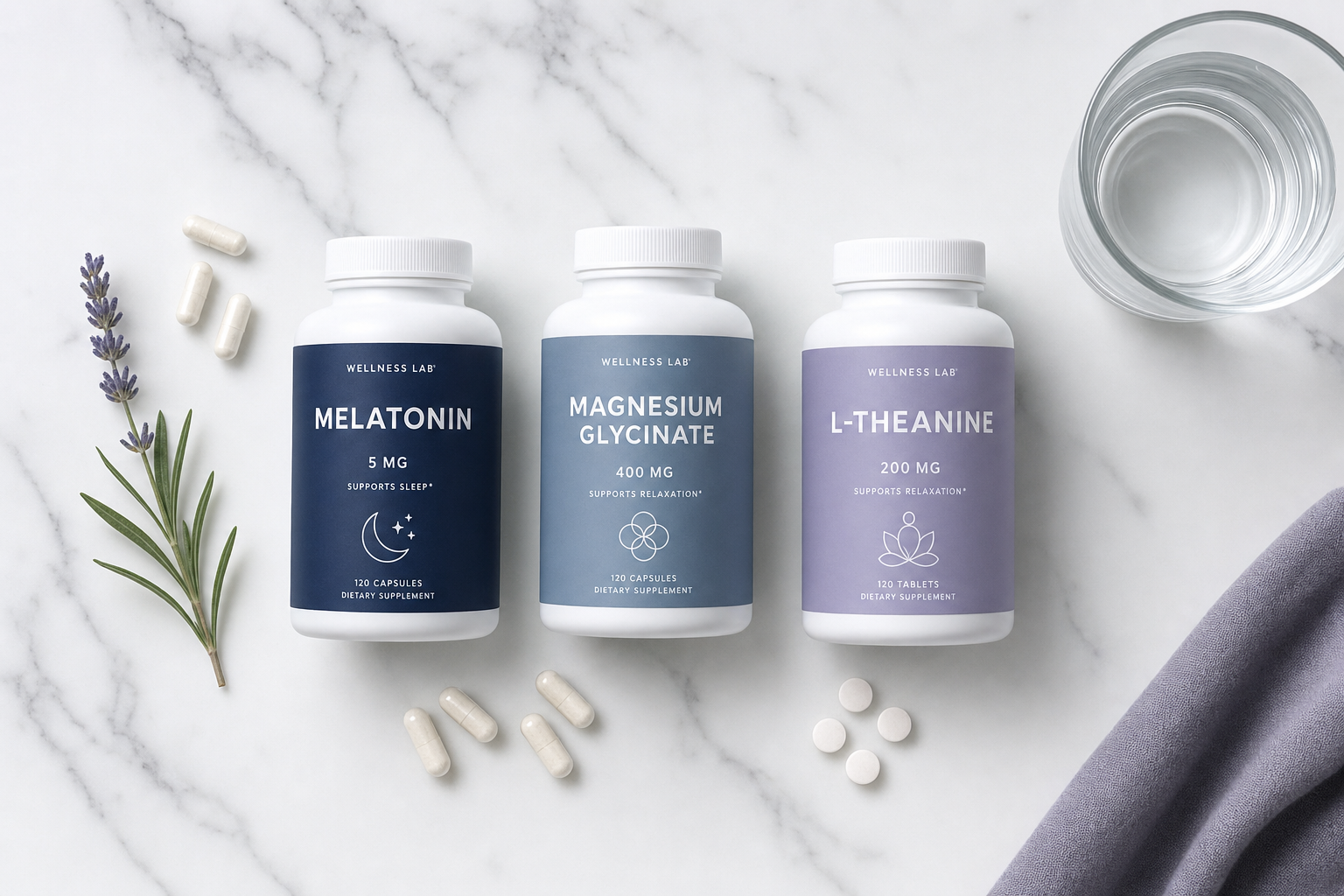
Melatonin is the most widely used sleep supplement globally and the most misunderstood. It is a hormone — not a sedative. Its primary function is signalling to the body that it’s biologically night, making it most effective for shifting the timing of sleep (circadian issues, jet lag, shift work) rather than directly improving sleep quality or duration. Effective doses are much lower than most products contain: 0.5–1mg is typically as effective as 5–10mg and carries fewer side effects (grogginess, next-day sedation, headache). For jet lag, take melatonin at the target timezone’s bedtime. For delayed sleep phase (difficulty falling asleep until very late), take 0.5mg 5–6 hours before the desired sleep time. See our guide to circadian rhythm and sleep for context on when melatonin is most appropriate.
Magnesium
Magnesium is one of the most evidence-supported supplements for sleep quality. It activates the parasympathetic nervous system, regulates GABA receptors (which calm neural activity), and supports melatonin production. Magnesium deficiency — common in Western populations — is strongly associated with poor sleep, restless sleep, and muscle cramps at night. The most bioavailable and sleep-supportive forms are magnesium glycinate and magnesium threonate. Typical effective dose: 200–400mg taken 30–60 minutes before bed. Magnesium oxide is poorly absorbed and largely ineffective for sleep.
L-Theanine
L-theanine is an amino acid found naturally in tea (particularly green tea) that promotes relaxation without sedation. It increases alpha brainwave activity (associated with a calm, alert state) and GABA production, reducing anxiety and pre-sleep mental arousal. Particularly useful for people who struggle to switch off mental activity before bed. Typical dose: 100–200mg taken 30–60 minutes before bed. Often combined with magnesium glycinate for synergistic effect. Has a favourable safety profile with no known dependency risk.
Valerian
Valerian root is one of the oldest herbal sleep remedies, with a long traditional use history. Clinical evidence is mixed — some trials show modest improvements in sleep onset and quality, others show no benefit over placebo. If effective, benefits typically require 2–4 weeks of regular use rather than immediate effect. Valerian appears most effective for mild insomnia and general sleep quality rather than severe insomnia. Dose: 300–600mg of standardised extract taken 30–60 minutes before bed. Generally well-tolerated but can cause vivid dreams or next-day grogginess in some people.
How to Choose a Sleep Supplement
Sleep Goal
Match the supplement to the problem: melatonin for circadian timing issues (can’t fall asleep until late, jet lag, shift work); magnesium glycinate for sleep quality and muscle relaxation; L-theanine for anxiety and mental overactivation; valerian for mild general sleep improvement.
Timing
Most sleep supplements are most effective taken 30–60 minutes before the desired sleep time. Melatonin for circadian shifting works better taken earlier — 5–6 hours before the target bedtime when used to advance the sleep phase.
Medication Interactions
Always check for interactions with existing medications. Melatonin can interact with blood thinners, immunosuppressants, and diabetes medications. Valerian can potentiate the effects of sedatives and CNS depressants. Magnesium can affect absorption of certain antibiotics. Consult a pharmacist or doctor if taking prescription medications.
Risks and Side Effects
Next-Day Drowsiness
High-dose melatonin (5–10mg) is the most common cause of next-day grogginess. Using the lowest effective dose (0.5–1mg) minimises this risk. Valerian and some magnesium forms can also cause next-day sedation in some people.
Drug Interactions
As noted above, several sleep supplements interact with prescription medications. Herbal supplements are not inert — they contain bioactive compounds that can interact with the cytochrome P450 enzyme system responsible for metabolising many drugs.
Overuse
Using melatonin nightly long-term may suppress the body’s own melatonin production. Relying on any supplement as a permanent sleep solution without addressing underlying causes perpetuates sleep problems. Supplements are best used as short-term support while addressing root causes through behaviour change.
Non-Supplement Alternatives
Sleep Hygiene
No supplement will compensate for poor sleep hygiene. Consistent sleep timing, a cool dark bedroom, morning light exposure, and eliminating late caffeine and alcohol will produce greater and more durable improvements than any supplement. See our sleep hygiene guide.
Relaxation Methods
Progressive muscle relaxation, body scan meditation, and CBT-I techniques address the hyperarousal that drives most chronic sleep problems without any of the risks or costs of supplements. See our guide to insomnia causes and solutions.
FAQ
What is the best supplement for sleep?
For most people, magnesium glycinate (200–400mg) is the best first sleep supplement — it addresses a common deficiency, has strong safety data, and reliably improves sleep quality. L-theanine is the best addition for those with pre-sleep anxiety. Melatonin is most appropriate for circadian timing issues specifically.
Is melatonin safe nightly?
Short to medium-term use (weeks to months) appears safe. Long-term nightly use may suppress endogenous melatonin production. Using the lowest effective dose (0.5–1mg) and cycling use (taking breaks) reduces this risk.
Do sleep supplements really work?
Magnesium and L-theanine have consistent evidence for modest sleep quality improvements. Melatonin is effective for circadian timing issues. Evidence for valerian is mixed. None are as effective as CBT-I for chronic insomnia.
Can you take magnesium and melatonin together?
Yes — combining magnesium glycinate and low-dose melatonin is safe and addresses different aspects of sleep (quality and timing respectively). Adding L-theanine to this combination is also safe and well-tolerated.
Are sleep supplements addictive?
Melatonin, magnesium, and L-theanine are not addictive and do not cause withdrawal. Prescription sleep medications (benzodiazepines, Z-drugs) do carry dependency risks and are a different category.
What should I try before supplements?
Fix your sleep hygiene first: consistent sleep timing, cool dark bedroom, caffeine cutoff, no alcohol, morning light, and a wind-down routine. These changes typically produce greater improvement than any supplement.


 Sarah Mitchell
 Ashley
 Daniel Brooks
 Emma Thornton
 Rachel Summers