 Ashley
Introduction to Sleep-Friendly Foods
What you eat — and when — has a measurable impact on your ability to fall asleep, stay asleep, and wake feeling restored. While no single food will cure insomnia, certain nutrients and foods support the production of sleep-promoting hormones and neurotransmitters, while others directly interfere with sleep quality. Building sleep-supportive eating habits is one of the most underutilised tools in sleep improvement. For a full overview of sleep and recovery, see our complete sleep and recovery guide.
Nutrients That Support Sleep
Magnesium
Magnesium is one of the most important minerals for sleep quality. It activates the parasympathetic nervous system (promoting relaxation), regulates GABA receptors (an inhibitory neurotransmitter that quiets brain activity), and helps regulate melatonin production. Magnesium deficiency — extremely common in Western diets — is associated with poor sleep quality, insomnia, and restless sleep. Food sources rich in magnesium include pumpkin seeds (37% DV per ounce), almonds, spinach, cashews, black beans, and dark chocolate. Supplemental magnesium glycinate (200–400mg before bed) is also well-evidenced for sleep quality improvement. See our best sleep supplements guide for more.
Tryptophan
Tryptophan is an essential amino acid that serves as the precursor to serotonin (which regulates mood and sleep-wake cycles) and subsequently melatonin (the primary sleep hormone). Tryptophan crosses the blood-brain barrier more readily when eaten with a small amount of carbohydrate — which is why the classic “milk and biscuits” or “turkey sandwich” produces mild sleepiness. Foods high in tryptophan include turkey, chicken, eggs, dairy products, oats, bananas, peanuts, and pumpkin seeds.
Melatonin
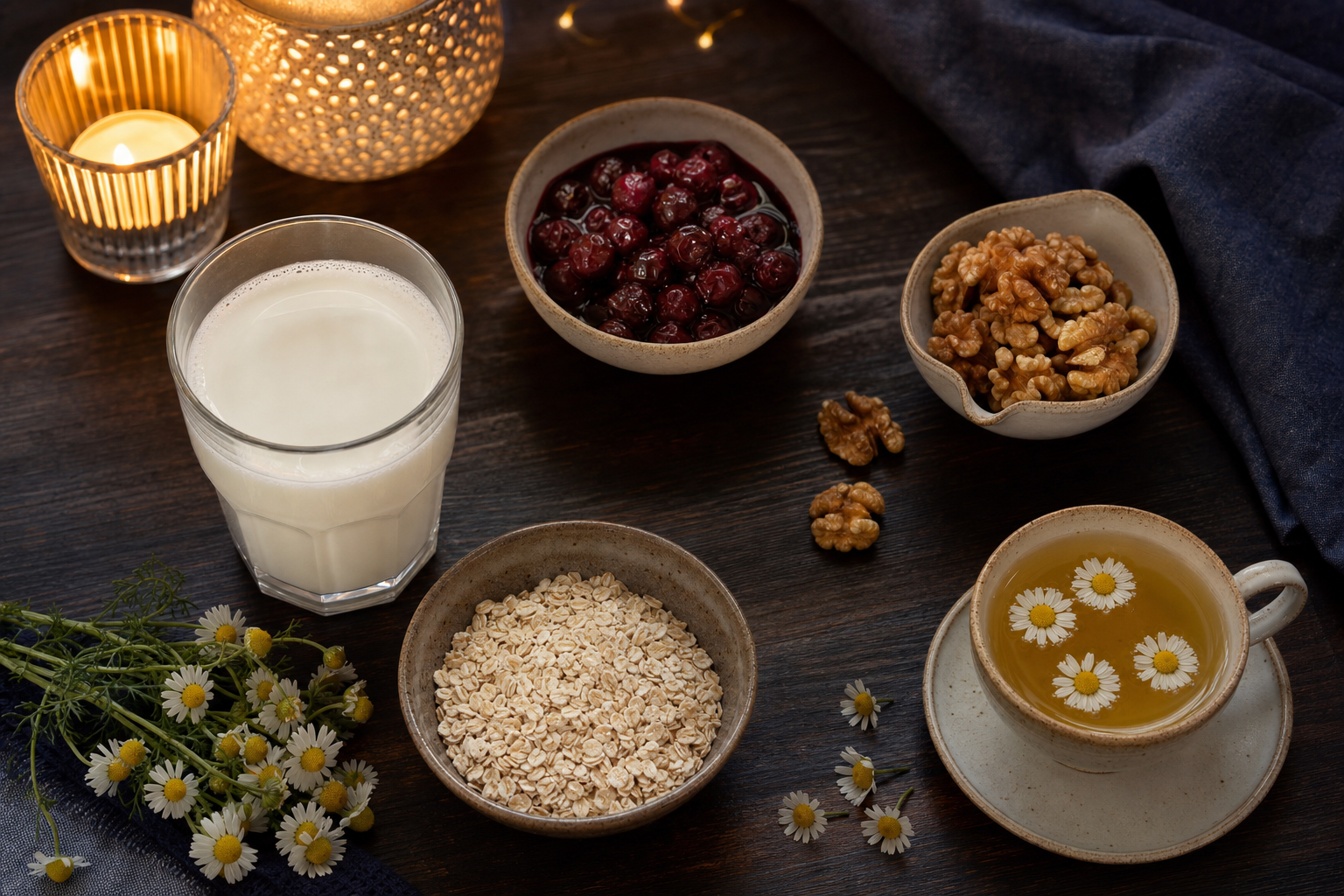
Melatonin is the hormone that signals the body that it’s time to sleep — but it is also found in small amounts in certain foods. Tart cherries are the most significant dietary source of melatonin, and multiple clinical trials have shown that tart cherry juice consumption improves sleep duration and quality in adults and those with insomnia. Grapes, tomatoes, walnuts, and rice also contain small amounts of melatonin.
Best Foods for Sleep
Dairy
Warm milk has been used as a sleep aid for centuries — and there is genuine science behind it. Milk contains both tryptophan and calcium (which helps the brain use tryptophan to produce melatonin). Warm temperature is also mildly sedating. Greek yogurt, cottage cheese, and other dairy products offer the additional benefit of casein protein, which provides a slow-releasing amino acid supply through the night supporting muscle recovery.
Tart Cherries
Tart cherry juice is perhaps the best-evidenced food for sleep. Studies have found that adults drinking two glasses of tart cherry juice per day slept an average of 84 minutes more per night compared to placebo, with significant improvements in sleep efficiency. The effect is attributed to tart cherry’s melatonin content and its ability to extend the bioavailability of tryptophan.
Nuts and Seeds
Walnuts provide melatonin, tryptophan, and magnesium — making them one of the most comprehensive sleep-supportive snacks available. Almonds are rich in magnesium and tryptophan. Pumpkin seeds are among the highest dietary sources of magnesium. A small handful of mixed nuts eaten 1–2 hours before bed is a convenient and effective sleep-supportive snack.
Oats and Whole Grains
Oats provide melatonin, complex carbohydrates (which support tryptophan transport to the brain), and magnesium. A small bowl of oats consumed 1–2 hours before bed can support sleep onset. Whole grain crackers, rice cakes, and other complex carbohydrate foods serve a similar tryptophan-transport function.
Foods and Drinks to Limit at Night
Caffeine
Caffeine blocks adenosine receptors — the receptors responsible for building sleep pressure — and has a half-life of 5–7 hours in most people (longer in some). A coffee at 3pm means 50% of that caffeine is still active at 9pm. For people sensitive to caffeine, even a noon coffee can reduce deep sleep. Cutting off caffeine by 1–2pm is one of the simplest and most impactful sleep improvements available. See our sleep hygiene guide for full timing guidance.
Alcohol
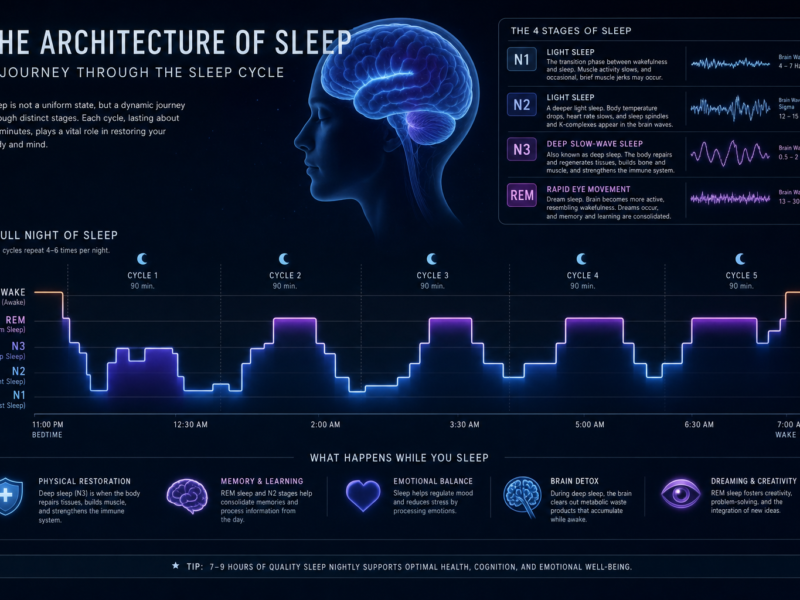
Alcohol is widely used as a sleep aid but is one of the most damaging substances for sleep quality. While it sedates and accelerates sleep onset, it dramatically suppresses REM sleep (particularly in the first half of the night) and causes rebound wakefulness and increased light sleep in the second half. The net effect is fewer hours of restorative sleep, more fragmented architecture, and often earlier waking. Even 2 units reduces REM sleep by 20–25%.
Heavy Meals
Large meals within 2–3 hours of bedtime impair sleep by keeping core body temperature elevated (digestion generates heat) and increasing the likelihood of acid reflux. If hungry before bed, opt for a small, easily digestible snack rather than a full meal.
Evening Snack Ideas
Light Snacks
The best pre-sleep snacks combine tryptophan (from protein) with a small amount of carbohydrate. Practical options: a banana with almond butter, cottage cheese with a few oat crackers, a small bowl of warm oats with walnuts, a glass of warm milk, Greek yogurt with a drizzle of honey, or a small handful of walnuts and almonds.
Timing Tips
Aim to finish your last large meal at least 2–3 hours before bed. If you need a pre-sleep snack, eat it 60–90 minutes before sleeping. Eating a small, protein-containing snack at this time helps stabilise blood sugar through the night (preventing early-morning waking from hypoglycaemia) while providing building blocks for overnight muscle repair.
FAQ
What foods make you sleepy?
Turkey, milk, oats, walnuts, tart cherries, and kiwi fruit are among the best-evidenced sleep-promoting foods. Their effects come from tryptophan, melatonin, magnesium, and other compounds that support the sleep-wake signalling system.
Is milk good for sleep?
Yes — warm milk contains tryptophan and calcium that support melatonin production. The warmth itself is mildly sedating. While the effect is modest, it’s a well-tolerated and genuinely evidence-backed sleep ritual.
Should you eat before bed?
A small, protein-and-carbohydrate snack 60–90 minutes before bed can support sleep quality and overnight muscle recovery. A large meal within 2 hours of bed, however, impairs sleep.
Does tart cherry juice really help sleep?
Yes — multiple clinical trials have found that tart cherry juice significantly improves sleep duration and efficiency, attributed to its melatonin content and tryptophan-extending effects.
What should I avoid eating at night?
Large fatty meals, spicy foods (acid reflux risk), high-sugar foods (blood sugar spikes and crashes), caffeine, and alcohol all impair sleep quality when consumed in the evening.
Does magnesium help with sleep?
Yes — magnesium activates GABA receptors and regulates melatonin. Food sources (pumpkin seeds, almonds, spinach) and supplemental magnesium glycinate are both effective. See our sleep supplements guide for dosing.

 Emma Thornton
 James Hargreaves
 Daniel Brooks
 Sarah Mitchell