 Emma Thornton
This article is for informational purposes only. If you have high blood pressure or are on medication, work with your doctor to manage your treatment. Do not adjust medication without medical advice.
Why Blood Pressure Matters for Your Heart
Blood pressure is the force your blood exerts against your artery walls as your heart pumps it around your body. A certain amount of pressure is necessary — without it, blood wouldn’t reach your organs. The problem starts when that pressure stays too high for too long.
High blood pressure is the single largest modifiable risk factor for heart disease and stroke worldwide. It damages arteries, thickens the heart muscle, and accelerates the buildup of plaque — all of which can happen silently, without symptoms, for years. That’s why it’s often called the “silent killer,” and why regular checks matter even when you feel perfectly fine.
Understanding Blood Pressure Numbers
What Systolic and Diastolic Mean
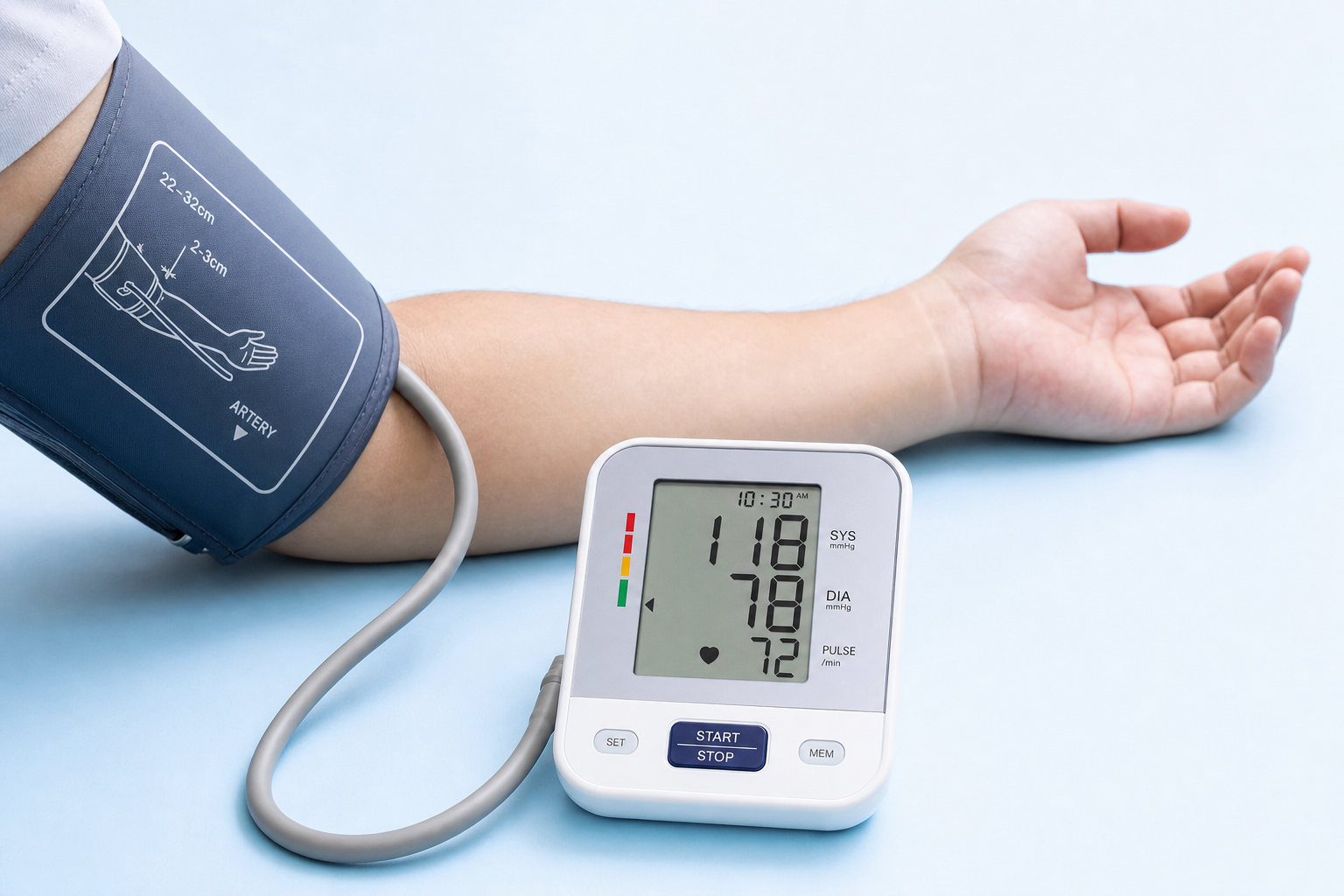
Blood pressure is measured as two numbers — for example, 120/80 mmHg. The top number (systolic) is the pressure when your heart contracts and pushes blood out. The bottom number (diastolic) is the pressure between beats, when your heart relaxes and refills. Both numbers matter, though systolic pressure tends to rise more with age and is a stronger predictor of cardiovascular events in most adults.
Normal, Elevated, and High Blood Pressure
General categories (these can vary slightly by guideline): normal is below 120/80; elevated is 120–129 systolic with diastolic below 80; stage 1 hypertension is 130–139/80–89; stage 2 hypertension is 140/90 or higher. A single high reading doesn’t mean you have hypertension — it needs to be consistently elevated across multiple measurements. Your GP can advise based on repeated checks and your overall risk profile.
How High Blood Pressure Damages the Heart
Artery and Vessel Damage
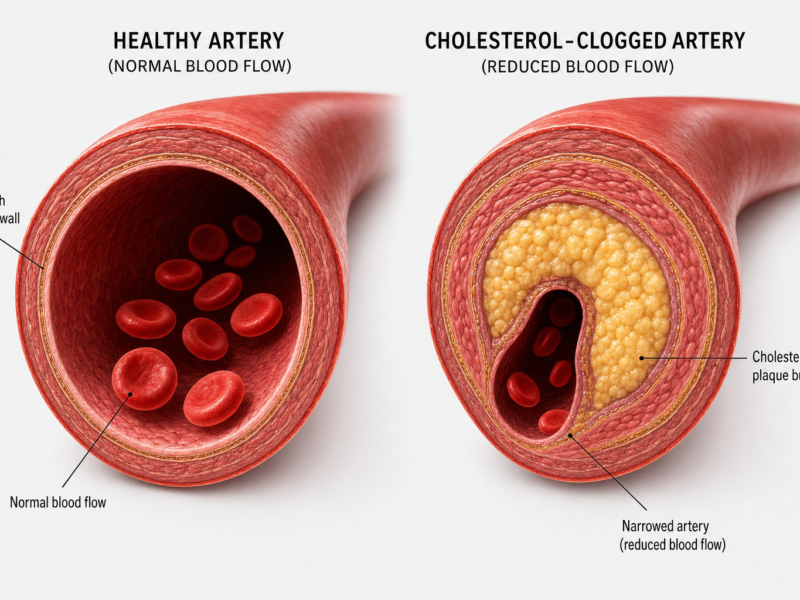
Sustained high pressure damages the inner lining of arteries, making them stiffer and more prone to plaque buildup. Over time, this narrows the arteries and restricts blood flow — increasing the risk of heart attack, stroke, and kidney damage. The damage accumulates gradually, which is why many people with uncontrolled hypertension don’t notice problems until something serious happens.
Heart Thickening and Weakness
When the heart has to pump against consistently high pressure, the left ventricle — the main pumping chamber — thickens and stiffens to cope with the extra workload. This is called left ventricular hypertrophy, and over time it can lead to heart failure, where the heart can no longer pump efficiently enough to meet the body’s needs.
How to Lower Blood Pressure and Protect Your Heart
Diet Changes for Lower Blood Pressure
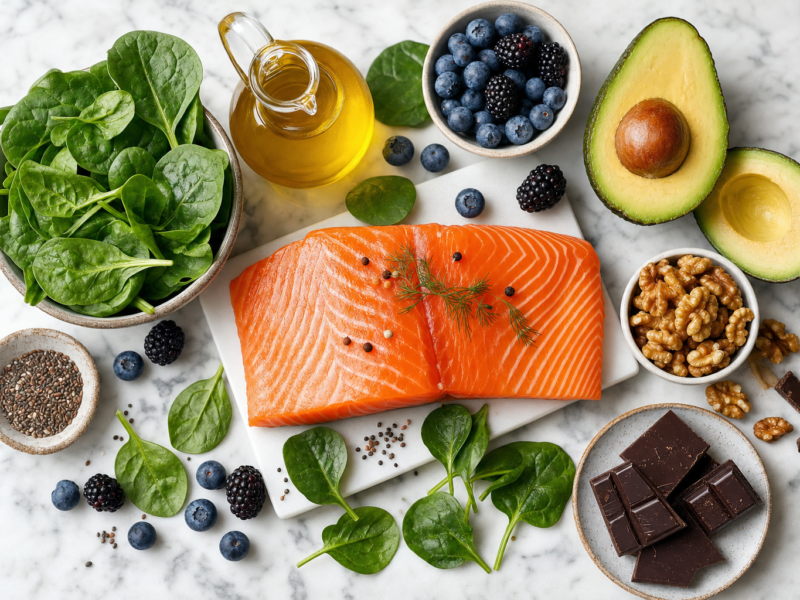
The DASH diet (Dietary Approaches to Stop Hypertension) is specifically designed to lower blood pressure through food: more vegetables, fruits, whole grains, lean protein, and low-fat dairy; less sodium, saturated fat, and added sugar. Reducing sodium intake to under 2,000mg per day (roughly one teaspoon of salt) can lower systolic blood pressure by 5–6 mmHg on its own. Increasing potassium from fruits, vegetables, and legumes helps counterbalance sodium’s effects. See our full guide on the best foods for heart health.
Exercise and Blood Pressure
Regular aerobic exercise can lower systolic blood pressure by 5–8 mmHg — comparable to some first-line medications. The effect builds over weeks of consistent activity and reverses if you stop. Even modest amounts of regular movement (walking 30 minutes most days) provide meaningful benefit. For a full exercise plan, see our guide on exercise and heart health.
Stress, Sleep, and Blood Pressure
Chronic stress keeps blood pressure elevated through sustained cortisol and adrenaline release. Poor sleep — particularly short sleep and sleep apnoea — prevents the normal overnight blood pressure dip that gives your cardiovascular system a chance to recover. Addressing stress through breathing exercises, boundaries, and professional support (see our stress and heart health guide) and improving sleep quality (see sleep and heart health) are both meaningful blood pressure interventions.
Frequently Asked Questions
What are normal blood pressure numbers?
Normal blood pressure is generally considered below 120/80 mmHg. Readings consistently above 130/80 are typically classified as hypertension and may need management through lifestyle changes or medication.
How does high blood pressure affect the heart?
It damages artery walls, accelerates plaque buildup, and forces the heart to work harder. Over time, this can lead to heart attack, stroke, heart failure, and kidney damage.
What foods lower blood pressure?
Potassium-rich foods (bananas, sweet potatoes, leafy greens, beans), whole grains, low-fat dairy, and foods low in sodium all support lower blood pressure. The DASH diet pattern has the strongest evidence.
Can exercise lower blood pressure?
Yes — regular aerobic exercise can lower systolic blood pressure by 5–8 mmHg. The benefit builds with consistency and is seen within a few weeks of regular activity.
When should I see a doctor for high blood pressure?
If your blood pressure is consistently above 130/80 (or 140/90 on home monitors), see your GP. If it’s above 180/120 or accompanied by symptoms like severe headache, chest pain, or vision changes, seek medical attention immediately.
Is hypertension reversible?
Mild to moderate hypertension can often be brought into a normal range through lifestyle changes — diet, exercise, weight loss, stress management, and reduced alcohol intake. More severe hypertension usually requires medication alongside lifestyle changes, but the lifestyle improvements still matter.
Simple 7-Day Blood Pressure Control Plan
Day 1: Reduce sodium — cook dinner from scratch with herbs instead of salt. Walk for 20 minutes.
Day 2: Eat two extra serves of vegetables. Drink water instead of a sugary or alcoholic drink.
Day 3: Do a 15-minute bodyweight strength session. Practice 5 minutes of slow breathing.
Day 4: Choose a potassium-rich meal (sweet potato, banana, beans). Walk for 25 minutes.
Day 5: Skip the takeaway — make a DASH-friendly dinner. Aim for 7+ hours of sleep.
Day 6: Try one stress-management technique: journaling, a warm bath, or a phone-free hour before bed.
Day 7: Walk for 30 minutes. Review the week and pick 2–3 changes to continue. Book a blood pressure check if needed.
For the full picture, read our complete guide to heart health.
Related Reading:
Heart Health: The Complete Guide
Best Foods for Heart Health
Exercise and Heart Health
Cholesterol Explained
Heart Disease Symptoms
Stress and Heart Health
Sleep and Heart Health
Heart Health for Women
Heart Health After 50


 Sarah Mitchell
 James Hargreaves
 Emma Thornton
 Rachel Summers